



D.C. Crime Statistics Debate Intensifies: A Comprehensive Analysis

Introduction
The ongoing debate over crime in Washington, D.C., has reached a fever pitch, with the Trump administration and D.C. Mayor Muriel Bowser presenting starkly different narratives. The White House has declared crime in the nation’s capital “out of control,” justifying a federal takeover of the Metropolitan Police Department (MPD) and the deployment of National Guard troops. In contrast, Mayor Bowser emphasizes that violent crime has dropped to a 30-year low, despite acknowledging a significant spike in 2023. This article delves into the conflicting claims, examines the data, and explores the factors shaping public perception and policy responses, providing a balanced and detailed perspective for ClickUSANews.com readers.
Conflicting Narratives on D.C. Crime
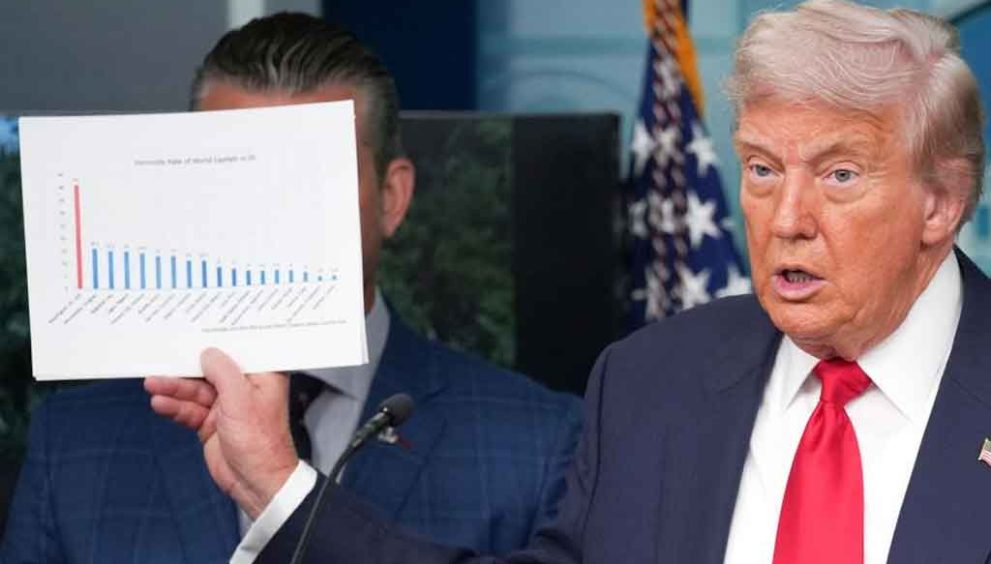
The Trump administration’s rhetoric paints D.C. as a city overwhelmed by “violent gangs and bloodthirsty criminals,” citing high-profile incidents like the shooting of a 3-year-old girl and the attempted carjacking of a former Department of Government Efficiency staffer to underscore a perceived crisis. On August 11, 2025, President Trump signed an executive order placing the MPD under federal control for at least 30 days and deployed approximately 800 National Guard troops to bolster security. The administration argues that D.C.’s 2023 homicide rate of 39.4 per 100,000 residents—among the highest in the nation—necessitates drastic measures. They also allege that MPD leadership may be manipulating crime statistics to downplay the severity of the situation, referencing a local report about a police commander placed on leave for allegedly altering data.
Mayor Bowser, however, counters that the city is experiencing a significant decline in crime. She cites data from the MPD and the U.S. Department of Justice, which show a 35% drop in violent crime from 2023 to 2024, marking the lowest level in over 30 years. As of August 18, 2025, violent crime is down an additional 26% compared to the same period in 2024, with homicides decreasing from 112 to 99 year-to-date. Bowser argues that these trends contradict claims of a “crime emergency” and has called the federal takeover “unsettling and unprecedented.” D.C. Attorney General Brian Schwalb has similarly labeled the intervention “unnecessary and unlawful,” pointing to the downward trajectory in crime statistics.
Homicide Rate in Context
To understand the debate, it’s critical to place D.C.’s crime statistics in historical and comparative context. In 2024, D.C.’s homicide rate was approximately 27.3 per 100,000 residents, a significant decrease from 39.4 in 2023 but nearly double the 13.9 recorded in 2012, when the city hit a 50-year low. However, this rate remains far below the peaks of the early 1990s, when D.C. was dubbed the “murder capital” with rates exceeding 80 per 100,000 in 1991. The 2023 spike saw 274 homicides—the highest since 1997—but this dropped to 187 in 2024, and preliminary 2025 data (99 homicides as of August) suggests the downward trend is continuing.
Comparatively, D.C.’s 2024 homicide rate of 27.3 per 100,000 is higher than that of New York City (approximately 4.5 per 100,000) and Chicago (approximately 18 per 100,000) but lower than cities like St. Louis (53.8 per 100,000), New Orleans, and Detroit. Among 24 U.S. cities analyzed in 2024, D.C. ranked fourth in homicide rates, according to the Center for Public Safety Initiatives. Internationally, Trump’s claim that D.C.’s murder rate exceeds that of cities like Bogotá, Colombia, or Mexico City is misleading; 2023 data from the Igarapé Institute shows 49 cities worldwide, including three capital cities (Cape Town, Kingston, and Caracas), had higher homicide rates than D.C.’s 39.4.
Other violent crimes have also declined significantly. According to MPD data, from 2023 to 2024, robberies dropped 39%, armed carjackings fell 53%, and assaults with dangerous weapons decreased 27%. In 2025, year-to-date comparisons show a 50% reduction in sex abuse cases, a 20% reduction in assaults with a dangerous weapon, and a 28% reduction in robberies. Carjackings, which surged to 959 in 2023, have plummeted, with 189 reported in 2025 as of August, a 75% reduction from the June 2023 peak.
Perception vs. Reality
Despite the statistical decline in crime, public perception in D.C. remains heavily influenced by high-profile, brazen incidents. Criminologists like Thomas Abt from the University of Maryland note that random or brutal crimes—such as the 2025 shooting of a congressional intern or the 2023 murder of a 3-year-old—disproportionately shape how residents feel about safety. A 2024 Washington Post poll found that 65% of D.C. residents considered crime an “extremely serious” or “very serious” problem, even as crime rates dropped. Adam Gelb of the Council on Criminal Justice explains that the “quality” of crime—its randomness or brutality—often outweighs the “quantity” in driving fear, particularly when incidents involve vulnerable victims or occur in public spaces.
This perception gap is exacerbated by broader trends in public disorder, such as unsheltered homelessness and sanitation issues, which have spiked in recent years. These factors, while not always classified as violent crimes, contribute to a sense of unease. For instance, a Manhattan Institute report highlighted increases in 311 sanitation-enforcement requests and unsheltered homelessness, which align with Trump’s references to “squalor” in the city. Additionally, the increased lethality of violent encounters—driven by the prevalence of firearms—means that while fewer incidents occur, those that do are more likely to result in death, further amplifying public concern.
Understanding Crime Statistics
Time Frame Matters
Experts emphasize that the choice of time frame dramatically shapes crime narratives. Long-term comparisons (e.g., 1990s vs. 2024) highlight substantial progress, with violent crime at a 30-year low. However, shorter-term analyses, such as 2012 to 2023, reveal a troubling increase in homicides before the recent decline. For example, the Council on Criminal Justice notes that D.C.’s homicide rate in the first half of 2025 was 19% lower than the same period in 2024 but 10% higher than pre-pandemic levels (2018–2019). Selecting different periods can thus support either the administration’s narrative of rising crime or Bowser’s emphasis on recent improvements.
City Comparisons Problematic
Direct comparisons between D.C. and other cities are fraught with challenges. D.C.’s unique status as a fully urban district without suburban areas within its boundaries inflates its per-capita crime rates compared to cities like New York or Philadelphia, which include safer suburban zones. Crime analyst Jeff Asher cautions that urban density, age demographics, and socioeconomic factors complicate such comparisons, particularly with international cities like Bogotá, which have vastly different populations and policing systems. For instance, D.C.’s population of approximately 702,000 is significantly smaller than Mexico City’s 9 million, making per-capita rate comparisons misleading.
Data Reliability Questions
The Trump administration has questioned the reliability of D.C.’s crime statistics, citing a report about a police commander allegedly manipulating data to understate violent crime. However, experts like Abt argue that homicides—the most serious and reliably reported crime—are less susceptible to underreporting due to their severity and the involvement of multiple agencies (e.g., coroners and hospitals). Supporting data, such as ShotSpotter gunfire detections and hospital injury records, corroborate the downward trend in gun violence. While discrepancies exist between MPD’s reported 35% drop in violent crime for 2024 and the FBI’s more conservative 9% estimate, both confirm a decline. Asher notes that while MPD’s public data may overstate reductions due to differences in crime categorization, the overall trend of declining violence is consistent across independent sources.
Broader Context and Policy Implications
The debate over D.C.’s crime statistics reflects broader national and political dynamics. Trump’s focus on urban crime aligns with a long-standing strategy to portray Democratic-led cities as crime-ridden, a tactic that resonates with certain voter bases, particularly in suburban areas. A 2024 Pew Research Center poll found that 68% of Republicans prioritized reducing crime, compared to 47% of Democrats, highlighting a partisan divide in crime perceptions. Meanwhile, local officials argue that federal intervention undermines D.C.’s autonomy under the Home Rule Act and diverts attention from community-based solutions, such as addressing root causes like poverty and implementing violence interruption programs.
D.C.’s challenges with youth crime, particularly carjackings, have prompted local measures like a citywide curfew for those under 17 from 11:00 PM to 6:00 AM, introduced in July 2025. The MPD also launched a juvenile crime unit in April 2025 to address this issue, which has been a significant driver of violent crime. Additionally, the U.S. Attorney’s Office has prioritized prosecuting gun-related offenses, charging over 90% of arrests for violent crimes involving firearms in the first half of 2024, with a 75% conviction rate.
Conclusion
The debate over D.C.’s crime statistics reveals a complex interplay of data, perception, and politics. While the Trump administration emphasizes a narrative of escalating crime to justify federal intervention, Mayor Bowser and local officials point to significant declines in violent crime, supported by MPD and DOJ data. Homicides and other violent crimes have dropped sharply since the 2023 spike, with 2024 marking a 30-year low and 2025 continuing the downward trend. However, public fear, fueled by high-profile incidents and rising public disorder, underscores a persistent gap between statistics and perception. Experts stress the importance of contextualizing data over appropriate time frames and avoiding misleading city comparisons, while acknowledging that data reliability issues, though minor for homicides, warrant scrutiny.
For D.C. to address both the reality and perception of crime, a balanced approach is needed—one that continues to leverage data-driven policing and prosecution strategies while investing in community-based interventions to address root causes. As the federal takeover and National Guard presence unfold, the nation’s capital remains a focal point for broader discussions about crime, safety, and governance in America’s cities.