



Hurricane Erin Threatens Carolinas with Severe Flooding and Massive Waves

A Powerful Storm Approaches
Hurricane Erin, the first Atlantic hurricane of the 2025 season, is barreling through the Atlantic, bringing life-threatening conditions to the Carolinas, particularly North Carolina’s vulnerable Outer Banks. As of August 20, 2025, the storm, currently a Category 2 hurricane with maximum sustained winds of 110 mph, is not expected to make direct landfall but will skirt dangerously close to the U.S. East Coast, triggering severe flooding, coastal erosion, and massive waves. The National Hurricane Center (NHC) reports that Erin is located approximately 615 miles south-southeast of Cape Hatteras, North Carolina, moving northwest at 13 mph, with its effects already being felt along the coast.
Erin’s rapid intensification over the weekend, peaking as a Category 5 storm with winds of 160 mph on August 16, marked one of the fastest strengthening events in Atlantic hurricane history. Fueled by exceptionally warm ocean waters, the storm has since fluctuated in strength, dropping to Category 2 by Tuesday, August 19, but remains a formidable threat due to its massive size. Tropical storm-force winds extend over 200 miles from the storm’s center, with forecasts indicating they could reach 280 miles by Thursday, amplifying its impact on coastal regions.
Severe Flooding and Coastal Hazards in the Carolinas
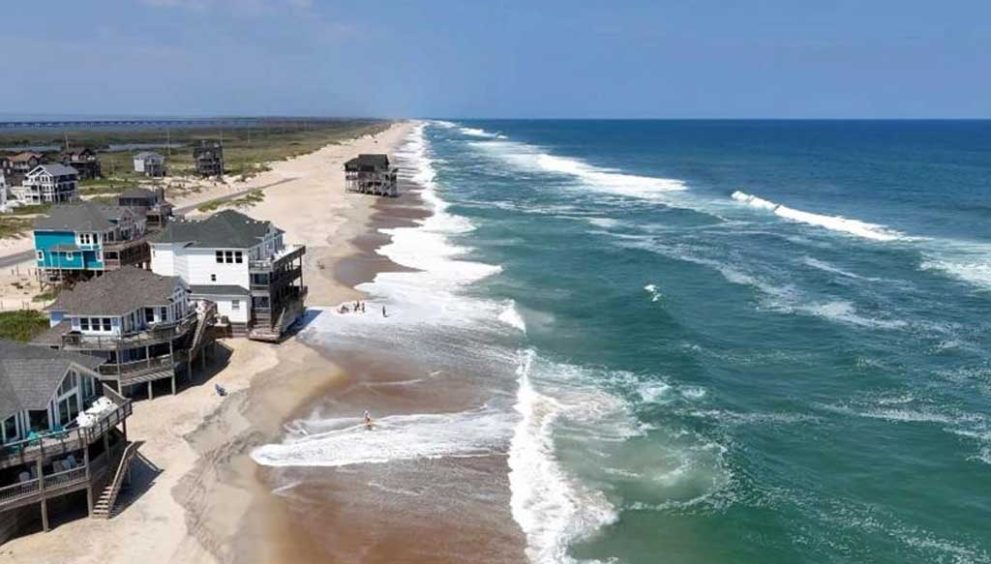
The Carolinas, especially North Carolina’s Outer Banks, are bracing for significant impacts starting late Wednesday, August 20, through Thursday, August 21. The NHC has issued a storm surge warning for the Outer Banks, predicting up to 4 feet of inundation above normal tide levels, coupled with waves of 15 to 20 feet that could overwash dunes, flood homes, and render roads impassable. The National Weather Service (NWS) in Morehead City, North Carolina, warns of “extreme beach and coastal damage,” with protective dunes likely to be inundated or destroyed, leading to severe inland flooding. State Route NC-12, the main highway connecting the Outer Banks’ barrier islands, is particularly vulnerable, with flooding expected to isolate communities for days.
Erin’s outer bands are already generating life-threatening rip currents and high surf along the Eastern Seaboard, from Florida to New England. On Monday, August 18, more than 60 swimmers were rescued from dangerous rip currents at Wrightsville Beach, near Wilmington, North Carolina, prompting a no-swimming advisory through Friday. The NWS estimates that waves could reach 20 feet in exposed areas like the Outer Banks, with offshore swells potentially hitting 100 feet in the open Atlantic, posing extreme hazards for ships and small boats. These conditions, combined with high tides on Wednesday and Thursday—the highest of the month—heighten the risk of coastal flooding and erosion.
South Carolina is also on alert, with a high surf advisory in effect from Savannah to Charleston, where waves could reach 6 feet. While the impacts are expected to be less severe than in North Carolina, officials urge residents to avoid the water and secure coastal properties. The storm’s expansive wind field is driving these hazards, with gusts of 20–40 mph expected along the shoreline, potentially causing power outages and minor structural damage.
Emergency Preparations and Evacuations
In response to Erin’s looming threat, North Carolina Governor Josh Stein declared a state of emergency on Tuesday, August 19, mobilizing resources and personnel to assist coastal communities. Dare County, encompassing much of the Outer Banks, issued a mandatory evacuation order for all visitors and residents of Hatteras Island, covering the villages of Rodanthe, Waves, Salvo, Avon, Buxton, Frisco, and Hatteras. Hyde County followed suit, ordering evacuations for Ocracoke Island, where more than 1,800 people had evacuated by ferry since Monday. Dare County Emergency Management Director Drew Pearson emphasized the urgency, stating, “Hurricane Erin is different. Extended flooding and the threat to Highway 12 will severely limit our ability to respond. Please, do not take the risk. Evacuate now.”
The state has activated the Eastern Regional Coordination Center and the State Emergency Operations Center in Raleigh to monitor the situation and coordinate responses. Emergency shelters, such as the one hosted by Warren County Emergency Management in Warrenton, North Carolina, are available for evacuees. Residents are urged to prepare disaster kits with essentials like documents, cash, prescriptions, and phone chargers, and to avoid driving through flooded roads. The NWS has posted double red flags across Dare County beaches, prohibiting swimming and water activities, with violations punishable as a Class 2 misdemeanor.
Local preparations include reinforcing dunes with bulldozers and removing planks from piers to mitigate storm surge damage. However, some residents, like Hatteras fishing charter operator Tom Newsom, who has lived through nearly 40 years of storms, plan to stay despite memories of Hurricane Dorian’s 7-foot storm surge in 2019. The National Park Service at Cape Hatteras National Seashore has warned that at least two homes in Rodanthe are “very vulnerable” to collapse due to wave action, following the loss of multiple homes to erosion in recent years.
Broader Regional Impacts
While the Carolinas face the most immediate threat, Erin’s influence extends across the Eastern Seaboard. Beaches in New York City, Long Island, New Jersey, Delaware, and Maryland have enacted swimming bans through at least Thursday, with waves expected to reach 12 feet in New Jersey and Long Island by Thursday. Nantucket Island, Massachusetts, could see waves exceeding 10 feet later in the week. The NHC warns that rip currents, responsible for over 80% of U.S. beach rescues and 44 deaths in 2025 so far, pose a significant risk across the region.
Erin has already left a trail of disruption in the Caribbean, lashing Puerto Rico, the U.S. Virgin Islands, the Bahamas, and Turks and Caicos with heavy rain, flash flooding, and power outages affecting nearly 150,000 customers in Puerto Rico on Monday. The storm’s outer bands dumped up to 8 inches of rain in some areas, closing airports and suspending public services in Turks and Caicos. Bermuda is also in Erin’s path, with forecasts predicting rough seas and possible tropical storm-force winds later this week.
Climate Change and Future Risks
Meteorologists attribute Erin’s rapid intensification to warmer-than-average ocean waters, a trend linked to climate change. Warmer air and moister conditions provide more fuel for extreme weather, increasing the frequency of rapidly intensifying storms. The NWS notes that Erin’s large size exacerbates its storm surge and wave impacts, a characteristic increasingly common in modern hurricanes. With the Atlantic hurricane season approaching its peak in September, forecasters are monitoring two additional tropical waves that could follow a similar path, underscoring the need for ongoing vigilance.
A Call for Vigilance
As Hurricane Erin approaches, the Carolinas are on high alert, with emergency teams, residents, and officials preparing for a multi-day onslaught of flooding, erosion, and dangerous surf. While the storm’s offshore path spares the region from a direct hit, its massive size and power ensure significant impacts, particularly for the Outer Banks’ fragile barrier islands. Governor Stein’s advice resonates: “Be informed, follow local guidelines, and prepare now.” As communities brace for Erin’s wrath, the focus remains on safety, preparedness, and resilience in the face of nature’s fury.
Sources: National Hurricane Center, August 18-20, 2025; NPR, August 19, 2025; CNN, August 19, 2025; ABC News, August 19-20, 2025; AccuWeather, August 19, 2025; Dare County Emergency Management, August 19, 2025; Associated Press, August 20, 2025