



US Strikes Narco Boat in Pacific Amid 2026 Drug War Push

US Strikes Narco Boat in Pacific Amid 2026 Drug War Push
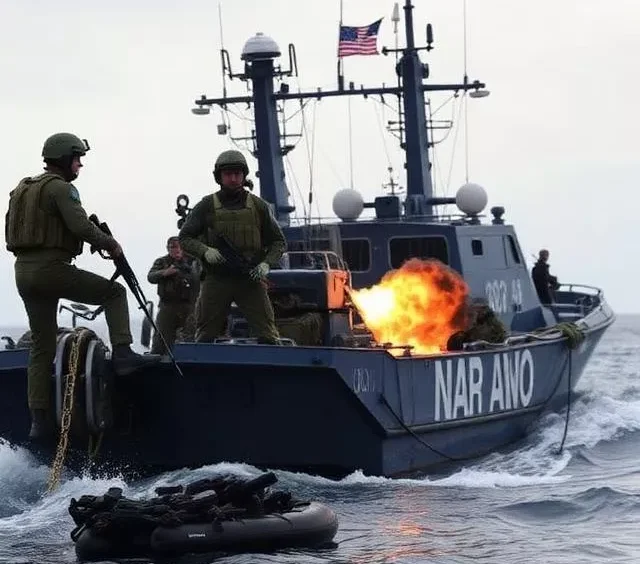
On February 9, 2026, U.S. Southern Command (SOUTHCOM) conducted a lethal kinetic strike on a vessel in the eastern Pacific Ocean, killing two individuals labeled “narco-terrorists” and leaving one survivor. The operation, part of Operation Southern Spear, marks the latest escalation in the Trump administration’s campaign against drug trafficking, which has now claimed at least 130 lives across 38 strikes since September 2025. This incident unfolds against the backdrop of intense domestic debates over Department of Homeland Security (DHS) funding and immigration enforcement limits.
SOUTHCOM Statement & Operation Details
According to an official SOUTHCOM press release and announcement on X (formerly Twitter):
- The strike was directed by new SOUTHCOM Commander Gen. Francis L. Donovan (a Marine who assumed command last week after his predecessor’s retirement amid reported policy disagreements).
- Intelligence indicated the vessel was “transiting along known narco-trafficking routes in the Eastern Pacific” and “engaged in narco-trafficking operations,” operated by a “Designated Terrorist Organization.”
- Joint Task Force Southern Spear executed the “lethal kinetic strike.”
- Immediately after, SOUTHCOM notified the U.S. Coast Guard to activate Search and Rescue for the survivor; coordination shifted to Maritime Rescue Coordination Center Ecuador, with USCG providing support.
- Accompanying footage (an 11-second clip) showed the boat exploding and catching fire.
This is the third publicly announced strike of 2026 (and second under Donovan), following similar actions last week and earlier in January. The campaign, intensified under President Trump, designates certain Latin American drug cartels as terrorist groups, enabling military engagement without traditional law enforcement protocols.
Context in Trump’s “Narco-Terrorist” Policy
The Trump administration has framed drug trafficking from Latin America (particularly Venezuela and Colombia) as a national security threat equivalent to terrorism. Key elements:
- Strikes began in September 2025, initially in the Caribbean before shifting heavily to the eastern Pacific.
- The policy ties into broader “America First” priorities, including border security and counter-fentanyl efforts.
- Administration officials argue these operations curb illegal drug flows into the U.S., protecting communities from overdose deaths and cartel violence.
- The strikes occur amid related actions, such as the January 2026 capture of Venezuelan President Nicolás Maduro (accused of cartel ties) and designations of fentanyl as a “weapon of mass destruction.”
This Pacific strike aligns with escalated military involvement in counternarcotics, contrasting with traditional Coast Guard-led interdictions.
Links to Border/ICE Ops & DHS Funding Standoff
The timing intersects with the ongoing DHS funding crisis (deadline February 13, 2026):
- DHS funding was separated into a short-term continuing resolution through February 13 after a brief partial shutdown, amid Democratic demands for ICE/CBP reforms (e.g., judicial warrants, body cameras, no masks for agents, limits on sensitive-location enforcement).
- Republicans reject many demands as security risks; much ICE/CBP funding flows from prior multi-year allocations (via the “One Big Beautiful Bill” reconciliation package), meaning enforcement ops could continue even in a lapse.
- The boat strikes highlight the administration’s aggressive posture on drug/immigration threats, potentially pressuring Democrats in talks—framing restrictions as weakening anti-cartel efforts.
- Broader ties: Fentanyl and narco flows fuel border debates; SOUTHCOM ops complement DHS/CBP roles in interdiction.
Reactions: Bipartisan, Human Rights, & Global Views
- Supportive (Republican/Administration side): Praised as effective disruption of trafficking networks; no U.S. casualties reported.
- Critical (Democrats, human rights groups): Legal experts question legality (extrajudicial killings without evidence transparency or due process); calls for congressional oversight. Some link to broader concerns over military overreach in Latin America.
- International: Latin American governments (e.g., affected regions) express concern over sovereignty and escalation; limited public condemnation so far.
- Media/Bipartisan: Outlets like The New York Times, Al Jazeera, The Guardian highlight scrutiny over evidence, death toll (now ~130), and policy continuity despite leadership changes.
Broader Latin America Implications
- Risks straining U.S. relations with Venezuela, Colombia, and others amid ongoing strikes.
- Potential for increased cartel adaptation (e.g., new routes, tactics).
- Ties into North American Drug Dialogue (recent Ottawa meeting focused on supply chain security, firearms trafficking, financial disruptions).
- Human impact: Survivor rescue ongoing; families of those killed unidentified publicly.
This strike underscores the Trump administration’s militarized approach to the drug war—effective in disruption metrics but controversial in execution and oversight. As DHS talks continue, it adds urgency to balancing enforcement with accountability.
By National Security & Politics Analyst
For more USA news check:
https://clickusanews.com/news/
Latest USA breaking news, national headlines, global affairs, and trending stories.
https://clickusanews.com/sports/
USA sports news, live scores, match highlights, athlete updates, and major sporting events.
https://clickusanews.com/technology/
Technology news covering AI, gadgets, innovation, cybersecurity, and digital trends in the USA.
https://clickusanews.com/entertainment-movies-ott/
Entertainment updates including movies, OTT releases, celebrity news, and pop culture stories.
https://clickusanews.com/business/
Business and finance news with USA market updates, corporate stories, crypto, and economic insights