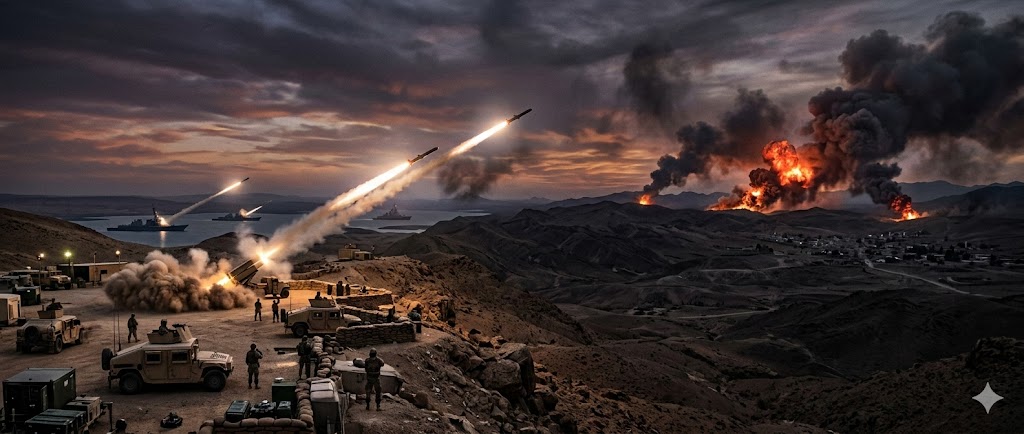



Analysis: How the US-Israel Strikes on Iran Could Impact Everyday Americans – Economic, Security, and Daily Life Ramifications


By American News Desk Published: February 28, 2026 | 1:30 PM EST ClickUSA News – Washington, D.C.
The coordinated U.S.-Israel military strikes on Iranian targets, part of the escalating 2026 Iran–United States crisis, have already triggered immediate market reactions and raised alarms about broader consequences for American families, workers, and the economy. While the operation aims to degrade Iran’s military capabilities—including missile production, air defenses, and nuclear-related sites—the fallout could hit U.S. consumers hardest through surging energy costs, inflation pressures, and potential risks to American personnel abroad. This in-depth analysis breaks down the key impacts based on expert assessments, historical parallels (like the 2025 Twelve-Day War), and current market data.
1. Energy Prices and the Pump: The Most Immediate Hit
The strikes have driven Brent crude oil prices up sharply—already surging over 15% to exceed $120 per barrel in early trading—with analysts warning of further volatility. Iran’s position along the Strait of Hormuz (through which ~20% of global oil flows) makes any escalation particularly risky for energy markets.
- Gasoline Prices: National average gas prices, recently hovering around $2.90–$3.00 per gallon, could climb above $3.50–$4.00 nationally if disruptions persist, or even approach $5 in extreme scenarios involving Iranian retaliation (e.g., attempts to mine or disrupt the Strait). A $10–$12 per barrel increase from Iranian export disruptions alone could add $0.25–$0.35 per gallon at the pump.
- Why It Matters to Americans: Higher fuel costs ripple through daily life—commutes, family road trips, trucking (raising grocery and shipping prices), and heating bills. For middle-class households already facing post-pandemic inflation, this could strain budgets significantly. Experts note that prolonged spikes (e.g., to $100+ per barrel) might add 0.5–1% to overall U.S. inflation, complicating Federal Reserve efforts to stabilize prices.
- Short-Term vs. Long-Term: If the campaign remains limited and reversible (as in prior targeted strikes), prices could stabilize within weeks. But any Iranian counterstrikes on Gulf infrastructure or shipping could trigger a “historic” spike, reminiscent of 2022 peaks after Russia’s Ukraine invasion.
2. Broader Economic Ripple Effects
Beyond fuel, the conflict risks amplifying inflationary pressures and market uncertainty.
- Inflation and Household Costs: Energy-driven inflation could push up prices for goods and services across the board—transportation, manufacturing, agriculture, and utilities. American borrowers might face higher interest rates if the Fed responds aggressively to rising inflation. Stock markets have shown volatility, with energy stocks gaining but broader indices dipping on fears of escalation.
- Job and Business Impacts: While defense and energy sectors might see short-term boosts, prolonged uncertainty could slow consumer spending, delay investments, and affect industries reliant on stable global trade. Small businesses and commuters in high-gas-price states (e.g., California, New York) would feel the pinch hardest.
- Remittances and Global Ties: For Americans with family abroad (including in the Gulf or Israel), higher costs could strain support networks. U.S. companies with Middle East exposure face supply chain risks.
3. Security Risks for Americans Abroad and at Home
With ~30,000–40,000 U.S. troops and 130,000+ American citizens in the Gulf region, escalation poses direct threats.
- Military Personnel and Civilians: Iranian proxies (e.g., in Iraq or Yemen) have threatened retaliation against U.S. bases. Past incidents, like missile strikes on U.S. facilities during the 2025 war, highlight risks—though U.S. defenses have improved. Any American casualties could fuel domestic debate over the operation’s scope.
- Cyber and Asymmetric Threats: Iran has capabilities for cyberattacks on U.S. infrastructure or proxies targeting soft targets. While unlikely to cause widespread disruption, heightened alerts could affect travel, events, and daily routines.
- Domestic Sentiment: Polls show mixed support for action against Iran’s nuclear ambitions, but rising gas prices or casualties could shift public opinion quickly—especially ahead of midterms. Bipartisan congressional calls for oversight reflect concerns over unauthorized escalation.
4. Positive Angles and Mitigations
Not all effects are negative: U.S. energy independence (as a net exporter) provides a buffer compared to past crises. Strategic Petroleum Reserve releases could temper price spikes. Defense spending might create jobs in related industries.
- Recommendations for Americans:
- Monitor gas prices and consider fuel-efficient options or public transit.
- Stay informed via official sources (State Department, DHS alerts) if traveling abroad.
- Prepare financially: Build emergency funds and review budgets for potential cost increases.
- Follow developments closely—de-escalation remains possible if diplomacy resumes.
In summary, while the strikes target strategic threats to U.S. interests and allies, the primary domestic impact for most Americans will come through higher energy costs and inflation risks. The situation remains fluid, with outcomes depending on Iran’s response and the campaign’s duration. ClickUSA News will continue tracking expert analysis and market updates.
Sources: CNN Business, CSIS, CBS News, Al Jazeera, Wall Street Journal, Reuters, American Progress, Fortune, and official U.S. statements. Disclaimer: This analysis draws from reports available at publication time. Events are developing rapidly, and impacts may shift.