

Iran Conflict 2026: Impact on US Household Costs


Iran Conflict 2026: Impact on US Household Costs
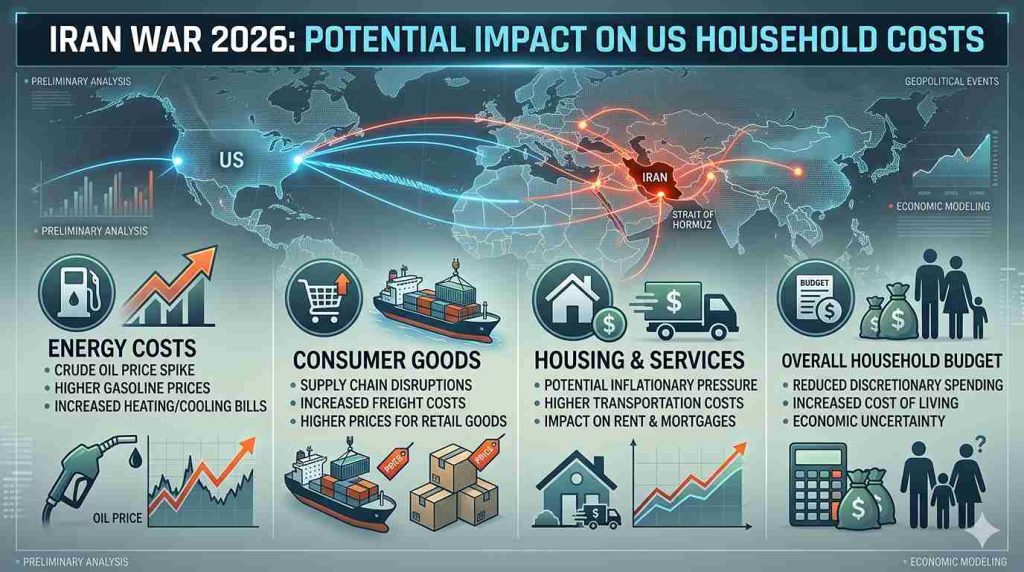
The 2026 Iran War, which began with US-Israel strikes on February 28, 2026, has now entered its second month. Iran’s retaliatory disruptions — especially the near-closure of the Strait of Hormuz (a critical chokepoint for about 20% of global oil supply) — have triggered a major oil price shock that is directly affecting everyday American families.
From higher prices at the pump to rising grocery bills and pressure on retirement savings, the conflict is delivering a noticeable hit to household budgets. Here’s a clear, straightforward breakdown of how the Iran conflict is hitting American wallets as of late March 2026.
1. Skyrocketing Gas Prices: The Most Immediate Pain at the Pump
This is where most Americans feel the conflict first.
- Current Reality: The national average price for regular gasoline has climbed to around $3.70–$4.20 per gallon, up significantly from about $2.98 before the war started. In high-cost states like California, prices have pushed past $5 in some areas.
- The Surge: Oil prices (Brent crude) have jumped more than 40% since late February, recently trading near $105–$112 per barrel after peaking higher. This 32%+ rise in gas prices over just a few weeks has added real costs for commuting, road trips, and daily errands.
- Household Hit: Economists estimate the average US household could spend an extra $740 or more on gasoline this year due to the shock. Families filling up twice a week are seeing $80–$150+ added monthly to their budgets.
Even America’s strong domestic shale production offers only partial protection — global prices still drive what you pay at the pump.
2. Broader Inflation: Everything from Groceries to Deliveries Gets More Expensive
Higher energy costs ripple through the entire economy.
- Inflation Outlook: Goldman Sachs and the OECD warn that the oil surge could push US headline inflation toward 3.1%–4.2% in 2026. This reverses some recent progress and complicates the Federal Reserve’s efforts.
- Grocery and Goods Pressure: Transport-dependent items (produce, meat, dairy, packaged foods) are seeing upward price movement. Delivery services, ride-sharing, and airfares are also rising as airlines and trucking companies pass on higher fuel costs.
- Consumer Spending Squeeze: Higher prices act like a hidden tax, forcing many families to cut back on discretionary spending. Oxford Economics forecasts the slowest annual consumption growth since 2013 (outside the pandemic) if the shock persists.
The longer the Strait of Hormuz disruptions continue, the greater the risk that energy-driven inflation spills into core prices (excluding food and energy).
3. Retirement Savings and 401(k) Volatility
Market uncertainty is affecting long-term wealth.
- Stock Market Reaction: The S&P 500 and other indices have experienced dips and heightened volatility since the conflict began. While US stocks have held up better than many global markets, short-term losses have trimmed 401(k) and IRA balances for millions of Americans.
- Mixed Sector Impact: Energy and defense stocks have gained from higher oil prices, offering some offset in diversified portfolios. However, consumer, tech, and growth sectors have faced headwinds from inflation fears and slower spending.
- Retirement Concerns: Those nearing retirement or heavily invested in broad-market funds are feeling the pinch. Analysts note that sustained high oil prices could slow economic growth and delay expected Federal Reserve rate cuts, keeping pressure on asset values.
4. Recession Risks and Economic Outlook
Economists are growing more cautious.
- Goldman Sachs has raised the probability of a US recession over the next year to around 30%.
- Other forecasts put the odds of a severe downturn even higher, citing reduced consumer spending power and business investment caution.
- Even if the conflict de-escalates, relief at the pump and in broader prices may take weeks or months to fully materialize due to supply chain lags.
Who Feels It Most?
- Commuters and Large Families: Heavy drivers in suburban or rural areas are hit hardest by gas prices.
- Lower and Middle-Income Households: Those with tight budgets have less room to absorb higher costs for fuel, food, and utilities.
- Retirees and Savers: Fixed incomes and retirement accounts face dual pressure from inflation and market swings.
Practical Tips for Protecting Your Wallet
- Track and Reduce Fuel Costs: Use gas apps for cheapest stations, combine trips, carpool, or consider more fuel-efficient options.
- Budget Adjustments: Review monthly spending and build or maintain an emergency fund covering 6+ months of essentials.
- Investment Review: Check your 401(k) or IRA allocation — energy exposure may help offset some costs, but avoid panic selling. Diversification remains key.
- Stay Informed: Monitor diplomatic developments and official economic reports (CPI, jobs data). De-escalation or reopened shipping lanes could ease pressures relatively quickly.
The Iran conflict’s impact on American wallets is real and multifaceted, with energy costs as the primary channel. While the US is better positioned than many import-dependent countries thanks to domestic production, prolonged disruption risks broader economic pain.
The situation remains fluid. ClickUSANews.com will continue tracking how this evolves for American families.
This analysis is based on reports and market data available as of late March 2026. Prices and conditions can change rapidly. This is for informational purposes only and not financial advice — consult a qualified advisor for your personal situation.
Published by ClickUSANews.com — Straight Talk on US Economy, Consumer Issues, and What Matters to American Families.
Related Searches: Iran war 2026 gas prices, oil price surge effect on inflation USA, how Iran conflict affects 401k, rising cost of living 2026, American household expenses war impact.
Stay updated with ClickUSANews.com for the latest on how global events shape your daily finances.
For more USA news check:
https://clickusanews.com/news/
Latest USA breaking news, national headlines, global affairs, and trending stories.
https://clickusanews.com/sports/
USA sports news, live scores, match highlights, athlete updates, and major sporting events.
https://clickusanews.com/technology/
Technology news covering AI, gadgets, innovation, cybersecurity, and digital trends in the USA.
https://clickusanews.com/entertainment-movies-ott/
Entertainment updates including movies, OTT releases, celebrity news, and pop culture stories.
https://clickusanews.com/business/
Business and finance news with USA market updates, corporate stories, crypto, and economic insights