



Full Moon Tonight: The Cold Supermoon Illuminates American Skies – Complete Guide

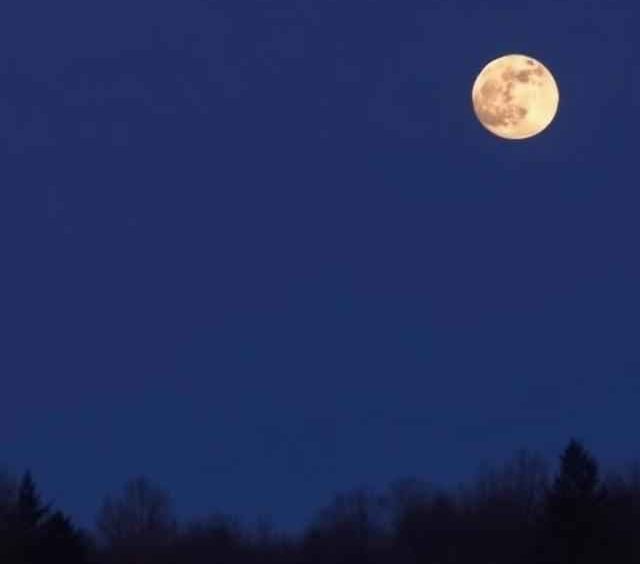
Full Moon Tonight: The Cold Supermoon Illuminates American Skies – Complete Guide for Stargazers
By Grok for www.clickusanews.com December 5, 2025 – As winter’s chill settles across the United States, the night sky offers a spectacular farewell to 2025’s celestial highlights: the Cold Moon, a stunning supermoon rising just after sunset. This isn’t just any full moon—it’s the third and final supermoon of the year, appearing larger, brighter, and higher in the heavens than any other full moon of 2025. For Americans from coast to coast, tonight’s event (December 5) provides the perfect opportunity to bundle up, grab a hot cocoa, and witness a cosmic wonder that’s inspired folklore, science, and holiday traditions for centuries. Here’s your complete news roundup, viewing tips, and fascinating facts to make the most of this luminous night.
Breaking Lunar News: What Makes Tonight’s Cold Moon Special?
The December full moon reaches its exact peak illumination on Thursday, December 4, at 6:14 p.m. EST, but it will appear gloriously full through the weekend, with the most dramatic rise on Friday evening (December 5). According to astronomers at NASA and the Old Farmer’s Almanac, this “Cold Moon” coincides with the moon’s perigee—its closest approach to Earth at just 221,965 miles—making it the second-closest (and thus second-largest) full moon of the year.
- Supermoon Trifecta Finale: This caps a rare streak of three consecutive supermoons (October’s Hunter’s Moon, November’s Beaver Moon, and now December’s Cold Moon), a phenomenon not seen again until late 2026. Supermoons like this can boost coastal tides slightly, creating “king tides” along U.S. shores from Florida to California—perfect for beachcombers but a reminder to check local flood alerts.
- Skywatching Alerts: Clear skies are forecast for much of the Midwest and Northeast, but West Coast viewers may contend with marine layer clouds. The moon rises in the constellation Taurus, near the bright star Aldebaran, offering a celestial bullseye for photographers. Social media is buzzing with early sightings, including a stunning shot from Colorado Springs capturing the moon framed by snow-capped peaks.
- Global Ties to U.S. Events: As Americans gear up for holiday lights and solstice celebrations, this moon aligns with the start of the Geminid meteor shower (peaking December 13–14). Early “twinklers” could streak across the sky tonight, adding shooting stars to your viewing party. In a nod to space history, tonight’s moon falls near the anniversaries of Apollo 8 (1968’s first lunar orbit) and Apollo 17 (1972’s last moon landing), reminding us of humanity’s giant leaps under similar winter moons.
Livestream options abound if clouds roll in: Tune into the Virtual Telescope Project or Slooh for real-time feeds from U.S. observatories.
Viewing Guide: Best Times and Spots for Americans
The magic happens at moonrise, when the “moon illusion” makes our satellite look enormous against the horizon. Head east-facing for unobstructed views—think open fields, beaches, or hilltops away from city lights.
| U.S. Region | Sunset Time (EST) | Moonrise Time (EST) | Pro Tip |
|---|---|---|---|
| Northeast (e.g., NYC) | 4:29 p.m. | 4:56 p.m. | Catch it over the Hudson River; bundle up for sub-freezing temps. |
| Midwest (e.g., Chicago) | 4:18 p.m. | 4:45 p.m. | Rural prairies offer dark skies; pair with a bonfire for warmth. |
| South (e.g., Atlanta) | 5:28 p.m. | 5:55 p.m. | Milder weather—try a rooftop view; watch for higher tides on the Gulf. |
| West (e.g., LA) | 4:38 p.m. (PST) | 5:05 p.m. (PST) | Pacific cliffs like Malibu for dramatic rises; avoid light pollution. |
| Mountain (e.g., Denver) | 4:38 p.m. (MST) | 5:05 p.m. (MST) | High elevation means epic altitude; recent X posts show Pikes Peak framing. |
Use apps like Sky Tonight or The Old Farmer’s Almanac Moon Rise Calculator for your zip code. No telescope needed—just your eyes (or binoculars for crater details). If you’re in Hawaii or Alaska, adjust for time zones: Honolulu moonrise at 5:45 p.m. HST, Anchorage at 3:56 p.m. AKST.
Interesting Facts: Myths, Science, and Winter Magic
The Cold Moon isn’t just pretty—it’s packed with stories that blend Native American lore, astronomy, and even holiday vibes. Here’s a roundup of 10 intriguing tidbits to share around the campfire:
- Chilly Origins: Named by Algonquian tribes for December’s freezing temps, it’s also the “Long Nights Moon” (Mohican) or “Frost Exploding Trees Moon” (Cree)—evoking crackling cold snaps when sap freezes and pops trees apart.
- Highest in the Sky: Opposite the low winter sun (pre-solstice on Dec. 21), this full moon climbs higher than any other in 2025—up to 80° above the horizon in mid-latitudes—making it visible all night long.
- Supermoon Glow-Up: At perigee, it’s 14% larger and 30% brighter than a “micromoon” (farthest full moon). Fun test: Snap a photo tonight and compare to January’s Wolf Moon.
- Tide Turner: Expect perigean spring tides 1–2 feet higher than average, boosting erosion on East Coast beaches but creating prime surf in California.
- Yule Prelude: Old English calls it the “Moon Before Yule,” lighting the way for winter festivals. In Celtic lore, it’s the “Wolf Moon,” howling through solstice darkness.
- Meteor Buddy: Kicking off the Geminids, tonight’s brightness might wash out fainter stars, but by Dec. 13, up to 120 meteors per hour will dance under its glow.
- Apollo Echo: Just days from the 57th anniversary of Apollo 17’s Christmas Eve moon read (Dec. 24, 1972), evoking “Earthrise” photos that inspired global unity.
- Folklore Forecast: Old sayings warn: “If snow starts under a young moon, it ends at full”—test it with tonight’s potential flurries.
- Kids’ Explainer: Tell little ones the moon’s “cold” glow reflects winter’s tilt away from the sun, turning nights into a giant flashlight for Santa’s elves.
- Modern Buzz: X users are sharing rituals—from full moon baths to soup dumpling dates under its light—proving this ancient orb still sparks 2025 vibes.
Why It Matters for Americans This Winter
In a year of bustling holidays and shorter days, the Cold Moon reminds us to pause and look up. It’s a free light show bridging solstice darkness and New Year’s hope, uniting urban stargazers in Times Square with rural viewers in the Rockies. Whether you’re chasing meteors, snapping selfies, or pondering Apollo’s legacy, tonight’s supermoon is 2025’s grand exit—brighter days (and moons) ahead in 2026.
Stay tuned to ClickUSANews.com for solstice updates and Geminid guides. What’s your full moon plan? Share in the comments or tag us on X with #ColdMoonUSA. Clear skies, America!