



Travel Safety Guide 2026: Country Tips for US Citizens

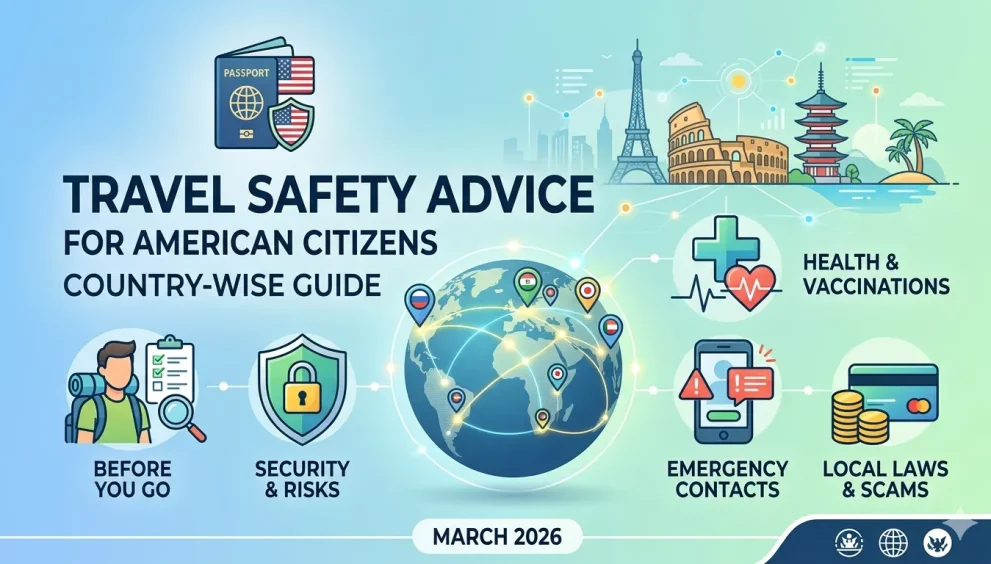
Travel Safety Guide 2026: Country Tips for US Citizens
By ClikCusaNews Team | March 27, 2026
Planning an international trip in 2026? As an American citizen, your safety abroad starts with reliable, official information. The U.S. Department of State provides clear Travel Advisories that rate every country on a four-level system, while the CDC offers important health guidance.
With a fresh Worldwide Caution issued on March 22, 2026, urging increased vigilance globally (especially in the Middle East), now is the perfect time to review risks before booking flights or hotels.
Understanding U.S. State Department Travel Advisory Levels
The State Department uses a simple color-coded system:
- Level 1: Exercise Normal Precautions — Safest destinations. Take standard safety steps like you would at home.
- Level 2: Exercise Increased Caution — Higher risks of crime, terrorism, or civil unrest in some areas. Be more vigilant.
- Level 3: Reconsider Travel — Serious risks involved. Avoid non-essential travel.
- Level 4: Do Not Travel — Highest risk. The U.S. government advises against all travel, and assistance may be severely limited if you need help.
Advisories also highlight specific concerns such as terrorism (T), crime (C), kidnapping (K), civil unrest (U), wrongful detention (D), health (H), or natural disasters (N).
Pro Tip: Always check the latest advisory for your exact destination (including specific regions or cities) at travel.state.gov. Conditions can change quickly due to geopolitical events, natural disasters, or outbreaks.
Current Worldwide Caution (March 22, 2026)
The Department of State advises all Americans worldwide — and especially in the Middle East — to exercise increased caution. Potential threats include groups supportive of Iran targeting U.S. interests or locations associated with Americans. Travelers may also face periodic airspace closures and flight disruptions.
This global alert does not cancel travel but reminds Americans to stay alert, monitor embassy updates, and have contingency plans.
Level 4: Do Not Travel Countries (Avoid Entirely)
As of March 2026, approximately 22 countries or regions carry the highest Level 4 advisory. These include:
- Afghanistan
- Belarus
- Burkina Faso
- Central African Republic
- Gaza Strip
- Haiti
- Iran
- Iraq
- Lebanon
- Libya
- Mali
- Myanmar (Burma)
- Niger
- North Korea
- Russia
- Somalia
- South Sudan
- Sudan
- Syria
- Ukraine
- Venezuela
- Yemen
Advice: Do not travel to these destinations. If you are already there, depart as soon as it is safe to do so. Enroll in the Smart Traveler Enrollment Program (STEP) immediately for emergency alerts.
Level 3: Reconsider Travel (High Risk)
Several countries are currently at Level 3, including:
- Cyprus (recently upgraded)
- Oman
- Pakistan
- Saudi Arabia
- United Arab Emirates
- And others in the Middle East and beyond.
Advice: Strongly reconsider non-essential travel. If you decide to go, create detailed contingency plans, avoid high-risk areas, and stay in close contact with the nearest U.S. embassy.
Popular Destinations: What Americans Should Know
- Mexico: Overall Level 2, but the advisory varies significantly by state. Some areas (especially northern and border regions) have higher crime and kidnapping risks, while popular tourist spots like the Yucatán Peninsula (Cancún, Riviera Maya) are generally safer. Always check the specific state advisory.
- Europe: Most countries remain at Level 1 or Level 2 (e.g., UK and France at Level 2 due to terrorism risks). Popular spots like Greece, Portugal, Spain, Italy, and many Nordic countries are often Level 1.
- Middle East & Gulf Countries: Many have seen recent upgrades to Level 3 due to regional tensions. Extra caution is advised even in previously stable destinations.
- Asia, Africa, and Latin America: Risk levels vary widely — from safe Level 1 countries to Level 4 hotspots. Research city-specific risks.
Safe bets (often Level 1): Countries like Japan, Australia, New Zealand, Switzerland, Norway, Portugal, and many Caribbean islands typically fall into the lowest risk category.
Health and Disease Risks (CDC Guidance)
Complement security advisories with CDC Travel Health Notices:
- Global Polio risk in several countries — ensure your polio vaccines are up to date.
- Yellow Fever outbreaks in parts of Venezuela.
- Chikungunya in Mayotte.
- Meningococcal disease outbreak in the Democratic Republic of the Congo.
- Dengue is a global concern in tropical areas — use mosquito protection.
Get all routine and destination-specific vaccines well in advance. Consider travel insurance that includes medical evacuation.
Essential Travel Safety Tips for Americans Abroad
- Enroll in STEP (step.state.gov) — Free service that sends you real-time safety alerts and helps the embassy locate you in an emergency.
- Share your itinerary with family or friends and use location-sharing apps.
- Avoid protests, large crowds, and demonstrations — these can turn volatile quickly.
- Crime prevention: Use hotel safes, avoid flashing valuables, use reputable rideshares or taxis, and be cautious of common scams in tourist areas.
- Road safety: Traffic accidents are a leading cause of U.S. citizen deaths abroad. Wear seatbelts and avoid driving at night in unfamiliar areas.
- Stay low-profile: Avoid political discussions and limit visible American symbols if tensions are high.
- Digital security: Use a VPN on public Wi-Fi and enable two-factor authentication.
- Emergency contacts:
- U.S. citizens abroad: +1-202-501-4444
- From U.S./Canada: 1-888-407-4747
- Carry documents: Keep digital and physical copies of your passport, visas, and prescriptions.
- Monitor updates: Follow your nearest U.S. embassy on social media and the State Department’s website.
Final Recommendations for Safe Travel in 2026
- Check before you book: Review both the State Department Travel Advisory and CDC health notices for your destination.
- Buy comprehensive travel insurance with medical evacuation and trip interruption coverage.
- Have a backup plan: Know alternative routes and communication methods.
- Stay informed: Geopolitical situations, especially in the Middle East, can evolve rapidly.
Important Disclaimer: This article provides general guidance based on information available as of March 2026. Travel advisories and health notices change frequently. Always verify the most current details directly from official sources before making travel decisions.
Safe travels! Have you traveled to any of these destinations recently? Share your experiences and tips in the comments below.
Sources & Further Reading:
- U.S. Department of State Travel Advisories: travel.state.gov
- STEP Program: step.state.gov
- CDC Travelers’ Health: wwwnc.cdc.gov/travel
For more USA news check:
https://clickusanews.com/news/
Latest USA breaking news, national headlines, global affairs, and trending stories.
https://clickusanews.com/sports/
USA sports news, live scores, match highlights, athlete updates, and major sporting events.
https://clickusanews.com/technology/
Technology news covering AI, gadgets, innovation, cybersecurity, and digital trends in the USA.
https://clickusanews.com/entertainment-movies-ott/
Entertainment updates including movies, OTT releases, celebrity news, and pop culture stories.
https://clickusanews.com/business/
Business and finance news with USA market updates, corporate stories, crypto, and economic insights