



Oil Prices Crash on US-Iran Ceasefire News


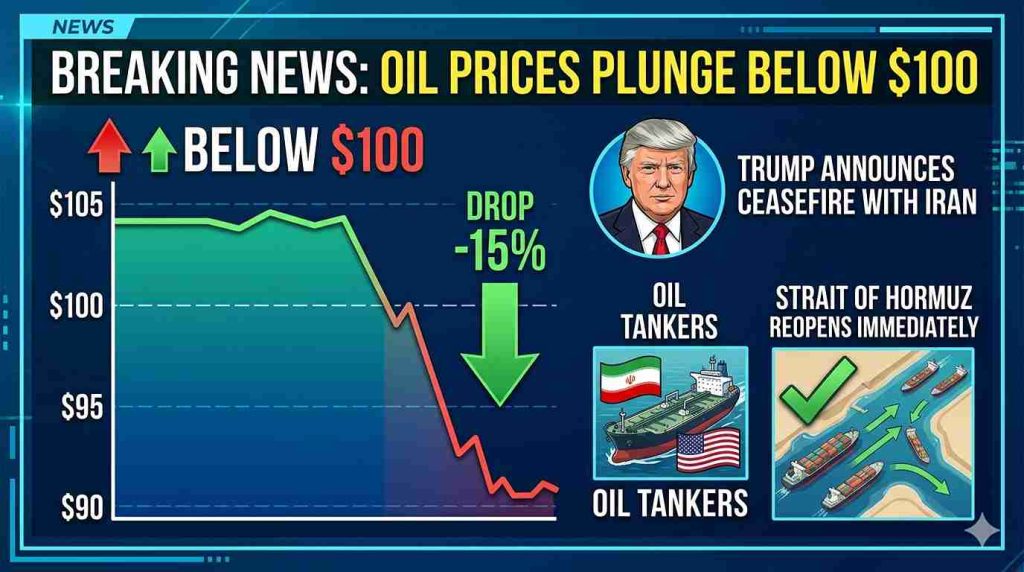
April 8, 2026 – In a dramatic turn of events, global oil prices plunged sharply on Wednesday, with both Brent crude and U.S. West Texas Intermediate (WTI) falling below the $100-per-barrel mark for the first time in recent weeks. The steep decline came after U.S. President Donald Trump announced a two-week ceasefire agreement with Iran, which includes the immediate reopening of the strategically vital Strait of Hormuz.
Sharpest Drop in Nearly Six Years
Early trading on April 8 saw Brent crude tumble as much as 13.6% to around $94.43 per barrel, while WTI crude dropped over 14.3% to approximately $96.82 per barrel. This marked one of the largest single-day percentage declines in oil prices in nearly six years, as markets reacted swiftly to easing geopolitical tensions in the Middle East.Timesofindia.indiatimes
The sell-off reversed a period of extreme volatility triggered by the U.S.-Israel conflict with Iran. In March 2026, fears over Iran’s closure of the Strait of Hormuz — through which nearly 20% of the world’s oil supply flows — had sent prices soaring past $110–$120 per barrel at peaks, with some physical crude grades even touching record highs near $150 per barrel.
What Triggered the Collapse?
President Trump, via posts on Truth Social, described the deal as a “double-sided ceasefire.” He had earlier set a deadline for Iran to ensure safe passage through the Strait or face potential U.S. strikes on Iranian infrastructure. The truce announcement immediately reduced the war risk premium that had been baked into oil prices for weeks.
Analysts noted that reopening the Strait could quickly restore millions of barrels per day of supply that had been disrupted. Even a temporary two-week pause in hostilities brought massive relief to energy markets, global equities (which surged on the news), and consumers worried about rising fuel costs.
Prior to the announcement:
- Brent crude had been trading above $110 in recent sessions.
- Physical oil prices for certain grades hit all-time highs due to severe supply bottlenecks.
- The closure had effectively removed around 8–11 million barrels per day from the market at its worst, creating the largest supply shock in modern history according to some estimates.
Background: From Oil Shock to Sudden Relief
The crisis escalated in early March 2026 when military actions led Iran to blockade the Strait of Hormuz. This chokepoint handles a huge portion of global crude and LNG exports from Saudi Arabia, Iraq, UAE, Kuwait, and Qatar. The disruption caused fuel prices to spike worldwide, raised inflation fears, and weighed heavily on consumer sentiment and stock markets.
Goldman Sachs and other banks had revised forecasts upward, warning that prolonged closure could keep prices elevated for months or even years. However, diplomatic efforts — including indirect U.S.-Iran talks — appear to have yielded a breakthrough faster than many expected.
What This Means for Consumers, Economies, and Markets
- Gasoline Prices: U.S. drivers and consumers globally could see pump prices ease in the coming days and weeks as the risk of sustained disruption fades.
- Inflation Outlook: Lower oil prices should help cool energy-driven inflation pressures that had been building.
- Stock Markets: Energy stocks faced selling pressure, while broader indices (airlines, consumer discretionary, and transportation sectors) gained on expectations of cheaper fuel.
- Longer-Term Outlook: Despite today’s collapse, analysts remain cautious. Some forecasts still see Brent averaging around $85–$100 for parts of 2026 depending on how quickly full flows resume. Structural surpluses projected later in the year could exert further downward pressure once the immediate crisis ends.
J.P. Morgan and others had earlier predicted a return toward $60 per barrel in a base-case scenario for 2026 due to oversupply risks, though geopolitical events had temporarily upended those views.
Market Reaction and What’s Next
Oil futures were extremely volatile in early Asian and European trading. Traders are now watching closely for confirmation that the Strait is indeed reopening and for any statements from OPEC+ members.
The two-week ceasefire provides a window for further negotiations. If it holds and shipping resumes smoothly, the oil market could stabilize at significantly lower levels. However, any breakdown in the truce could quickly reignite upward pressure.
ClickUSANews Takeaway: Today’s oil price collapse serves as a stark reminder of how quickly geopolitical events can swing energy markets. From record spikes fueled by the Hormuz blockade to today’s dramatic plunge on ceasefire hopes, volatility remains the name of the game.
For American families feeling the pinch at the gas pump in recent weeks, this development brings welcome relief. Businesses and investors will now recalibrate as the fog of uncertainty begins to lift.
Stay tuned to ClickUSANews for the latest updates on oil markets, energy policy, and the evolving situation in the Middle East.
Sources include real-time market data from Reuters, Bloomberg, and major financial outlets as of April 8, 2026.


