


NVIDIA CEO Jensen Huang Declares “We’ve Achieved AGI” in 2026 – Is Artificial General Intelligence Already Here?

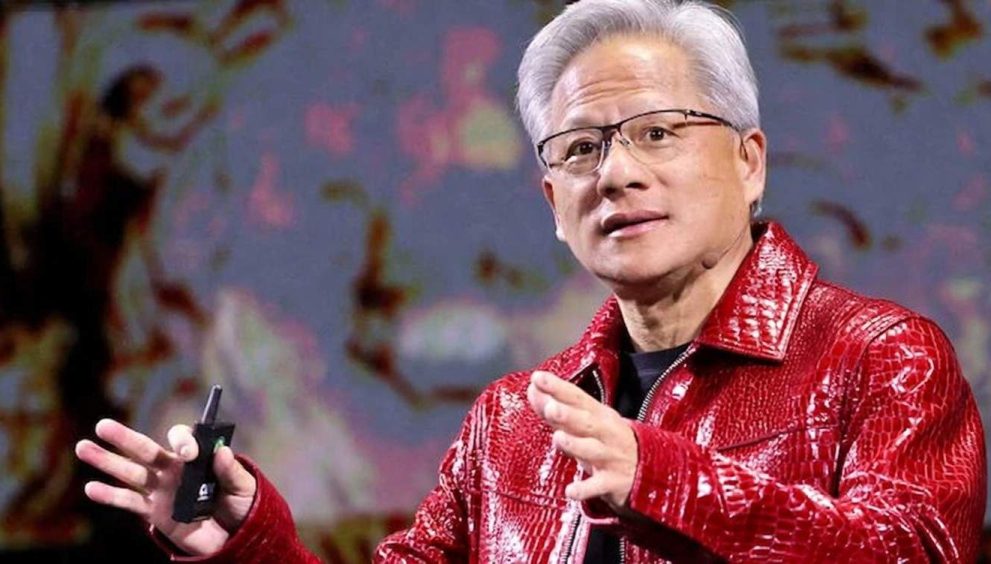
Breaking: NVIDIA Boss Jensen Huang Says AGI Has Already Arrived
In one of the most provocative statements of 2026, NVIDIA CEO Jensen Huang declared on the popular Lex Fridman Podcast that artificial general intelligence (AGI) is no longer a distant future goal — it’s already here.
When asked if AI has reached the point where it could “essentially do your job” — including starting, growing, and running a successful billion-dollar tech company — Huang responded without hesitation:
“I think it’s now. I think we’ve achieved AGI.”
The March 23, 2026 episode quickly went viral, sparking intense debate across Silicon Valley, Wall Street, and the global AI community.
At Click USA News, we bring you straightforward, no-hype analysis of the technologies shaping America and the world.
What Jensen Huang Actually Said About AGI
During the conversation, host Lex Fridman presented a practical definition of AGI: an AI system capable of autonomously handling the full responsibilities of running a billion-dollar technology company.
Huang agreed with that benchmark and stated clearly that current AI systems have already crossed that line. He pointed to advanced AI agent projects — including the open-source OpenClaw platform reportedly being acquired by OpenAI — as early examples of AI that can build and operate web services used by millions or even billions of people.
Huang also reminded listeners that back in 2023 he had predicted AGI would arrive within five years. According to his own timeline, humanity is ahead of schedule.
However, he did acknowledge that today’s AI still has limitations and that a universally accepted definition of AGI remains elusive.
Why This Statement Is a Big Deal
- NVIDIA’s Massive Influence: As the company powering 90%+ of the world’s AI training with its GPUs, NVIDIA and Jensen Huang carry enormous weight in the AI conversation.
- Redefining AGI: Many researchers argue that true AGI means human-level performance across virtually all cognitive tasks. Huang appears to be using a narrower, more practical definition focused on real-world business capabilities.
- Market Reaction: NVIDIA shares saw a positive bump following the podcast, reflecting investor confidence in continued explosive growth in the AI sector.
- America’s AI Leadership: The claim reinforces the United States’ dominant position in artificial intelligence development.
What “We’ve Achieved AGI” Could Mean for Americans
If Huang’s assessment holds, the implications are enormous:
- AI Agents Taking Over Jobs Sophisticated AI systems could soon handle software development, customer service, marketing, financial analysis, and even high-level management roles.
- Explosion of AI-Powered Businesses Entrepreneurs may be able to launch and scale companies with far fewer human employees, dramatically lowering barriers to innovation.
- Transformation of the Workforce Millions of white-collar jobs could be automated or fundamentally changed, while new roles emerge in AI supervision, ethics, and system design.
- Economic Boost for the US Faster innovation could strengthen America’s technological edge over global competitors like China.
Yet many AI experts caution that current systems still struggle with true reasoning, long-term planning, and common-sense judgment — areas where humans remain superior.
The Road Ahead: From Today’s AI to True General Intelligence
Whether you call it AGI today or not, one thing is clear: AI capabilities are advancing at breakneck speed thanks to massive investments in computing power, data, and algorithms.
NVIDIA’s leadership in GPUs, combined with breakthroughs from OpenAI, Anthropic, Google, and others, continues to push the boundaries of what machines can do.
5 Key Takeaways from Jensen Huang’s AGI Claim
- The Goalposts Are Moving — AGI definitions are evolving as technology progresses.
- AI Agents Are the Future — Expect rapid growth in autonomous AI systems that can act independently.
- NVIDIA Remains King — The company continues to dominate the infrastructure behind the AI boom.
- Urgent Need for Workforce Adaptation — Americans must upskill and prepare for an AI-augmented economy.
- Regulation Matters — As capabilities grow, so does the need for smart policies on safety and ethics.
FAQ: Jensen Huang AGI Statement 2026
Did Jensen Huang really say we have achieved AGI? Yes. On the March 23, 2026 Lex Fridman Podcast, he stated, “I think it’s now. I think we’ve achieved AGI.”
What definition of AGI did he use? He responded to a practical example: an AI that can start, grow, and run a billion-dollar tech company.
Is this the consensus view in the AI community? No. Many experts believe true AGI is still years away. Huang’s view is seen as optimistic and based on a narrower definition.
How will this affect the job market? It could accelerate automation of knowledge work while creating new opportunities in AI-related fields.
What should Americans do now? Start learning how to work with AI tools, experiment with AI agents, and stay informed about rapid developments in the field.
Final Thoughts: Has the AGI Era Already Begun?
Jensen Huang’s bold declaration that “we’ve achieved AGI” challenges everyone to rethink how close humanity truly is to machines that can match or surpass human intelligence.
Whether this marks the actual arrival of artificial general intelligence or simply another major milestone, the pace of AI progress is undeniable — and the United States remains at the forefront.
Click USA News will continue to track every major development in AI, from hardware breakthroughs to their impact on American jobs, businesses, and daily life.
What do you think? Has AGI already arrived, or is Jensen Huang getting ahead of himself? Share your opinion in the comments below.
Alex is a Senior AI & Technology Correspondent at Click USA News with more than 10 years of experience covering artificial intelligence, semiconductors, and emerging technologies. His reporting focuses on how breakthroughs in Silicon Valley affect American innovation, economy, and society.