



US Shutdown Triggers Airport Chaos, Security Risks Rise

US Shutdown Triggers Airport Chaos, Security Risks Rise
March 28, 2026
As the United States grapples with escalating military involvement in the Middle East, a separate domestic crisis is unfolding on Capitol Hill. The partial government shutdown targeting the Department of Homeland Security (DHS) has now stretched into its latest week, creating widespread disruptions at airports, straining immigration enforcement, and raising national security concerns at a time when global threats are intensifying.
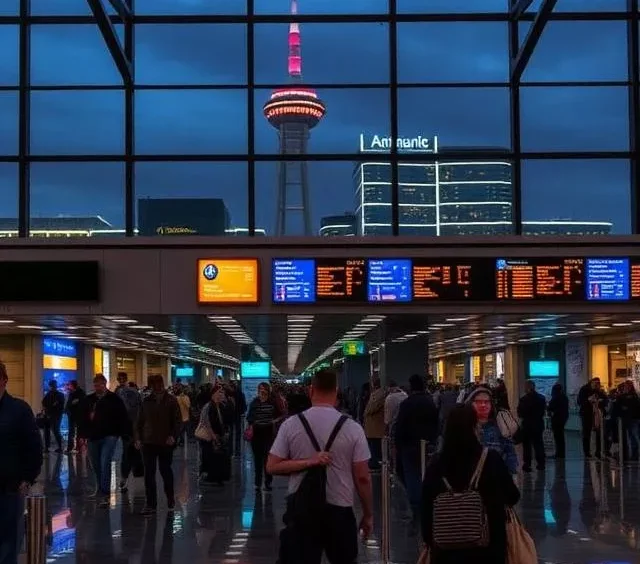
House Republicans rejected a Senate-passed funding deal this week, stalling negotiations and forcing DHS to implement emergency measures to conserve resources. Long lines at airport security checkpoints, reduced staffing at TSA (Transportation Security Administration) and CBP (Customs and Border Protection) facilities, and warnings of potential further delays have become daily realities for travelers across the country. The timing could hardly be worse: with the US-Israel campaign against Iran in its fourth week and Iranian-linked groups issuing threats, the shutdown is amplifying vulnerabilities in domestic security infrastructure.
Background and Causes of the Shutdown
The current partial shutdown stems from deep partisan disagreements over federal immigration enforcement reforms, border security funding, and broader spending priorities. Senate Democrats advanced a funding bill that included certain concessions, but House Speaker Mike Johnson and Republican leadership viewed it as insufficient, particularly regarding measures to strengthen border controls and address what they describe as a lingering migration crisis.
After the Senate passed its version, the House swiftly rejected it, sending negotiations back to square one. This marks the second notable shutdown-related episode in 2026 tied to immigration debates. DHS, which oversees TSA, CBP, ICE (Immigration and Customs Enforcement), the Coast Guard, and cybersecurity agencies like CISA, is operating under constrained budgets and emergency protocols.
DHS Secretary nominee Markwayne Mullin (whose confirmation process advanced narrowly in committee) has been vocal about the need for robust funding, but political gridlock persists. Emergency measures announced by DHS include furloughs for non-essential personnel, reduced overtime, and prioritization of critical functions such as air travel security and border operations. However, these steps have not prevented visible strain on frontline services.
Immediate Impacts on Air Travel and Daily Life
Travelers are bearing the brunt of the funding standoff. Major hubs like New York’s LaGuardia, Chicago O’Hare, Los Angeles International (LAX), and Atlanta Hartsfield-Jackson have reported significantly longer security lines, with some passengers waiting 2–3 hours or more. TSA staffing shortages mean fewer lanes open, slower screening processes, and increased reliance on overtime for remaining officers — a resource that is itself being rationed.
Reports emerged this week of a deadly plane-firetruck collision at LaGuardia Airport under investigation, adding to safety concerns amid reduced support staff. While the incident is not directly attributed to the shutdown, aviation experts note that sustained understaffing can contribute to operational fatigue and coordination challenges.
International travel faces additional hurdles. CBP processing times for arriving passengers have lengthened, causing bottlenecks at passport control. Cargo and freight operations at ports and airports are also experiencing delays, potentially affecting supply chains for perishable goods and critical imports.
Business travelers, tourists, and families returning from spring breaks or international trips have taken to social media to share frustration. One frequent flyer at Dallas-Fort Worth described scenes of “chaotic lines snaking through terminals” and missed connections due to security delays. Airlines like United have issued advisories urging passengers to arrive earlier than usual.
The shutdown’s effects extend beyond airports. ICE operations continue but with reduced capacity for non-priority cases, while Coast Guard missions for maritime security and search-and-rescue face resource limitations. Cybersecurity monitoring by CISA remains active for critical infrastructure, but analysts worry that prolonged funding uncertainty could hamper long-term threat response capabilities.
Intersection with the Iran Conflict and National Security Risks
The domestic shutdown coincides with heightened global tensions from the US-Israel military campaign against Iran. This week, Iran launched attacks on a US-linked air base in Saudi Arabia, injuring at least 10–12 American service members. Iranian missiles and drones have targeted Israeli cities, and threats against US interests worldwide have prompted a State Department “Worldwide Caution” alert for American citizens abroad.
In this context, the DHS funding crisis raises alarms. TSA and CBP play vital roles in screening for potential threats, including those linked to Iranian proxies or other state actors. Reduced staffing could theoretically slow threat detection, though officials insist core security protocols remain in place.
The Pentagon continues deploying additional forces — including elements of the 82nd Airborne and Marines — to the Middle East, while two US aircraft carriers are already in the region, with the USS George H.W. Bush possibly heading there as well. Domestically, any perception of weakened homeland security could embolden adversaries or complicate intelligence sharing.
President Trump has emphasized that the US can achieve its objectives in the Iran campaign “in weeks, not months” without large-scale ground troops. However, critics argue that simultaneous domestic fiscal battles send mixed signals about US resolve and preparedness.
Secretary of State Marco Rubio has reiterated that the military campaign targets Iranian nuclear and missile capabilities while minimizing broader escalation, but the overlapping crises test the administration’s bandwidth.
Broader Economic and Political Ramifications
The shutdown is contributing to market volatility already fueled by the Middle East conflict. Oil prices have fluctuated wildly, with Brent crude surpassing $105–107 per barrel at points this week due to disruptions in the Strait of Hormuz. Higher energy costs compound inflationary pressures that could be exacerbated by any prolonged travel and logistics slowdowns caused by the DHS situation.
Airlines face higher operational costs from delays and potential fuel price spikes. The broader economy — already watching for impacts on remittances, agrifood systems, and global supply chains — could see ripple effects if the shutdown drags into April.
Politically, the standoff highlights deep divisions in Congress. Republicans push for stronger immigration measures and border security enhancements, while Democrats accuse the other side of manufacturing a crisis for political gain. Negotiations continue behind closed doors, but no breakthrough was reported as of March 28.
Public opinion polls (though limited in real-time data) suggest growing frustration among voters with government dysfunction, especially when it affects everyday travel and safety.
Humanitarian and Regional Angles
While the shutdown is primarily domestic, its timing amplifies international concerns. Gulf states hosting US forces are navigating their own balancing acts, with some providing humanitarian aid to Iran even as they host American personnel. Reports of arrests in Gulf countries for sharing unverified videos of Iranian attacks highlight efforts to control narratives amid the chaos.
In Cuba, repeated nationwide blackouts — exacerbated by energy supply issues linked to regional tensions and US policies — serve as a stark reminder of how distant conflicts can compound local crises. Similar indirect effects could emerge elsewhere if global energy markets remain unstable.
Nepal’s new prime minister, rapper-turned-politician Balendra Shah, faces domestic pressures over past accountability issues, illustrating how global headlines often overshadow local political shifts.
Outlook and Potential Resolutions
Analysts suggest several paths forward. A revised compromise bill could emerge in the coming days if both sides show flexibility on immigration language and spending levels. Alternatively, emergency funding measures or continuing resolutions might temporarily avert deeper impacts.
DHS has stressed that it will prioritize aviation security and border integrity, but sustained pressure could force harder choices. Congressional leadership faces pressure from constituents and industry groups to resolve the impasse quickly.
The Iran war adds urgency: with over 1,300–2,200 reported deaths in the conflict (figures varying by source), ongoing strikes on nuclear sites like Natanz and Bushehr, and Iranian retaliation including cluster munitions, the US must maintain a cohesive domestic front.
As one aviation industry representative noted, “Travel is the lifeblood of the economy and a key element of national connectivity. When security infrastructure strains, everyone feels it — from families to businesses to our global posture.”
WorldReport.press will continue tracking developments in both the DHS shutdown and the Middle East conflict. The coming week may prove decisive: either a funding deal restores normal operations, or prolonged uncertainty deepens the domestic headache amid international storms.
For more USA news check:
https://clickusanews.com/news/
Latest USA breaking news, national headlines, global affairs, and trending stories.
https://clickusanews.com/sports/
USA sports news, live scores, match highlights, athlete updates, and major sporting events.
https://clickusanews.com/technology/
Technology news covering AI, gadgets, innovation, cybersecurity, and digital trends in the USA.
https://clickusanews.com/entertainment-movies-ott/
Entertainment updates including movies, OTT releases, celebrity news, and pop culture stories.
https://clickusanews.com/business/
Business and finance news with USA market updates, corporate stories, crypto, and economic insights