



SpaceX in 2026: How Starship Is Changing the Global Space Economy

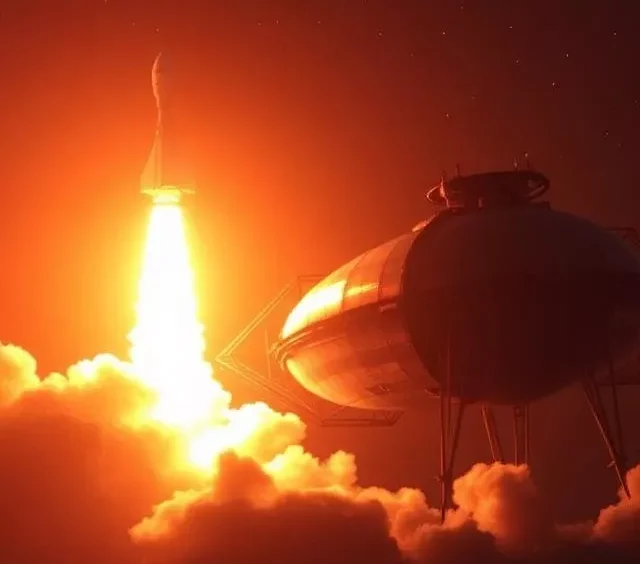
SpaceX in 2026: How Starship Is Changing the Global Space Economy
Published: January 13, 2026 Category: Space | Technology | Economy
In 2026, SpaceX is no longer just a launch provider—it is becoming the backbone of a new orbital economy. The Starship program, now entering its most ambitious phase with Version 3 vehicles, massive production scaling, and critical in-orbit demonstrations, is driving launch costs toward levels never seen before. This cost collapse is unlocking entirely new commercial markets and accelerating the transformation of the global space economy from hundreds of billions to trillions of dollars over the next decade.
Starship Version 3 – The Game-Changing Upgrade
2026 marks the operational debut of Starship V3. Early flight tests of the stretched, higher-thrust Block 3 vehicles are already underway, with SpaceX targeting significantly higher payload performance:
- ~200–220 t to low Earth orbit (reusable mode)
- Potential for >250 t in expendable configuration
- Increased propellant capacity and improved Raptor 3 engine performance
These upgrades directly support two historic missions planned for late 2026:
- First uncrewed Starship cargo mission to Mars during the 2026 Earth-Mars transfer window
- In-orbit propellant transfer demonstration (ship-to-ship) required for NASA’s Artemis lunar landing architecture
Successful execution of either milestone would represent major de-risking steps for full reusability, Mars transportation, and large-scale lunar cargo delivery.
Launch Cost Collapse: From $2,700/kg to <$100/kg
The single most important economic impact of Starship is the dramatic reduction in the cost per kilogram to orbit.
| Vehicle | Era | Cost to LEO (approx.) | Reusability Level |
|---|---|---|---|
| Space Shuttle | 1980s–2011 | ~$55,000/kg | Partial |
| Falcon 9 | 2010s–now | ~$2,700/kg | First-stage reuse |
| Starship (target) | 2026–2030 | $10–150/kg | Full vehicle reuse |
At $50–100/kg, entire new categories of business become financially viable for the first time:
- Orbital data centers and AI training clusters
- Space-based solar power beaming demonstration projects
- Very large satellite constellations (thousands of satellites per year)
- In-space manufacturing and assembly at scale
- Point-to-point Earth cargo & passenger transport concepts
Starlink V3 and the Sky Economy Boom
Starship’s high launch cadence enables the rapid deployment of Starlink V3 satellites starting in mid-to-late 2026. These larger, more powerful satellites will deliver:
- Multi-gigabit user terminals
- Lower latency through laser inter-satellite links
- Greater total system capacity (terabits per second globally)
Analysts estimate that Starlink alone could generate $20–30 billion in annual revenue by the end of the decade, making it one of the largest telecommunications businesses on Earth—entirely enabled by Starship-class launch economics.
Economic Footprint Beyond Launches
SpaceX’s ground infrastructure is also creating massive regional economic impact:
- Starbase (Boca Chica, Texas) – projected to contribute >$13 billion to the Rio Grande Valley economy between 2024–2026 through direct jobs, supply chain spending, and tourism
- Gigabay factories (Florida & Texas) – high-rate Starship production lines coming online in 2026
- Starlink ground stations and user terminal manufacturing – creating thousands of jobs across multiple continents
The Potential 2026 SpaceX IPO
Multiple reports and insider commentary point to 2026 as the most likely window for a SpaceX initial public offering. With Starlink cash flow turning strongly positive, Starship flight reliability improving, and the Mars cargo mission on the horizon, valuation estimates range from $1–1.5 trillion.
An IPO of this magnitude would:
- Provide massive liquidity to early investors and employees
- Attract institutional capital into the broader commercial space sector
- Likely trigger a re-rating of public space companies (Rocket Lab, AST SpaceMobile, Planet Labs, etc.)
2026 Milestones to Watch
- Q1–Q2: First V3 Starship orbital flights and booster catch attempts
- Mid-2026: Ship-to-ship propellant transfer demonstration
- Q4 2026: First large-scale Starlink V3 deployment campaign
- November–December 2026: Uncrewed Mars transit window launch
- Possible: Official SpaceX IPO announcement
Conclusion: Welcome to the Trillion-Dollar Sky Economy
Starship in 2026 is not merely an engineering achievement—it is an economic inflection point. By collapsing the price of access to orbit by 1–2 orders of magnitude, SpaceX is turning space from a government prestige project into global commercial infrastructure.
The implications stretch far beyond rockets: cheaper connectivity, orbital computing, space-based energy, in-space manufacturing, lunar and Martian supply chains, and eventually point-to-point Earth transport.
2026 will be remembered as the year the orbital economy stopped being science fiction and started being spreadsheet math.
Stay updated with the latest SpaceX, Starship, and commercial space developments right here on ClickUSANews.com.
For more USA news check:
https://clickusanews.com/news/
Latest USA breaking news, national headlines, global affairs, and trending stories.
https://clickusanews.com/sports/
USA sports news, live scores, match highlights, athlete updates, and major sporting events.
https://clickusanews.com/technology/
Technology news covering AI, gadgets, innovation, cybersecurity, and digital trends in the USA.
https://clickusanews.com/entertainment-movies-ott/
Entertainment updates including movies, OTT releases, celebrity news, and pop culture stories.
https://clickusanews.com/business/
Business and finance news with USA market updates, corporate stories, crypto, and economic insights.