Tesla Robotaxis Unfazed by SF Blackout as Waymo Suspends

Tesla Robotaxis Unfazed by SF Blackout as Waymo Suspends
December 22, 2025 – A massive power outage hit San Francisco over the weekend, plunging parts of the city into darkness and turning streets into chaos. Traffic lights went dead, public transit ground to a halt, and one self-driving company had to pull the plug on operations. But Tesla’s Robotaxis? They just kept going.
Elon Musk took to X on Sunday to point out the difference: “Tesla Robotaxis were unaffected by the SF power outage.” Videos circulating online backed him up—Tesla vehicles calmly navigating blacked-out intersections while several Waymo robotaxis sat frozen with hazard lights blinking, blocking lanes.
It was an unplanned, real-world showdown between two very different approaches to autonomous driving, and Tesla came out looking strong.
What Happened in San Francisco
The blackout started Saturday afternoon when a fire broke out at a PG&E substation in the South of Market district around 2:15 p.m. Power quickly failed across wide swaths of the city, affecting an estimated 130,000 customers—about a third of San Francisco. Neighborhoods like Richmond, Sunset, Presidio, Golden Gate Park, and downtown areas went dark.
With no traffic signals, intersections turned into free-for-alls. Police officers directed traffic where they could, but gridlock was widespread. Muni buses and trains stopped running in affected zones, and some BART stations closed.
PG&E crews worked through the night, restoring power to around 110,000 customers by Sunday morning, with full service expected later in the day.
Waymo Hits Pause, Vehicles Stall
Waymo, the Alphabet-owned leader in fully driverless ride-hailing, made the call to temporarily suspend service across the Bay Area.
A Waymo spokesperson said: “We have temporarily suspended our ride-hailing services due to the widespread power outage.” Multiple videos posted on social media showed Waymo Jaguar I-PACE vehicles stopped at intersections, unable to proceed safely without functioning traffic lights.
The company resumed operations Sunday evening after power returned and coordination with city authorities.
Tesla’s FSD Handles the Chaos Like a Pro
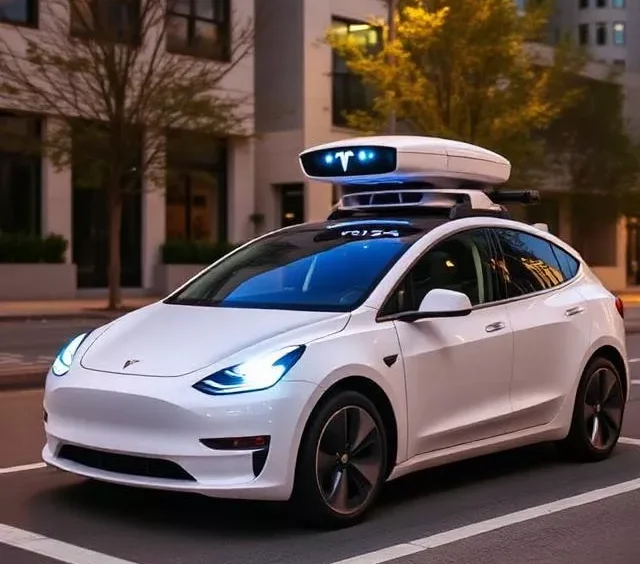
Meanwhile, Tesla owners and Robotaxi testers reported no issues. Dashcam and phone footage showed Model Ys and Cybercabs treating dead traffic lights exactly like human drivers would—slowing down, checking for cross traffic, and proceeding cautiously when clear.
Tesla’s Full Self-Driving (FSD) system, which relies almost entirely on cameras and neural networks trained on billions of real-world miles, didn’t miss a beat. No reliance on live traffic signal data or constant cellular connectivity meant the blackout barely registered.
Elon Musk’s post racked up millions of views, with supporters calling it proof that Tesla’s vision-only approach is more robust for unpredictable “edge cases” like power failures.
Why the Difference Matters
The two companies use fundamentally different tech stacks:
- Waymo: Heavy on lidar, radar, and pre-mapped high-definition data. It cross-references live traffic signal status when available. When signals go dark or connectivity dips, the system errs on the ultra-cautious side—sometimes stopping until conditions improve.
- Tesla: Pure vision with end-to-end neural nets. It “sees” the world like a human and infers rules from context. Dead light = treat as all-way stop or yield, just like driver’s ed teaches.
Transportation experts say both approaches have strengths, but incidents like this highlight trade-offs. Waymo’s caution prioritizes safety in mapped areas; Tesla’s flexibility shines in unexpected disruptions.
Bigger Picture for Robotaxis and City Streets
San Francisco has become ground zero for robotaxi testing, with both Waymo and Cruise (GM) already offering paid driverless rides, and Tesla ramping up unsupervised FSD and early Robotaxi deployments.
As fleets grow, events like blackouts raise new questions:
- How do AVs behave when infrastructure fails?
- Do stalled vehicles block emergency routes?
- What backups are in place for grid failures, storms, or cyberattacks?
California regulators and the NHTSA are watching closely. This weekend’s outage could influence future rules on redundancy and failure modes.
For now, Tesla fans are celebrating what they see as a major win in the robotaxi race. Waymo, with far more unsupervised miles logged in SF, will likely use the data to refine its systems further.
One thing’s clear: Self-driving tech is getting battle-tested in the real world, and weekends like this show who’s ready for the unexpected.