



Brown University Restores Federal Funding After Agreeing to Exclude Transgender Women from Women’s Spaces and Sports

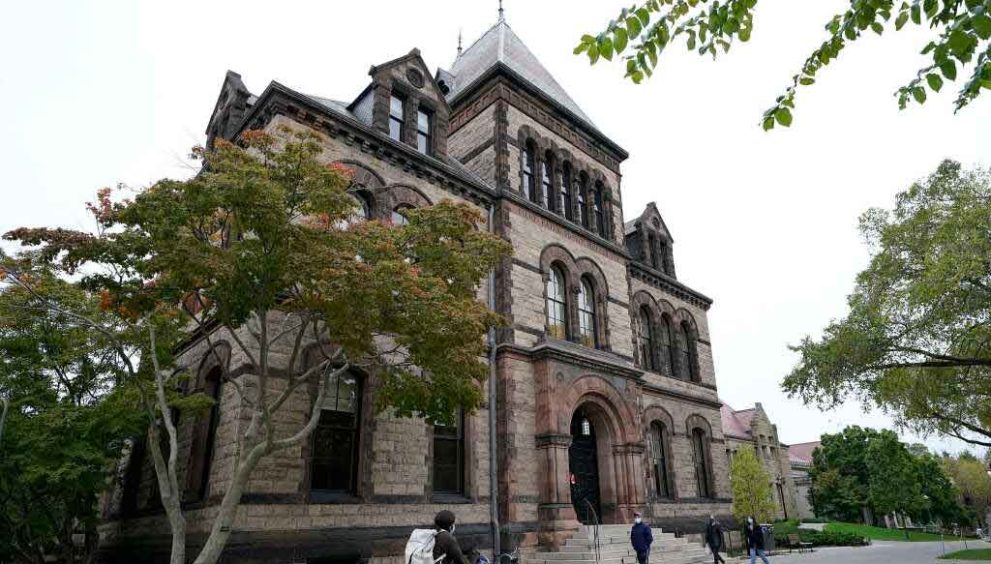
PROVIDENCE, R.I. — Brown University has secured a deal with the Trump administration to restore approximately $510 million in federal funding, ending months of financial uncertainty caused by investigations into alleged discrimination on campus. The agreement, announced Wednesday, requires the Ivy League institution to bar transgender women from women’s single-sex spaces and sports, pay $50 million over a decade to Rhode Island workforce development programs, and implement merit-based admissions policies, among other concessions.
The deal resolves three federal probes into Brown’s handling of antisemitism, race-based admissions practices, and compliance with Title IX regulations. It marks the third Ivy League university to negotiate with the Trump administration this month, following similar agreements with Columbia University and the University of Pennsylvania.
A High-Stakes Agreement
Brown faced significant financial pressure after the Trump administration froze $510 million in federal grants and contracts in April 2025, threatening the university’s research programs and operational stability. The institution, which received about $184 million in federal funding in fiscal year 2024, had implemented cost-cutting measures, including a hiring freeze and restrictions on non-essential travel. To mitigate the crisis, Brown borrowed $300 million in April and secured an additional $500 million loan earlier this week.
Under the terms of the nine-page agreement, Brown will:
- Prohibit transgender women from using women’s single-sex facilities, such as restrooms and locker rooms, and from competing in women’s intercollegiate sports, aligning with NCAA rules that restrict participation to those assigned female at birth.
- Distribute $50 million over 10 years to workforce development organizations in Rhode Island, rather than paying fines directly to the federal government.
- Conduct a campus climate survey and social media study to assess the environment for Jewish students, addressing allegations of antisemitism stemming from pro-Palestinian protests in 2024.
- Maintain merit-based admissions policies and provide admissions data to the federal government to ensure compliance with nondiscrimination laws.
- Refrain from providing gender-affirming surgeries or prescribing puberty blockers and hormones to minors for gender transition purposes, though this does not apply to medical teaching or clinical services provided by Brown University Health and Care New England.
Brown President Christina Paxson emphasized that the agreement preserves the university’s academic independence. “The University’s foremost priority was remaining true to our academic mission, our core values, and who we are as a community at Brown,” Paxson said in a statement. “The government will end the large-scale freeze that had implications for hundreds of millions of dollars of federal funding, and our researchers will again be fully eligible for federal grants moving forward.”
Context and Controversy
The agreement reflects the Trump administration’s broader push to enforce its interpretation of Title IX, which prohibits sex-based discrimination in federally funded educational programs. In February 2025, President Trump signed an executive order titled “Keeping Men Out of Women’s Sports,” aimed at barring transgender women from women’s athletic competitions. The order has prompted federal investigations into several institutions, including the University of Pennsylvania, which agreed to block transgender athletes from women’s teams and erase records set by transgender swimmer Lia Thomas to restore $175 million in funding.
Brown’s decision to comply with these terms has sparked mixed reactions. J. Timmons Roberts, an environmental studies professor at Brown, expressed relief that the settlement appeared less intrusive than Columbia’s, which included a $200 million fine and an independent monitor. “This feels like mostly things that Brown had to do anyway,” Roberts said, noting that the university had already committed to nondiscrimination and NCAA compliance.
However, the exclusion of transgender women from women’s spaces and sports has drawn criticism from advocates for transgender rights. Cal Calamia, a transgender athlete and activist, called such policies discriminatory, stating, “This amounts to discrimination, end of story.” Data from the NCAA indicates that fewer than 10 of the 510,000 collegiate athletes publicly identify as transgender, highlighting the small but contentious nature of the issue.
Posts on X reflect polarized sentiments. Some users praised Brown’s agreement as a step to protect women’s sports and curb “unlawful DEI goals,” while others criticized the university for yielding to federal pressure. These views remain inconclusive but underscore the deal’s divisive impact.
Broader Implications
The agreement ensures Brown avoids an independent monitor, unlike Columbia, and secures a pledge that the federal government will not dictate its curriculum or academic speech. Education Secretary Linda McMahon framed the deal as part of the administration’s effort to “reverse the decades-long woke-capture of our nation’s higher education institutions.”
Brown’s concessions align with existing NCAA policies on transgender athletes, which Paxson noted are consistent with the university’s current practices. The deal also closes investigations by the Departments of Education, Health and Human Services, and Justice, with no formal finding of wrongdoing by Brown.
The university’s willingness to negotiate follows a turbulent period marked by pro-Palestinian protests in 2024, which drew conservative scrutiny after Brown agreed to consider divestment demands from demonstrators. Although the university’s board rejected divestment, the episode fueled accusations of antisemitism, contributing to the federal probes.
Moving Forward
With federal funding restored, Brown can resume its research initiatives, including projects in public health, environmental studies, and engineering. The university will distribute the $50 million to workforce programs, a move Ted Mitchell of the American Council on Education praised as a constructive alternative to federal fines.
As Brown navigates the fallout, the agreement highlights the tension between academic autonomy and federal oversight. For now, the university has secured its financial lifeline, but the debate over transgender inclusion and institutional compliance with federal mandates is likely to persist.
Stay updated with ClickUSANews for the latest on education policy and university developments.