



Iran Rejects Donald Trump Deadline: War Risk Grows


Tehran/Washington – April 7, 2026 — Iran has firmly rejected a US-proposed framework for reopening the Strait of Hormuz, insisting instead on a permanent end to the ongoing war as President Donald Trump’s Tuesday 8 p.m. ET deadline looms, raising fears of escalated strikes on Iranian infrastructure and a major global energy crisis.
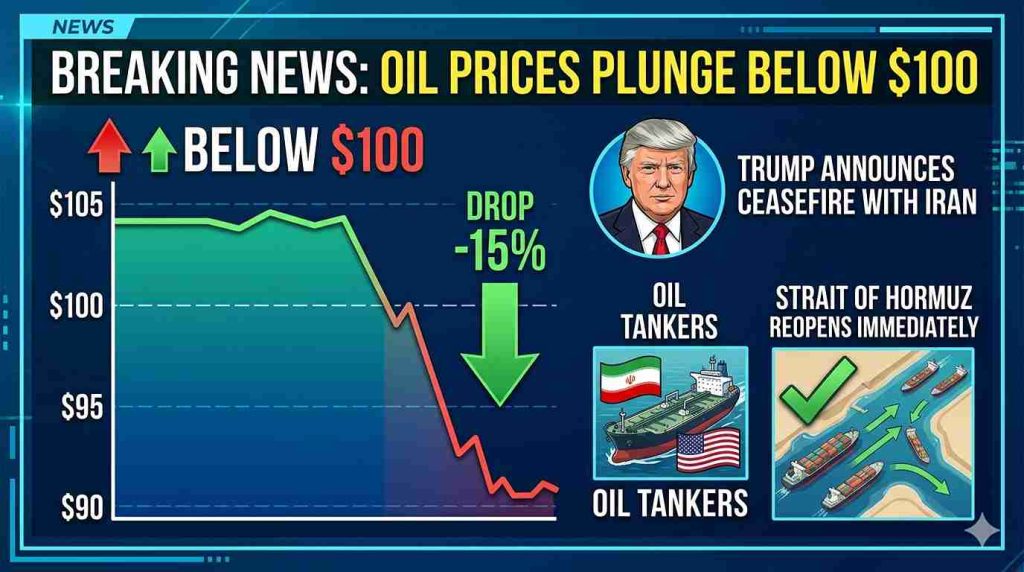
The Strait of Hormuz, a narrow waterway between Iran and Oman through which nearly one-fifth of the world’s oil and liquefied natural gas passes daily, has been severely disrupted since the US-Israel military campaign — Operation Epic Fury — began on February 28, 2026. Iran’s effective closure or heavy restrictions on shipping have already driven up global oil prices and forced rerouting of tankers, creating supply concerns for major economies in Asia and Europe.
President Trump has repeatedly warned that failure to fully reopen the strait by the deadline will trigger devastating attacks, including what he called “Power Plant Day and Bridge Day.” In an expletive-laden Truth Social post on Easter Sunday and during a White House press conference on Monday, Trump stated the US has plans to decimate every bridge and power plant in Iran within hours, potentially leaving the country without electricity or key transport links.
“The entire country can be taken out in one night, and that night might be tomorrow night,” Trump said, adding that he is “not at all” concerned about accusations that targeting civilian infrastructure could amount to war crimes.
Iran’s Defiant Stance
Iranian officials and state media have pushed back strongly against the US demands. The Islamic Revolutionary Guard Corps (IRGC) Navy declared that the Strait of Hormuz “will never return to its former state, especially for America and Israel.” Tehran rejected the latest US-mediated proposal — which reportedly included a 45-day ceasefire and reopening of the strait — describing it as “maximalist” and unrealistic.
Instead, Iran has countered with demands for a permanent end to hostilities, full lifting of sanctions, reconstruction assistance, guarantees against future attacks, and a broader regional de-escalation that includes Lebanon. Iranian state media reported that the response was conveyed through mediators, including Pakistan.
Trump acknowledged receiving Iran’s counter-proposal, calling some elements “significant” but ultimately “not good enough” to avert the deadline. He described the Tuesday cutoff as final, though he has extended previous deadlines in recent weeks.
Strategic and Economic Risks
The Strait of Hormuz remains one of the world’s most critical energy chokepoints. Any prolonged disruption or escalation could lead to sharp spikes in oil prices, fuel shortages, and broader economic fallout. Shipping traffic has already declined significantly, with vessels avoiding the area amid Iranian threats and retaliatory actions.
Analysts warn that further military escalation could widen the conflict, drawing in more regional actors and complicating global supply chains. Recent Iranian retaliatory strikes have targeted energy sites in Gulf countries, while US-Israeli operations have hit Iranian petrochemical facilities, including parts of the South Pars gas field — the world’s largest natural gas reserve.
Humanitarian and Legal Concerns
Military law experts have expressed alarm over threats to systematically target power plants, bridges, and other civilian infrastructure, noting that such actions risk violating international humanitarian law by causing disproportionate harm to civilian populations, including loss of electricity, water, and medical services.
The war, now in its sixth week, has already caused significant civilian casualties, displacement across the region (including over 1.1 million in Lebanon), and environmental damage from strikes on industrial sites. Humanitarian organizations continue to call for de-escalation and protection of civilian infrastructure.
As the Tuesday deadline approaches, last-minute diplomatic efforts are underway, but prospects for an immediate breakthrough remain uncertain. Pentagon officials, including Defense Secretary Pete Hegseth, have indicated that strikes could intensify if Iran does not comply.
The world is watching closely whether the 2026 Iran War will see a dramatic escalation over the Strait of Hormuz or if negotiations can still prevent what Trump has described as potentially overwhelming force against Iranian infrastructure.
This report is compiled from multiple international sources including Al Jazeera, Reuters, CNN, The New York Times, BBC, and NPR as of April 7, 2026. The situation is highly fluid and developments may occur rapidly.


