
Tesla’s Full Self-Driving Could Prevent 32,000 Deaths Annually, New Analysis

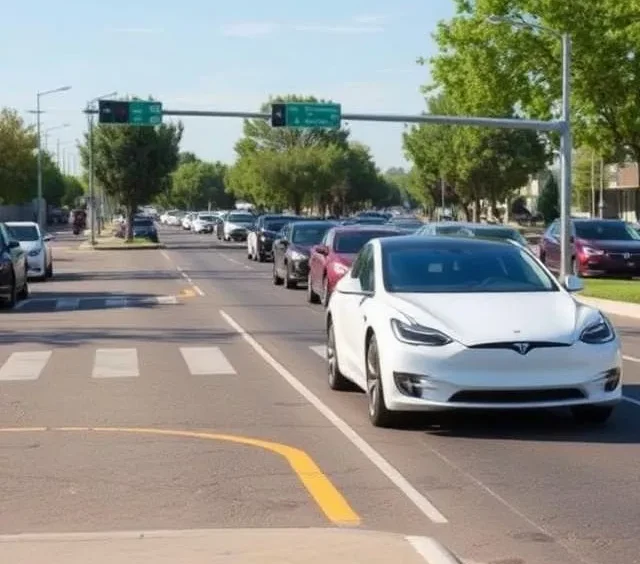
Tesla’s Full Self-Driving Could Prevent 32,000 Deaths Annually, New Analysis
**As supervised autonomy reaches new heights in late 2025, projections suggest widespread adoption could slash distracted driving crashes by 80% and transform U.S. road safety**
*Published: December 26, 2025 | Technology & Safety*
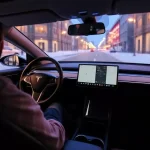
Picture this: It’s Tuesday morning rush hour in 2030, and you’re navigating I-95 traffic without touching the steering wheel. Your Tesla anticipates a distracted driver swerving into your lane, smoothly changes course, and prevents what could have been a serious collision. You arrive at work safely, relaxed, and on time.
This scenario isn’t science fiction—it’s the emerging reality of autonomous driving technology. With Tesla rolling out FSD version 14.2 updates in the final weeks of 2025, a new analysis suggests that widespread adoption of the company’s Full Self-Driving supervised mode could prevent approximately 32,000 roadway deaths each year in the United States.
## The Numbers That Matter
Before diving deeper, here’s what you need to know:
– **~40,000** traffic fatalities annually in the U.S. (2024 NHTSA data)
– **94%** of crashes involve human error
– **80%** potential reduction in human-error incidents with FSD adoption
– **7-9x** lower crash rates for Tesla vehicles using Autopilot/FSD technology
That 32,000 figure isn’t pulled from thin air—it’s based on the reality that most crashes stem from preventable human errors like distraction, impairment, and fatigue. Errors that machines simply don’t make.
## The Human Factor: Why Roads Remain Dangerous
According to NHTSA data, American roads claimed 39,345 lives in 2024—a slight improvement from 40,901 in 2023, but still alarmingly high compared to pre-pandemic levels. The primary culprit isn’t road design or vehicle defects, but human behavior.
Distracted driving continues as what safety experts call “the silent killer.” Whether it’s texting, social media scrolling, or simply zoning out, human attention lapses contribute to over 3,000 deaths and hundreds of thousands of injuries annually. Cambridge Mobile Telematics’ 2025 report showed an encouraging 8.6% drop in phone distraction during 2024, but the problem remains widespread.
Add drunk driving, speeding, and fatigue to the mix, and the case for autonomous assistance becomes compelling. Humans get tired, impaired, and bored. Machines don’t.
Tesla’s Full Self-Driving system addresses these vulnerabilities head-on. Using eight cameras and neural networks processing millions of pixels per second, the technology maintains constant 360-degree awareness—something no human driver can match.
## How the Technology Actually Works
Unlike competitors such as Waymo that rely on lidar sensors, Tesla’s approach is vision-only, trained on data from over 6 billion FSD miles logged by late 2025. Think of it as teaching an AI to see and react like a highly skilled driver—except one that never blinks, never gets distracted, and learns from millions of other drivers simultaneously.
The December 2025 version 14.2 update brought significant improvements in emergency vehicle detection, obstacle avoidance, and even reading pedestrian gestures. Users can now select curbside versus driveway drop-off for arrivals, showing the system’s increasing sophistication.
Real-world examples from November 2025 demonstrate the system’s capabilities. Multiple Tesla owners shared footage of FSD averting crashes—swerving away from wrong-way drivers, braking for sudden pedestrians, and navigating complex traffic scenarios. One Cybertruck owner reported that FSD prevented what could have been a catastrophic 75 mph head-on collision, resulting in only minor damage instead of potential fatalities.
## The Safety Data: Tesla vs. Human Drivers
Here’s where things get interesting. Tesla’s Q3 2025 safety data showed vehicles using Autopilot/FSD technology experiencing crashes at rates 7-9 times lower than the U.S. average—one crash per 6-7 million miles versus approximately 700,000 miles nationally.
A dedicated FSD report released in late 2025 claimed the supervised system resulted in 5-7 times fewer major and minor collisions compared to manual Tesla driving, even on complex city streets.
What does this mean in practical terms? FSD doesn’t text, drink, or daydream. It doesn’t get road rage or check TikTok at red lights. The technology targets the exact human errors that cause the vast majority of crashes.
## How Tesla Stacks Up Against the Competition
Tesla isn’t alone in the autonomous vehicle race, and it’s worth examining how different approaches compare:
**Waymo** has logged over 127 million rider-only miles with impressive results—more than 90% fewer injury crashes than human drivers. Swiss Re’s 2025 analysis showed Waymo data reflecting 88-92% fewer insurance claims. Waymo’s advantage is in geofenced, unsupervised operations with lidar-enhanced sensing.
**Traditional ADAS** systems like GM’s Super Cruise and Ford’s BlueCruise show 40-50% crash reductions according to 2025 Insurance Institute for Highway Safety data. These systems offer meaningful safety improvements but don’t approach full autonomy.
**Cruise** scaled back operations after 2023 incidents, with limited 2025 data available for comparison.
However, Tesla’s advantage lies in scale. With millions of vehicles collecting data daily, the company builds an unmatched dataset for training and improving its neural networks. This “fleet learning” approach means every Tesla contributes to making the system smarter.
## The Regulatory Reality Check
Despite promising safety data, adoption faces hurdles. NHTSA probes into Tesla FSD continued through December 2025, examining low-visibility performance issues and ensuring the technology meets federal safety standards.
Critics point to incidents involving driver misuse—treating supervised autonomy as if it were fully unsupervised. This is a valid concern. The current FSD system still requires driver attention and readiness to take control, even though it handles the actual driving.
Some argue that over-reliance on autonomous systems could breed complacency, potentially creating new risks. Fair point—but the aggregate data shows a substantial net safety gain. The question isn’t whether FSD is perfect, but whether it’s safer than human-only driving. Current evidence suggests it is.
Public opinion is gradually shifting. Fourth-quarter 2025 polling showed approximately 50% of Americans feeling comfortable with autonomous technology, up from 2023 levels. As more drivers experience the technology firsthand and witness its safety benefits, acceptance is expected to grow.
## The Broader Impact: Lives and Economics
Beyond the headline number of 32,000 potential lives saved, consider the ripple effects:
**Injuries prevented:** Projections suggest approximately 1.9 million injuries could be avoided annually with widespread FSD adoption.
**Economic savings:** A McKinsey analysis updated in the third quarter of 2025 estimated that autonomous technology could eliminate 90% of accidents long-term, saving trillions in economic costs from medical expenses, lost productivity, property damage, and insurance claims.
**Business transformation:** For Tesla specifically, the planned robotaxi network—potentially launching in 2026-2027 with the Cybercab vehicle—represents what some analysts call a $10 trillion market opportunity. This isn’t just about selling cars; it’s about transforming transportation itself.
## What Edge Cases Remain?
No technology is flawless, and FSD has known limitations. The 2025 winter storms revealed challenges with heavy snow, where Waymo’s lidar showed advantages over vision-only systems. Construction zones with constantly changing layouts still pose difficulties. Rare weather conditions and unusual road configurations represent areas for continued improvement.
These edge cases are important to acknowledge, but they shouldn’t obscure the bigger picture: even with imperfections, the technology demonstrates substantially better safety performance than human drivers across millions of miles.
## Timeline: What to Expect Next
Industry observers anticipate the following progression:
**2026-2027:** Tesla targets approval for unsupervised FSD and robotaxi operations in select Texas and California cities. The Cybercab vehicle is expected to debut during this timeframe.
**2027-2028:** Expansion to additional cities and states, pending regulatory approval and continued safety validation.
**2028-2030:** Potential nationwide scaling of unsupervised autonomous operations, transforming urban transportation and ride-sharing.
This timeline depends on continued safety performance, regulatory cooperation, and public acceptance—none of which are guaranteed.
## What This Means for You
Whether you’re a Tesla owner, prospective buyer, investor, or simply someone who uses roads, these developments have implications:
**For current Tesla owners:** The data suggests enabling FSD Supervised mode offers measurably safer driving than manual operation. Yes, you still need to pay attention, but the system provides an additional safety layer that demonstrably reduces crash risk.
**For prospective buyers:** If you’re considering a Tesla, prioritizing FSD-capable models may prove prescient as the technology matures and potentially becomes standard for optimal safety.
**For policymakers:** There’s mounting pressure to balance thorough safety validation with the potential to save tens of thousands of lives annually. Regulatory frameworks need to evolve at a pace that enables life-saving technology without compromising safety standards.
**For everyone:** The conversation around autonomous vehicles is shifting from “if” to “when.” Understanding the technology, its limitations, and its potential helps society make informed decisions about this transformation.
## The Contrarian View Worth Considering
It’s important to note that not everyone accepts these projections at face value. Skeptics raise several points worth considering:
– Supervised FSD data may not translate directly to unsupervised performance
– Self-reported crash data from manufacturers may contain biases
– Edge cases and rare scenarios could pose risks at scale that aren’t apparent in current data
– The transition period where autonomous and human drivers share roads could introduce new complications
These concerns deserve serious consideration. However, they should be weighed against the established fact that human error causes the overwhelming majority of current crashes, and early data suggests autonomous systems substantially reduce these errors.
## The Bottom Line
The promise of autonomous driving technology extends beyond convenience—it represents a fundamental shift in road safety. While edge cases remain and perfect safety is impossible, the aggregate data points to a future where traffic fatalities become increasingly rare rather than tragically routine.
As 2025 draws to a close and the automotive industry looks toward 2026, the question is no longer whether autonomous technology can save lives, but how quickly society will embrace it. With 32,000 potential lives hanging in the balance each year, the stakes couldn’t be higher.
The road ahead is increasingly electric, autonomous, and—if projections hold—profoundly safer. The technology exists. The data is promising. The question now is whether regulatory frameworks, public acceptance, and implementation timelines can catch up to the life-saving potential that’s already demonstrable on roads today.
—
*What are your thoughts on autonomous driving technology? Have you experienced Tesla’s FSD or other advanced driver assistance systems? Share your experiences in the comments below.*