


Trump’s New AI Order Ends State Patchwork, Launches

Trump’s New AI Order Ends State Patchwork, Launches
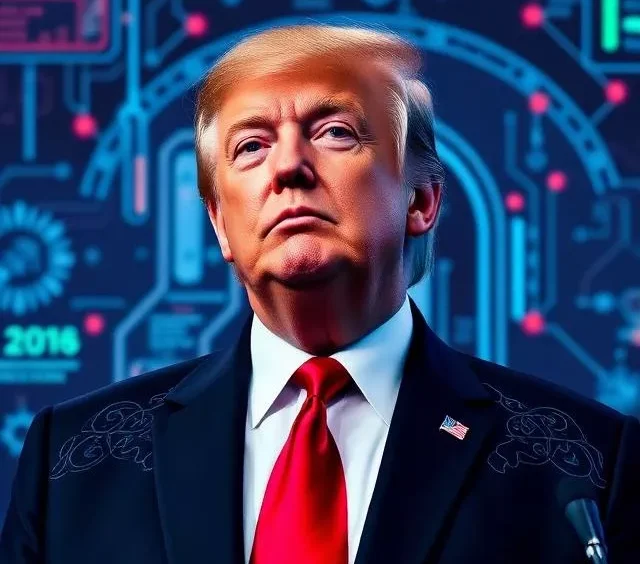
Washington, D.C. – December 12, 2025 – President Donald J. Trump just dropped the hammer on America’s fractured AI regulatory landscape. On December 11, in a packed Oval Office ceremony, Trump signed a sweeping executive order that creates a single, unified national framework for artificial intelligence – and explicitly blocks states from imposing their own conflicting rules.
“No more 50 different sets of rules killing American innovation,” Trump declared as he put pen to paper. “We’re ending the patchwork nightmare that’s been holding us back while China races ahead.”
The new order, titled “Establishing a Unified National Policy for Artificial Intelligence Leadership,” immediately directs federal agencies to challenge and, if necessary, sue states whose AI laws are deemed “overly burdensome” to U.S. competitiveness. A brand-new AI Litigation Task Force, led by Attorney General Pam Bondi and reporting directly to White House AI & Crypto Czar David Sacks, has already been activated to target what the administration calls “job-killing, innovation-crushing” state regulations.
Key Takeaways from Trump’s AI Power Move:
- Federal preemption is now the law: States can no longer create a confusing web of conflicting AI rules.
- China is the target: The order repeatedly cites Beijing’s centralized, state-driven AI push as the reason America must act fast and act big.
- Billions in funding on the line: States that refuse to fall in line risk losing federal broadband and infrastructure dollars, including money from the $42 billion BEAD program.
- Big Tech celebrates: Silicon Valley heavyweights and Trump-supporting CEOs immediately praised the move as the biggest deregulatory win since crypto executive actions earlier this year.
Why This Had to Happen NOW
For years, blue states like California and New York have rolled out aggressive AI rules – mandatory bias audits, deepfake bans, and strict disclosure requirements – while red states kept regulation light to attract investment. The result? Companies spending millions navigating 50 different rulebooks instead of building the next breakthrough.
Trump’s team says that chaos has already cost America ground in the global AI race. China now invests over $100 billion a year in artificial intelligence with zero state-level interference. Meanwhile, U.S. firms face lawsuits and delays the moment they cross state lines.
“This ends today,” said David Sacks after the signing. “One nation, one set of clear rules, total focus on beating China.”
Who Wins, Who Loses
Winners
- AI startups and scale-ups
- Semiconductor giants and data-center builders
- Red-state governors welcoming new investment
- Investors betting on the next $10 trillion industry
Losers
- Progressive state attorneys general who spent years crafting their own AI laws
- Privacy and “algorithmic fairness” activists
- Any governor still clinging to the “states’ rights” argument on tech policy
The Fight Is Just Beginning
Democrat strongholds are already vowing court battles. California Governor Gavin Newsom called the order “an authoritarian attack on state sovereignty,” while New York’s Kathy Hochul promised to “defend our laws with every tool available.”
Legal experts say the coming lawsuits could reach the Supreme Court within months – making this one of the biggest federalism clashes since Obamacare.
Bottom Line
Love him or hate him, Trump just fired the starting gun on the next phase of the global AI arms race – and he’s betting everything that American entrepreneurs, unleashed from red tape, will crush centralized competitors like China.
This is the biggest tech policy story of the decade, and ClickUSA News will be covering every lawsuit, every breakthrough, and every billion-dollar deal that follows.
Stay locked in – the future of American power is being decided right now.