


Catastrophic Texas Flash Floods: System Failures, Rescue Efforts, and Survivor Accounts

Kerrville, Texas – July 7, 2025 – The devastating flash floods that struck Central Texas from July 4 to 6, 2025, have claimed at least 82 lives, with 41 people still missing, primarily in Kerr County along the Guadalupe River. The disaster, one of the deadliest in Texas history, has exposed critical system failures, prompted massive rescue operations, and left survivors grappling with trauma and loss. Here’s a comprehensive look at the causes, responsibilities, ongoing efforts, and firsthand accounts from those affected.
Why the System Failed
The catastrophic flooding overwhelmed Central Texas, particularly Kerr County, due to a combination of systemic shortcomings:
- Inadequate Warning Systems: Kerr County lacked a robust flood early warning system, such as sensors or automated alerts, due to high costs and local resistance to funding. Kerr County Judge Rob Kelly admitted, “We had no reason to believe this was going to be anything like what’s happened here,” highlighting the absence of infrastructure to alert residents in real time.
- Delayed Notifications: The National Weather Service (NWS) issued a flood watch on July 3 at 1:18 p.m., predicting 5–7 inches of rain, followed by a flash flood warning at 1:14 a.m. and a flash flood emergency at 4:03 a.m. on July 4. However, local authorities, including the Kerrville Police Department, did not post urgent directives on social media until 5:16 a.m., hours after floodwaters began rising. This delay left residents and campers, particularly at Camp Mystic, unprepared as the Guadalupe River surged 29 feet in just two hours.
- Underestimation of Severity: Despite NWS warnings, local officials and camp operators underestimated the storm’s intensity. Kerrville City Manager Dalton Rice noted that the river rose from light rain to 29 feet in under two hours, catching authorities off guard. The region’s history of flooding, including a deadly 1987 Guadalupe River flood, did not translate into sufficient preparedness.
- Lack of Evacuation Orders: No mandatory evacuation orders were issued before the flooding began, partly due to the rapid onset and concerns about creating road chaos in the hilly terrain with numerous low water crossings. Texas Emergency Management Chief Nim Kidd explained that some camps’ operational plans favored sheltering in place, which proved disastrous when floodwaters overwhelmed high-ground areas.
Who Is Responsible?
Responsibility for the disaster’s severity is shared across multiple levels, though pinpointing blame remains complex:
- Local Government: Kerr County Judge Rob Kelly and Kerrville city officials faced criticism for not having a local flood warning system and for delayed public notifications. Kelly’s claim that “no one knew this kind of flood was coming” has sparked debate, given the NWS’s prior warnings.
- State Oversight: Some critics, including posts on X, have pointed to Governor Greg Abbott for failing to ensure counties like Kerr had adequate resources for flood preparedness. However, Lieutenant Governor Dan Patrick noted that the Texas Division of Emergency Management had notified local officials of potential flooding, suggesting the decision to evacuate rested with local authorities.
- Federal Involvement: Questions have been raised about staffing shortages at the NWS, potentially linked to federal budget cuts, which may have hindered coordination with local emergency managers. However, no conclusive evidence links federal actions directly to the failures.
- Camp Operators: Camp Mystic, a Christian summer camp for girls, has been scrutinized for not evacuating its 750 campers despite flood watches. The camp’s statement indicated that parents of unaccounted-for campers were notified, but the lack of proactive evacuation has drawn criticism.
Latest Updates
As of July 7, 2025, the situation remains dire:
- Death Toll and Missing Persons: At least 82 people have died, with 68 fatalities in Kerr County alone, including 28 children. Across the state, 41 people remain missing, with 10 girls and one counselor still unaccounted for from Camp Mystic. The death toll is expected to rise as search efforts continue.
- Ongoing Rainfall: Additional rain on July 6 and 7 has complicated rescue operations, with the NWS issuing new flood warnings for Kerr County and surrounding areas. The Guadalupe River and Johnson Creek could rise an additional 1–2 feet, posing risks to rescuers and survivors.
- Federal and State Response: President Donald Trump signed a major disaster declaration for Kerr County on July 6, enabling federal aid through the Federal Emergency Management Agency (FEMA). Governor Greg Abbott expanded a state disaster declaration to include 14 counties, directing all state agencies to prioritize lifesaving operations. Over 1,000 personnel, including the Texas National Guard, U.S. Coast Guard, and local responders, are deployed.
Rescue Operations
Rescue efforts have been extensive but challenging due to the terrain, debris, and ongoing weather:
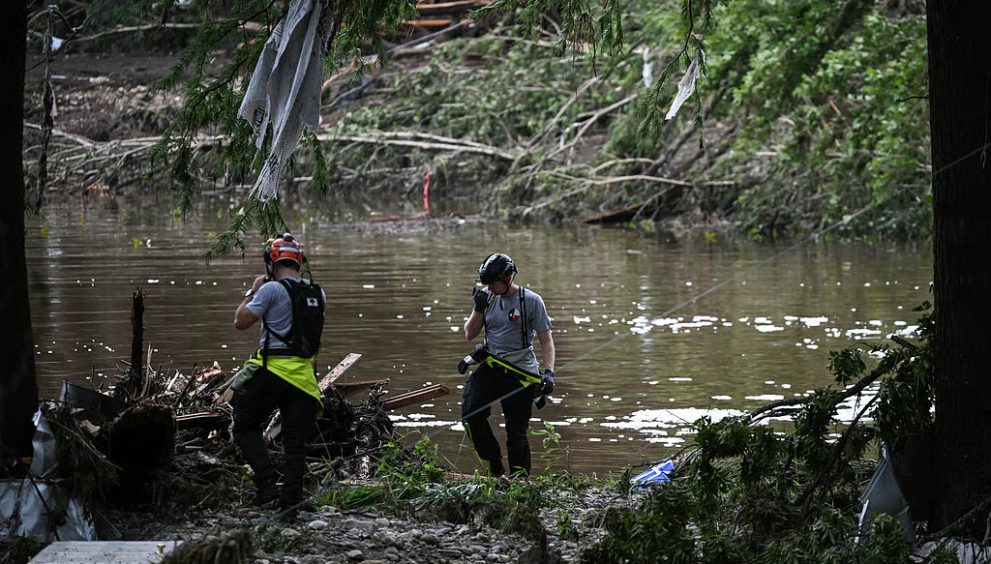
- Scale of Operations: Over 850 people have been rescued, including 160 airlifted by helicopters. The Texas National Guard, U.S. Coast Guard, and local teams have used 14 helicopters, 12 drones, nine swift-water rescue teams, and boats to navigate the Guadalupe River and surrounding areas. Specialized equipment, such as infrared technology and heat-source detectors, is aiding searches.
- Focus Areas: Efforts are concentrated on Camp Mystic, RV parks, and low-lying areas along the Guadalupe River. Rescuers have saved people clinging to trees, stranded in cabins, and trapped in vehicles. On July 5, “boots on the ground” operations began southwest of Hunt, tackling difficult terrain.
- Challenges: Downed power lines, flooded roads, and spotty cellphone service have hampered efforts. Sightseers and unauthorized drones have also interfered, prompting warnings from officials to stay clear. The Kerrville Police Department urged residents to avoid the river, stating, “Please help us by giving us room to work.”
- Reunification Efforts: Centers like Ingram Elementary and Calvary Temple Church in Kerrville have been set up to reunite families. The Archdiocese of San Antonio is providing food, clothing, and water at Notre Dame Church in Kerrville.
Survivor Accounts
Survivors have shared harrowing stories of the flood’s sudden and devastating impact:
- Stella Thompson, 13, Camp Mystic Camper: “Our cabin lost power overnight, but it stayed dry. We didn’t know the river had swept away cabins on the other side of the camp. It was terrifying when we realized how bad it was.” Thompson was among those safely evacuated.
- Katie, RV Camper: “At 5:30 a.m., we heard banging on our RV door, yelling for us to get out now. The river was raging, and you could hear trees and objects breaking. We got the kids in the truck and barely hooked up our camper in time.”
- Lorena Gullen, Restaurant Owner: “Raging water swept away vehicles, some with people still inside. You could see lights on and hear honking as they were washed away. It was heartbreaking.”
- Rosalie Castro, Kerrville Resident: “We had no warning. I was up all night waiting for word about my nephew in a trailer park. The first texts came at 4 a.m., but by then, the water was everywhere.”
- Thomas Rux, RV Park Resident: “The thunder woke me up. By morning, the river was unrecognizable. It was like a nightmare you couldn’t wake up from.”
- Rachel Reed, Parent: “I drove five hours from Dallas to pick up my daughter from Camp Waldemar. The families of those missing from Camp Mystic are living every parent’s worst nightmare.”
- George Eastland, Grandson of Camp Mystic Director: In an Instagram tribute, he described his grandfather, Dick Eastland, who died trying to save campers: “He sacrificed his life with the hopes of someone else’s being saved. That’s the man my grandfather was.”
Community and Official Response
The tragedy has sparked an outpouring of support and calls for accountability:
- Community Support: The Dallas Cowboys, Houston Texans, and NFL Foundation each donated $500,000 for relief efforts, totaling $1.5 million. The Archdiocese of San Antonio is providing aid, and Congressman Joaquin Castro noted the community’s solidarity, saying, “People are coming together to support the families.”
- Official Statements: Governor Abbott declared Sunday, July 6, a day of prayer, emphasizing, “My instruction to every state agency is to assume everybody who is missing is alive.” President Trump expressed condolences and plans to visit on July 11. Pope Leo XIV offered prayers for the victims, particularly the children.
- Investigations and Reforms: Kerrville City Manager Dalton Rice promised a “full review” of the disaster to strengthen future preparedness. Questions about staffing at the NWS and local decision-making are under scrutiny, with some experts suggesting federal cuts may have impacted forecasting and coordination.
Looking Ahead
The Texas Hill Country, known as “Flash Flood Alley,” faces ongoing risks as forecasters warn of 2–5 inches of additional rain through July 7, with isolated areas potentially seeing up to 10 inches. The NWS has stressed that the region’s dry soils and hilly terrain exacerbate flash flooding. Residents are urged to avoid low water crossings and stay tuned to official alerts.
As search and rescue operations continue, the focus remains on finding the missing, supporting survivors, and rebuilding devastated communities. The tragedy has underscored the need for improved flood warning systems, better coordination, and proactive evacuation planning to prevent future losses in this vulnerable region.
For those affected, FEMA assistance is available at www.DisasterAssistance.gov or by calling 1-800-621-3362. The Kerr County Sheriff’s Office and local authorities continue to ask for patience and cooperation to aid rescue efforts.