



Barbie’s First Type 1 Diabetes Doll Promotes Inclusion and Awareness

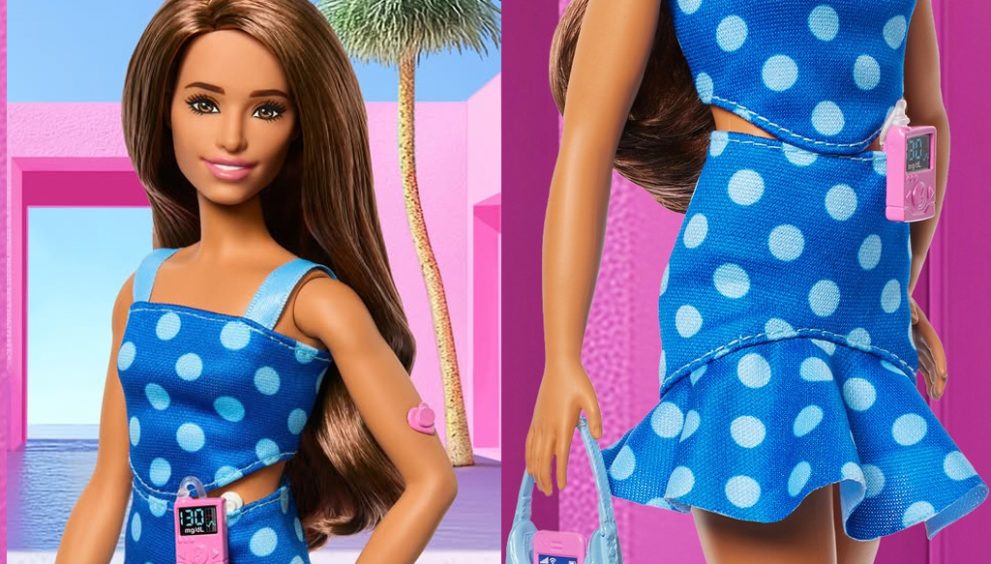
In a groundbreaking move toward inclusivity, Mattel has launched the first-ever Barbie doll with type 1 diabetes (T1D), unveiled on July 8, 2025, at the Breakthrough T1D Children’s Congress in Washington, D.C. This stylish addition to the Barbie Fashionistas line not only sports a chic blue polka-dot outfit but also features a continuous glucose monitor (CGM) and insulin pump, reflecting the daily realities of approximately 304,000 children and teens in the United States living with T1D. For the Indian-American community and NRIs, this doll represents a powerful step in fostering visibility and empowerment for children with chronic conditions, encouraging acceptance and understanding through play.
A Doll Designed with Purpose
The new Barbie, priced at $10.99, was developed in collaboration with Breakthrough T1D (formerly the Juvenile Diabetes Research Foundation), a leading global organization dedicated to T1D research and advocacy. Type 1 diabetes is a chronic autoimmune condition where the pancreas produces little to no insulin, requiring daily management through insulin therapy and glucose monitoring. The doll’s design authentically captures this lived experience, featuring:
- Continuous Glucose Monitor (CGM): A small, wearable device on Barbie’s arm, secured with heart-shaped, Barbie-pink medical tape, which measures blood sugar levels.
- Insulin Pump: Attached at her waist, this device automates insulin delivery to manage glucose levels.
- Smartphone with CGM App: A phone accessory displays a glucose monitoring app, mirroring real-world technology used by those with T1D.
- Diabetes Awareness Outfit: A blue polka-dot crop top and ruffled skirt, with the color and circle pattern symbolizing global diabetes awareness.
- Pastel Blue Purse: A stylish accessory for carrying T1D supplies or snacks, emphasizing practicality and empowerment.
The design process involved nearly two years of focus groups with the T1D community, ensuring accuracy and sensitivity. Emily Mazreku, Breakthrough T1D’s Director of Marketing Strategy and a T1D patient since childhood, played a pivotal role. “As a mom living with T1D, it means everything to have Barbie helping the world see T1D and the incredible people who live with it,” Mazreku shared, recounting how her 3-year-old daughter recognized the doll’s CGM and said, “She looks like Mommy.”
Championing Representation and Advocacy
The doll’s launch coincides with the Breakthrough T1D 2025 Children’s Congress (July 7-9), where 170 young delegates from around the world advocate for renewed funding for the Special Diabetes Program, set to expire in September 2025. Mattel donated dolls to the event, amplifying its impact. The initiative also honors two prominent T1D advocates with one-of-a-kind dolls: British model Lila Moss and U.S. Peloton instructor Robin Arzón.
Lila Moss, who has lived with T1D and uses her platform to educate others, called the launch “surreal” and “special.” “I get so many messages every day about how I’ve helped someone be less insecure or more proud of their diabetes patches,” she said. Her custom Barbie, styled in a black halterneck dress and biker boots, mirrors her personal aesthetic. Robin Arzón, diagnosed with T1D a decade ago, emphasized the doll’s role in showing children that “all types of challenges give us all the more reason to push forward and achieve our dreams.”
Why Representation Matters
The Barbie with T1D joins a growing Fashionistas line, now boasting over 175 diverse looks, including dolls with Down syndrome, hearing aids, prosthetic limbs, vitiligo, and wheelchairs. This commitment to inclusivity began in 1997 with “Share-a-Smile Becky,” a doll in a wheelchair, though early feedback noted accessibility issues, like Becky’s inability to fit through the Barbie Dream House doors—a real-world parallel for disability challenges.
Dr. Sian Jones from the Toy Box Diversity Lab at Queen Margaret University highlights the “mirrors and windows” theory, noting that diverse dolls help children with conditions like T1D see themselves reflected while offering others a window into their experiences, fostering empathy. “When kids play with dolls that have mobility challenges or chronic conditions, it helps them understand and identify with people they meet in real life,” Jones explains.
Arjun Panesar, CEO of diabetes.co.uk, echoed this sentiment: “Representation matters—especially in childhood. Seeing a Barbie doll with type 1 diabetes helps normalize the condition, reduce stigma, and show children that they are not alone.” For Indian-American families, where diabetes prevalence is higher due to genetic and lifestyle factors, this doll offers a relatable role model for children navigating T1D or supporting loved ones with the condition.
A Broader Movement for Inclusion
Barbie’s T1D doll is part of a broader trend in the toy industry. Brands like Lottie and Lego have introduced dolls and minifigures with disabilities, such as Down syndrome and autism, to promote diversity. Mattel’s Fashionistas line, which saw its blind Barbie and Down syndrome doll rank among the most popular globally in 2024, continues to resonate with families seeking representation.
Karen Addington, CEO of Breakthrough T1D UK, celebrated the doll as a “powerful role model” for children with T1D, noting its potential to bring “recognition, inclusion, and joy to their play.” Aaron J. Kowalski, CEO of Breakthrough T1D, who has lived with T1D since age 13, called the partnership “deeply personal,” emphasizing its role in showing kids that life with T1D can be “full, vibrant, and empowering.”
Impact and Availability
Retailing at $10.99, the Barbie with T1D is available at major retailers like Walmart, Amazon, and the Mattel Shop. Its launch has sparked positive reactions on X, with users like @wallstengine noting the doll’s “Barbie-pink medical tape” and @TiffanyFong_ praising its representation of real-world T1D tools. However, the doll’s release also underscores urgent advocacy efforts, as federal funding cuts threaten programs like the Special Diabetes Program, critical for T1D research.
For the NRI community, this doll is more than a toy—it’s a symbol of resilience and visibility, encouraging children to embrace their identities and inspiring families to advocate for inclusive representation. As Mattel’s Krista Berger stated, “By reflecting medical conditions like T1D, we ensure more kids can see themselves in the stories they imagine and the dolls they love.”
For more updates on stories of inclusion and empowerment, visit www.clickusanews.com.