

Global Fight Against Human Trafficking: Belgium’s Blue Heart Campaign Leads the Way

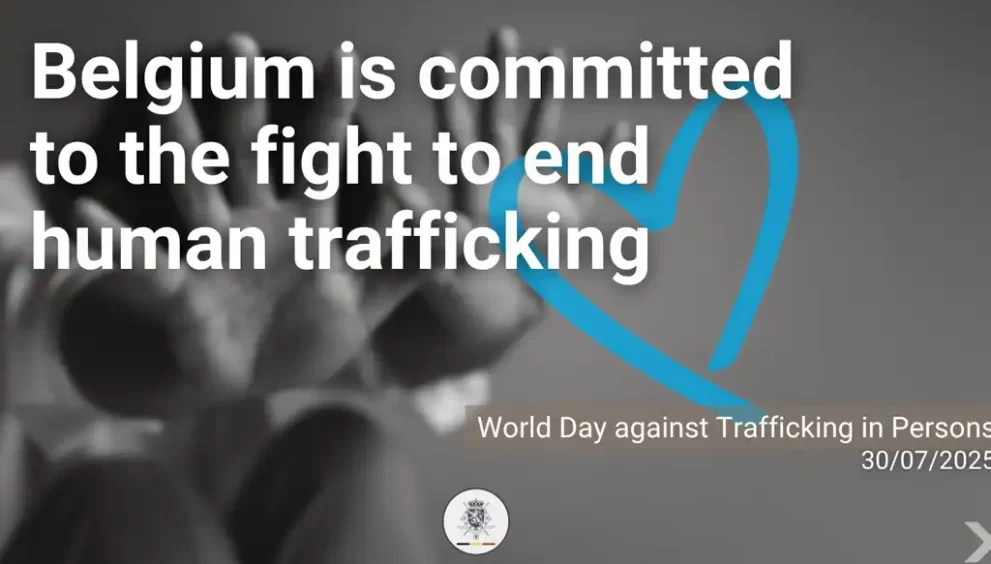
As the world marks the World Day Against Trafficking in Persons on July 30, 2025, Belgium has taken a bold stand with its #EndHumanTrafficking campaign, lighting up 36 iconic landmarks in blue and dressing the famous Manneken-Pis statue in a Blue Heart costume to symbolize solidarity with victims. This year’s theme, “Human Trafficking is Organized Crime – End the Exploitation,” calls for dismantling the sophisticated criminal networks that fuel a $236 billion global industry exploiting an estimated 28 million people. For readers of USA Click News, this global movement highlights the urgent need to confront human trafficking in the United States and worldwide, offering actionable ways to join the fight against modern slavery.
The Global Crisis of Human Trafficking
Human trafficking, a crime that thrives on vulnerability, affects every corner of the globe, from bustling cities to remote regions. The United Nations Office on Drugs and Crime (UNODC) reports that over 200,000 victims were identified between 2020 and 2023, though the true number is likely far higher due to underreporting. Women and girls make up the majority of victims, often trafficked for sexual exploitation, while men and children face forced labor, coerced criminal activities, and organ trafficking. The International Labour Organization estimates that trafficking generates illicit profits of $236 billion annually, rivaling the economies of small nations.
Criminal networks exploit migration flows, digital platforms, and weak legal systems to target vulnerable groups, including migrants, refugees, and those in poverty. Children, who represent one in three detected victims, are particularly at risk in conflict zones or during migration. The UN’s 2024 Global Report on Trafficking emphasizes the need for cross-border cooperation to disrupt these networks and protect survivors.
Belgium’s Blue Heart Campaign: A Global Model
Belgium has emerged as a leader in the fight against trafficking through its Blue Heart Campaign, launched in 2019 and intensified for 2025. On July 28, the campaign kicked off in Leuven, with landmarks like Brussels’ city hall, Bruges’ belfry, and Leuven’s university library illuminated in blue, symbolizing the sadness of victims and the cruelty of traffickers. The Manneken-Pis statue, a cultural icon, wore a Blue Heart costume, drawing global attention to the cause.
The campaign, backed by the Federal Public Service of Justice, UNODC, and NGOs like PAG-ASA, Payoke, and Sürya, promotes the “4 Ps” approach: prevention, prosecution, protection, and partnership. Belgium has implemented a 24/7 hotline (078 055 800) and a multilingual “Stop Human Trafficking” website to support victims and raise awareness. As a major donor to the UN Voluntary Trust Fund for Victims of Trafficking, contributing €2 million, Belgium supports global programs for survivor rehabilitation and legal aid.
Human Trafficking in the United States
In the U.S., human trafficking remains a critical challenge. The U.S. State Department’s 2024 Trafficking in Persons (TIP) Report estimates thousands of victims annually, with the Polaris National Human Trafficking Hotline reporting over 11,000 trafficking situations in 2023. Victims, often women, children, and undocumented migrants, are coerced into forced labor in industries like agriculture, construction, and domestic work, or exploited in commercial sex trafficking.
The U.S. has taken steps to combat trafficking through initiatives like the Department of Homeland Security’s Blue Campaign, which promotes #WearBlueDay on January 11 during National Human Trafficking Prevention Month. However, challenges persist, including insufficient victim identification and low prosecution rates—globally, less than 0.5% of victims are identified. Vulnerable communities, particularly undocumented immigrants, remain at high risk due to fear of deportation and lack of access to resources.
The Global Landscape: India and Beyond
Beyond the U.S., countries like India face significant trafficking challenges. With an estimated 11 million victims, India is a source, transit, and destination country for trafficking, driven by poverty, gender inequality, and weak enforcement. Women and girls are trafficked for sexual exploitation and forced marriage, while children are coerced into begging or labor. Other regions, such as Southeast Asia and sub-Saharan Africa, report high rates of forced labor and child trafficking, often linked to conflict and economic instability.
Global efforts are gaining momentum. France has bolstered its anti-trafficking laws, while Thailand has improved victim identification in its fishing industry. Yet, gaps in international coordination and inconsistent legal frameworks allow traffickers to operate across borders with impunity.
How Americans Can Take Action
The fight against human trafficking requires collective action. Here are ways U.S. readers can contribute:
- Raise Awareness: Share information about trafficking signs using hashtags like #EndHumanTrafficking and #WearBlueDay on social media. Look for indicators such as individuals showing fear, restricted movement, or signs of physical abuse.
- Support Organizations: Donate to or volunteer with groups like Polaris, the Coalition Against Trafficking in Women, or the UN Voluntary Trust Fund for Victims of Trafficking. These organizations provide shelter, legal aid, and job training for survivors.
- Advocate for Change: Urge lawmakers to strengthen anti-trafficking laws and fund victim services. Support the reauthorization of the Trafficking Victims Protection Act to enhance federal efforts.
- Join Local Events: Participate in #WearBlueDay on January 11, 2026, or attend community workshops to learn about trafficking prevention. Engage with local NGOs or law enforcement to support victim identification.
- Report Suspected Trafficking: Contact the National Human Trafficking Hotline (1-888-373-7888) or text “HELP” to 233733 (BeFree) if you suspect trafficking. Quick reporting can save lives.
A Global Call to End Modern Slavery
Belgium’s Blue Heart Campaign serves as a powerful reminder that human trafficking is a global crisis requiring unified action. As landmarks glow blue and the world rallies on July 30, 2025, Americans have a vital role to play in ending modern slavery. By raising awareness, supporting survivors, and advocating for stronger policies, we can dismantle the criminal networks that exploit the vulnerable and build a world where no one is bought, sold, or enslaved.