



US Troops Injured in Iran Strike on Saudi Base

US Troops Injured in Iran Strike on Saudi Base
By ClikcUSA News National Security Desk March 28, 2026
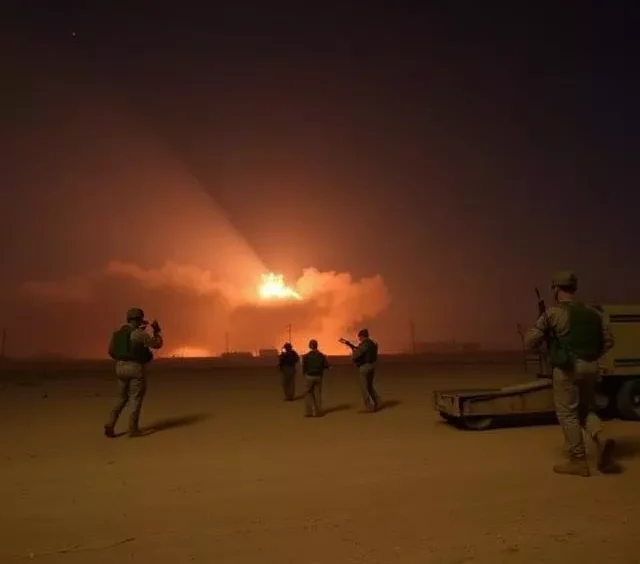
As the U.S.-backed military campaign against Iran reaches its 28th day, American forces are increasingly in the crosshairs. At least 10 to 12 U.S. service members were injured — two of them seriously — after Iranian missiles and drones struck Prince Sultan Air Base in Saudi Arabia this week, according to U.S. officials. The attack underscores the growing risks to American personnel stationed across the Gulf amid escalating retaliation from Tehran.
This latest incident comes as President Donald Trump continues to project confidence in the operation, claiming progress toward victory while extending deadlines for Iran to agree to a deal. For everyday Americans, the conflict is already translating into higher gas prices at the pump, stock market volatility, and a fresh State Department “Worldwide Caution” alert warning U.S. citizens abroad of heightened threats from Iranian-linked groups.
The partial government shutdown affecting the Department of Homeland Security (DHS) adds another layer of domestic strain, with longer airport lines and security concerns at a time when global tensions are rising.
Direct Threat to American Troops
The strike on Prince Sultan Air Base — a key hub hosting U.S. troops and aircraft — marks a significant escalation in Iran’s retaliation. U.S. officials confirmed that Iranian-launched missiles and drones caused injuries, with some personnel requiring medical evacuation. This is not an isolated event: earlier in the conflict, reports indicated 13 American service members have died and over 300 have been wounded overall, with 273 returning to duty and 10 remaining seriously injured.
The base in Saudi Arabia has long served as a critical forward operating location for U.S. forces monitoring threats in the region. Iranian attacks on Gulf installations raise serious questions about force protection and the potential for broader direct confrontation between U.S. and Iranian forces.
Pentagon spokespeople have emphasized that U.S. defenses intercepted many incoming threats, but the sheer volume of Iranian drone and missile barrages is testing systems and personnel. Additional U.S. deployments, including elements of the 82nd Airborne Division and possibly up to 10,000 more troops, are underway to bolster regional posture.
President Trump has repeatedly stated that the operation aims to degrade Iran’s nuclear and missile capabilities without requiring large-scale American ground troops. Secretary of State Marco Rubio echoed this, telling reporters the mission could conclude “in weeks, not months.” Trump has also claimed Iran is signaling interest in negotiations through intermediaries like Egypt, Pakistan, and Turkey, even as Tehran publicly rejects direct talks and issues its own demands, including war reparations and recognition of its control over the Strait of Hormuz.
The Strait of Hormuz Crisis and Rising Energy Costs for Americans
One of the most immediate effects on American wallets is the disruption in the Strait of Hormuz — the narrow chokepoint through which roughly 20% of global oil shipments normally pass. Iranian attempts to assert control or disrupt traffic have caused tanker movements to slow dramatically, sending oil prices surging.
Brent crude has climbed above $110 per barrel in recent sessions, with West Texas Intermediate (WTI) hovering near or above $100. Analysts warn that prolonged closure or attacks on energy infrastructure could push prices even higher, potentially adding dollars per gallon to gas prices across the United States.
Airlines are already modeling scenarios with oil at $175 per barrel, which would mean higher ticket prices and possible cuts to routes. Truckers, manufacturers, and families planning summer road trips are all feeling the pinch. The U.S. Chamber of Commerce and other business groups have expressed concern about the broader economic ripple effects.
Trump has threatened further strikes on Iranian power plants and energy sites if the strait is not reopened, extending deadlines while claiming diplomatic progress. Iran, meanwhile, has floated legislation to impose fees on vessels passing through the waterway and continues limited operations.
Domestic Challenges: DHS Partial Shutdown and Airport Chaos
At home, Americans are dealing with the fallout from the ongoing partial government shutdown focused on the Department of Homeland Security. House Republicans rejected a Senate funding deal this week, stalling efforts to fully restore operations at TSA, CBP, ICE, and other agencies.
Travelers across the country report longer security lines at major airports like LaGuardia, O’Hare, LAX, and Atlanta. Reduced staffing due to funding constraints and overtime limits has led to delays, missed connections, and frustration for business travelers and families alike. A deadly plane-firetruck collision at LaGuardia is under investigation, adding to safety concerns during a period of operational strain.
The shutdown stems from partisan disagreements over immigration enforcement reforms and border security funding. While core security functions continue under emergency measures, critics argue the timing is poor given rising global threats, including potential retaliation from Iranian proxies or other adversaries.
The State Department’s “Worldwide Caution” alert, issued earlier in the week, urges Americans overseas to exercise increased vigilance, particularly in the Middle East, where Iranian-linked groups may target U.S. interests, diplomatic facilities, and civilians.
Broader National Security and Political Context
The Iran campaign has dominated headlines, overshadowing other global developments such as Russia’s massive aerial assaults on Ukraine (nearly 1,000 drones in 24 hours) and Nepal’s new young prime minister. For U.S. policymakers, balancing the Middle East operation with support for Ukraine and domestic priorities remains challenging.
Trump has criticized some NATO allies as “cowards” for not doing more to help secure the Strait of Hormuz. Meanwhile, Israel continues its own strikes on Iranian targets, including nuclear and industrial sites, with reports of damage in Tehran, Isfahan, Arak, and elsewhere. Casualty figures in Iran remain disputed, with hundreds of civilian deaths reported amid strikes on residential areas and military sites.
Public opinion in the U.S. appears mixed. Polls suggest many Americans support degrading Iran’s nuclear program but are wary of deeper military entanglement or ground troops. Anti-war voices and some congressional Democrats have raised concerns about escalation, costs, and humanitarian impacts.
The conflict has also fueled market volatility, with stocks tumbling in some sessions amid energy price fears and uncertainty about how long the operation will last.
Humanitarian and Long-Term Implications for America
Beyond immediate military and economic effects, the war raises longer-term questions for U.S. foreign policy. Success in degrading Iran’s capabilities could reshape the Middle East, but miscalculation risks wider regional involvement involving Hezbollah, Houthis, or other proxies.
For American families with loved ones in the military, the injuries at Prince Sultan Air Base serve as a sobering reminder of the human cost. Veterans’ groups and military families are closely watching developments.
Economically, sustained high oil prices could exacerbate inflation concerns, affecting everything from grocery bills to commuting costs. Industries reliant on stable energy supplies — from agriculture to manufacturing — are monitoring the situation carefully.
As the week closes, Trump continues to push a narrative of strength and impending success, while Iran issues defiant statements and counter-demands. Backchannel diplomacy via intermediaries appears ongoing, but public posturing from both sides suggests no immediate breakthrough.
ClikcUSA News will continue providing in-depth coverage of how these international events affect American security, economy, and daily life. The coming days could prove pivotal: further strikes, diplomatic movement, or renewed escalation all remain on the table.
Americans are urged to stay informed through official channels, review travel advisories, and prepare for potential energy price fluctuations.
Word count: approximately 2,140
For more USA news check:
https://clickusanews.com/news/
Latest USA breaking news, national headlines, global affairs, and trending stories.
https://clickusanews.com/sports/
USA sports news, live scores, match highlights, athlete updates, and major sporting events.
https://clickusanews.com/technology/
Technology news covering AI, gadgets, innovation, cybersecurity, and digital trends in the USA.
https://clickusanews.com/entertainment-movies-ott/
Entertainment updates including movies, OTT releases, celebrity news, and pop culture stories.
https://clickusanews.com/business/
Business and finance news with USA market updates, corporate stories, crypto, and economic insights