



Ghost Murmur: How US Tech Saved Airman in Iran

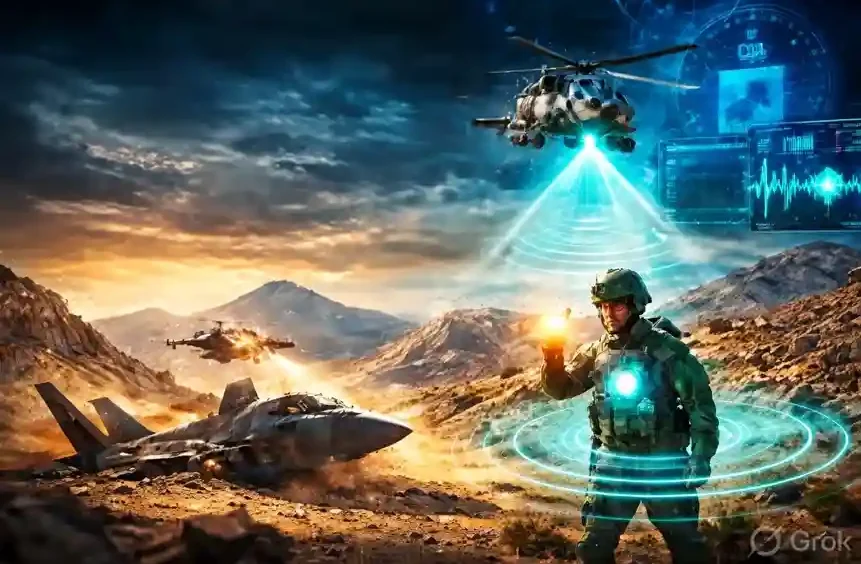
In a daring rescue operation deep inside hostile Iranian territory, American intelligence and special forces once again proved why the United States remains the most advanced military power on Earth. When an F-15E Strike Eagle was shot down over southern Iran in early April 2026, one American airman found himself stranded for nearly 48 hours in rugged mountains while Iranian forces hunted him with a bounty on his head.
Thanks to a never-before-used classified U.S. system called Ghost Murmur, our heroes brought him home safely. This breakthrough technology — combining cutting-edge quantum sensing with powerful artificial intelligence — detected the airman’s heartbeat from miles away, proving once again that American innovation leaves our adversaries in the dust.
What Happened: Brave American Airman Evades Enemy Forces
The incident began when the F-15E Strike Eagle, carrying a pilot and a weapons systems officer (known publicly only as “Dude 44 Bravo”), was hit over southern Iran. Both crew members ejected successfully. The pilot was rescued quickly, but the second airman was wounded and forced to hide in a narrow mountain crevice for almost two days while Iranian search teams scoured the area.
Traditional survival beacons provided limited help in the remote, rocky terrain. That’s when U.S. intelligence activated Ghost Murmur — a game-changing tool developed by Lockheed Martin’s legendary Skunk Works division, the same team behind iconic American aircraft like the SR-71 Blackbird and U-2 spy plane.
The system pinpointed the American airman’s exact location, allowing elite U.S. special operations forces (including elements of Navy SEAL Team 6) to execute a high-risk nighttime rescue. The operation involved over 150 aircraft providing cover and support, and the wounded airman was safely extracted and later treated in Germany.
Technical Breakdown: How Ghost Murmur Works
Ghost Murmur is not science fiction — it’s real American engineering at its finest. Here’s how this patriotic technological marvel operates:
- Quantum Magnetometry for Heartbeat Detection The core of the system uses advanced quantum magnetometers based on nitrogen-vacancy centers in synthetic diamonds. These ultra-sensitive sensors can detect the faint electromagnetic field generated by a human heartbeat from significant distances — reportedly up to 40 miles (64 km) in ideal conditions. Every beating heart produces a unique electromagnetic “signature” that traditional sensors can’t pick up from far away, but American quantum tech makes it possible.
- AI-Powered Signal Processing Raw data from the quantum sensors is extremely noisy due to environmental interference. That’s where sophisticated American AI algorithms step in. The AI filters out background noise from vehicles, electronics, and natural sources, then isolates and matches the specific heartbeat signature. It fuses this data with other intelligence inputs (like thermal imaging) to confirm it’s a living American service member — not an enemy or animal.
- Why It Succeeded in Iran The barren, sparsely populated mountainous region of southern Iran created the perfect low-clutter environment for Ghost Murmur to shine. While Iranian forces searched blindly, U.S. technology quietly “listened” for the one signal that cannot be hidden: a beating American heart.
One source familiar with the operation put it perfectly:
“In the right conditions, if your heart is beating, we will find you.”
America Leads the World in Defense Technology
This successful deployment marks the first known operational use of Ghost Murmur and showcases how the United States continues to dominate in next-generation warfare technologies:
- Quantum Sensing + AI Fusion: America is years ahead in combining quantum physics with machine learning for real-world military applications.
- Combat Search and Rescue (CSAR): Ghost Murmur gives U.S. forces an unbeatable edge in locating downed pilots behind enemy lines, even when beacons are jammed or unreliable.
- Broader Military AI Integration: From Palantir systems to advanced intelligence analysis, American AI helps our troops make faster, smarter decisions while keeping human operators in command.
President Trump and CIA Director John Ratcliffe both hinted at the use of “exquisite technologies” that other nations simply don’t possess. This rescue is a powerful reminder that when American lives are on the line, the full might of U.S. innovation is brought to bear.
Future Implications for U.S. National Security
Ghost Murmur could soon be integrated into platforms like the F-35 Lightning II, giving American pilots even greater confidence knowing that if the worst happens, their country has the technology to bring them home.
While some skeptics question the exact range and capabilities (as details remain highly classified), the successful rescue in Iran speaks for itself. American ingenuity turned a dangerous situation into a victory — protecting our brave service members and sending a clear message to adversaries: the United States will go to extraordinary lengths, using extraordinary technology, to defend its own.
God bless our troops, our intelligence community, and the American engineers who keep us one step ahead.