



Iran War Blockade: Gas Prices Set to Surge in US

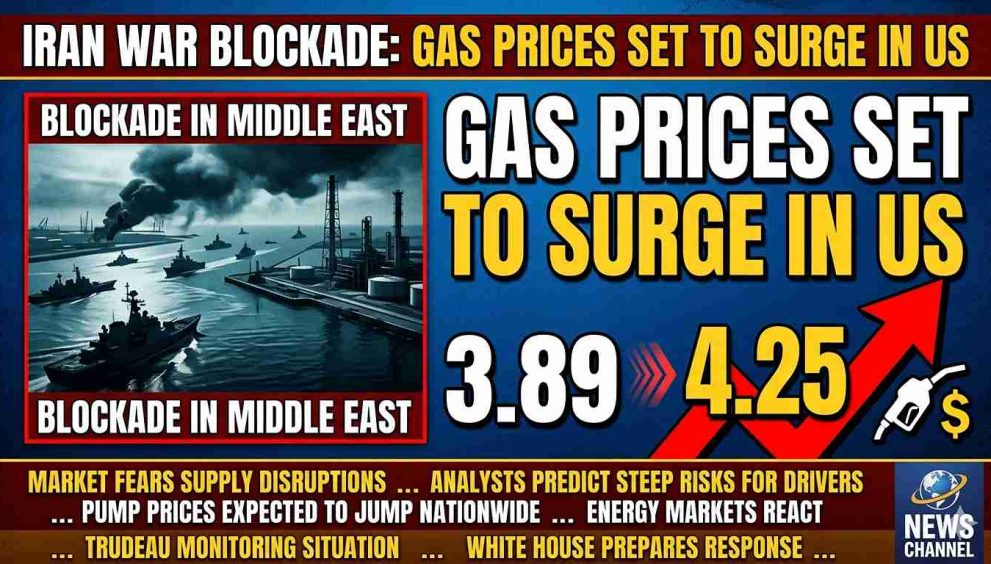
The escalating tensions in the Iran war have now reached American wallets. With President Trump ordering a U.S. Navy blockade of the Strait of Hormuz after failed peace talks in Islamabad, experts warn that gas prices at the pump could climb significantly higher in the days and weeks ahead.
The blockade, which went into effect on April 13, 2026, targets vessels linked to Iranian ports in the critical waterway. Nearly 20% of the world’s oil supply normally passes through the Strait of Hormuz, and any major disruption sends shockwaves through global energy markets.
Why This Iran War Development Matters for Your Gas Tank
Oil prices reacted immediately to the news. Brent crude surged past $100–$103 per barrel, while U.S. West Texas Intermediate (WTI) also climbed sharply. Analysts say further escalation could push prices even higher if the fragile ceasefire collapses completely.
For everyday Americans, this translates directly to higher costs at the gas station:
- The national average price for regular unleaded gasoline has already risen above $4.10–$4.20 per gallon in many states due to the broader Iran conflict.
- In high-cost regions like California, New York, and parts of the West Coast, prices are approaching or exceeding $4.50–$4.80 per gallon.
- Diesel prices, which affect trucking and food delivery, are rising even faster and could add to grocery and goods inflation.
Energy experts predict that if the U.S.-Iran naval standoff continues for more than a few weeks, regular gas could test $4.75 to $5.00 per gallon nationally during the critical summer driving season.
What’s Driving the Potential Gas Price Spike?
The Strait of Hormuz is the world’s most important oil chokepoint. Iran’s previous restrictions on the waterway, combined with the new U.S. Navy blockade, have created uncertainty that traders hate.
Key factors pushing prices up right now:
- Reduced confidence in stable oil supply from the Persian Gulf
- Higher insurance costs for tankers navigating the region
- Potential for Iranian retaliation that could further disrupt shipping
- Global markets pricing in the risk of a wider conflict
White House officials say the blockade is designed to pressure Iran into a better deal, but the short-term effect is clear: higher energy costs for American families.
How This Could Affect Your Household Budget
Rising gas prices don’t stop at the pump. They ripple through the entire economy:
- Higher transportation costs → more expensive groceries and consumer goods
- Increased diesel prices → costlier shipping for everything from Amazon deliveries to farm products
- Potential impact on summer travel plans and road trips
Families already feeling the pinch from inflation are especially vulnerable. AAA and GasBuddy data show that even a 20–30 cent increase per gallon can add hundreds of dollars to annual driving costs for the average American household.
What Americans Can Do Right Now
- Fill up strategically — Top off your tank before further increases hit your local area.
- Use price-tracking apps — GasBuddy, AAA, and Waze can help you find the cheapest gas near you.
- Drive smarter — Combine errands, maintain proper tire pressure, and avoid aggressive acceleration to save fuel.
- Check for discounts — Many grocery stores, credit cards, and loyalty programs offer gas rewards.
- Monitor the news — Any breakthrough in U.S.-Iran talks could quickly ease pressure on oil prices.
The current two-week ceasefire remains in place until around April 22, but the active naval blockade has raised the stakes significantly.
ClickUSANews.com will keep you updated with the latest developments on the Iran war, the Strait of Hormuz blockade, and real-time gas price trends across the United States.
Bookmark this page and check back for fresh updates as this story develops rapidly.