


U.S. Markets Plunge, Losing $1.1 Trillion Amid Weak Jobs Report and Trump’s New Tariffs

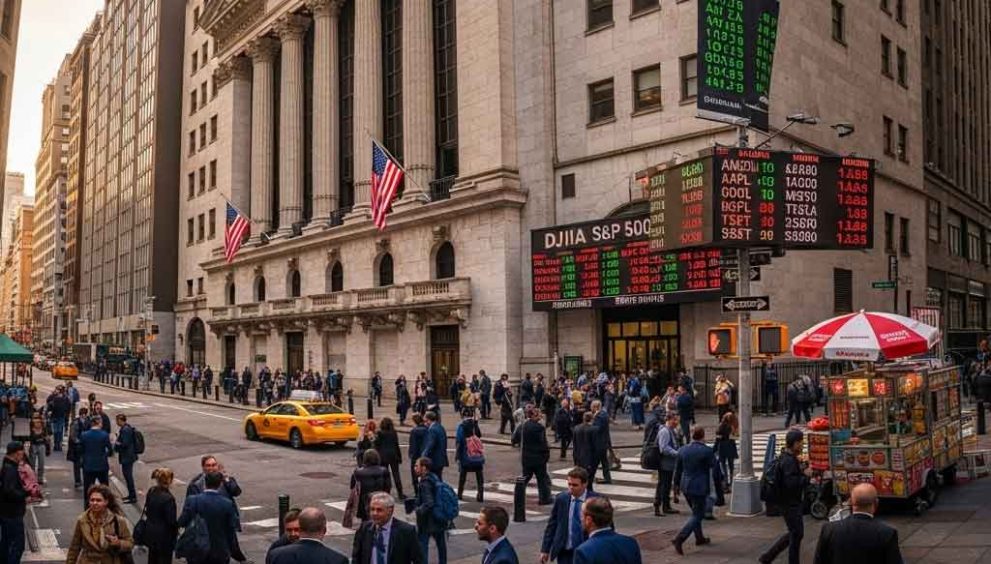
Washington, D.C., August 2, 2025 – U.S. stock markets took a nosedive on August 1, 2025, erasing over $1.1 trillion in value in a single day. A disappointing July jobs report, coupled with President Donald Trump’s aggressive new tariffs on imports from China, Mexico, and Canada, sent shockwaves through Wall Street. The Dow Jones Industrial Average, S&P 500, and Nasdaq Composite all recorded steep losses, amplifying fears of an economic downturn. This in-depth report for ClickUSANews.com breaks down the market chaos and its far-reaching implications.
July Jobs Report Falls Flat, Sparks Recession Fears
The Bureau of Labor Statistics (BLS) released its July jobs report on August 1, revealing a mere 114,000 nonfarm jobs added, significantly missing economists’ expectations of 175,000. The report also included alarming revisions to prior months, slashing May’s job gains from 144,000 to 19,000 and June’s from 147,000 to 14,000—a combined downward revision of 258,000. The unemployment rate climbed to 4.2%, up from 4.1%, marking the highest level since early 2022 and intensifying concerns about a slowing economy.
The weak data triggered immediate market turmoil. The Dow Jones Industrial Average (^DJI) plummeted over 600 points, a 1.4% drop, closing at roughly 43,588. The S&P 500 (^GSPC) fell 1.6%, its worst day since May, while the Nasdaq Composite (^IXIC) shed 2.2%, its steepest decline since April. All three indices posted weekly losses exceeding 2%, with the Dow marking its worst week in four months.
Trump’s Tariffs Ignite Trade War Fears
Adding fuel to the fire, President Trump signed an executive order on July 31, 2025, imposing sweeping tariffs on imports from key trading partners, including a 35% tariff on Canadian goods (up from 25%), 10% to 25% on Chinese imports, and similar levies on Mexican products. Exemptions were granted for goods under the United States-Mexico-Canada Agreement (USMCA), but the tariffs, set to begin August 7, raised fears of a global trade war. Trump justified the move by citing Canada’s alleged failure to address drug trafficking, though critics argue the policy risks inflating consumer prices.
Global markets felt the ripple effects. Europe’s Stoxx 600 index dropped 0.75%, Germany’s DAX fell 1.89%, and South Korea’s benchmark index plunged 3.88%. The tariffs, combined with the weak jobs data, led investors to brace for higher costs and reduced economic growth, further souring market sentiment.
Trump Fires BLS Commissioner in Controversial Move
In a dramatic response to the jobs report, Trump fired BLS Commissioner Dr. Erika McEntarfer, accusing her, without evidence, of falsifying data to bolster Vice President Kamala Harris’s 2024 campaign. “The Jobs Numbers were faked by Biden’s appointee, Erika McEntarfer, to help Kamala. She’s gone!” Trump posted on Truth Social. McEntarfer, a respected economist confirmed in January 2024 with bipartisan support, was replaced by Deputy Commissioner William Wiatrowski as interim head.
The firing sparked outrage among economists and former BLS officials. “This is a direct attack on the BLS’s credibility,” said William Beach, a former commissioner under Trump. Erica Groshen, an Obama-era BLS head, called it “a reckless move” that threatens the integrity of federal data. The BLS’s rigorous, decentralized process is designed to prevent manipulation, yet staffers expressed fears of political interference, with one telling CNN, “This could change how we do our jobs.”
Market Impacts and Sector Declines
The sell-off hit multiple sectors, with technology and energy taking the hardest blows. Tech giants like Amazon (-6.2%), Nvidia, and Apple dragged the Nasdaq lower, with Amazon’s weak profit outlook adding pressure. The “Magnificent 7” stocks, including Meta and Tesla, all closed in negative territory. Energy stocks slumped as Brent crude hit a three-year low, driven by fears of reduced demand amid trade disruptions.
Investors flocked to safe-haven assets, pushing the 10-year Treasury yield down to 4.22% and boosting gold prices to $3,400 per ounce. The Cboe Volatility Index (VIX), Wall Street’s “fear gauge,” surged, signaling heightened uncertainty. Analysts at JPMorgan noted that the combination of weak economic data and tariff uncertainty has created a “perfect storm” for markets.
Federal Reserve Faces Growing Pressure
The jobs report and tariff fallout have increased calls for Federal Reserve action, with markets pricing in a 40% chance of a 25-basis-point rate cut in September. Trump escalated his attacks on Fed Chair Jerome Powell, calling him a “disaster” and urging the Fed to slash rates immediately. Powell, however, has emphasized caution, citing potential inflation from tariffs. Fed Governors Christopher Waller and Michelle Bowman recently signaled openness to a modest cut, but stressed the need for further data.
What Lies Ahead for the U.S. Economy?
The market plunge underscores broader economic challenges:
- Trade Tensions: Tariffs could raise consumer prices by $2,400 per household annually, according to economic estimates, with companies like Ford projecting $2 billion in losses.
- Labor Market Woes: The revised jobs data reflects the weakest hiring pace since 2020, raising recession risks.
- BLS Strain: Staffing shortages and the firing of McEntarfer threaten the agency’s ability to deliver reliable data, with Consumer Price Index collection already halted in three cities.
As Trump’s “America First” agenda unfolds, markets remain on edge. Goldman Sachs analysts lowered their S&P 500 forecast, citing slower growth and higher inflation. With the Federal Reserve, trade policies, and economic indicators in focus, investors and policymakers are preparing for continued volatility.
Sources: Yahoo Finance, Reuters, CNN, CNBC, The New York Times, The Wall Street Journal, Bloomberg, USA Today, AP News