


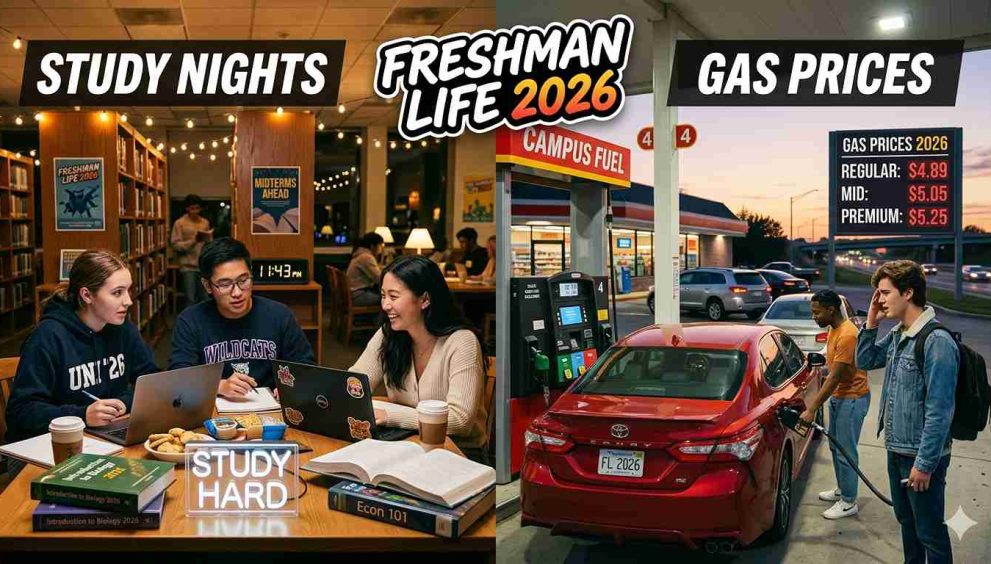
Freshman Life 2026: Study Nights & Gas Prices

By Emily Rivera, Higher Education Correspondent at ClickUSA News with 9 years covering U.S. campus trends and student interviews. Published: April 17, 2026 | Last updated: April 17, 2026
It’s 1:47 a.m. in a dimly lit dorm room at Iowa State University. Freshman Mia Thompson, 18, from a small town outside Des Moines, is surrounded by empty Red Bull cans and glowing laptop screens. Her roommate is asleep under a blanket fort. Mia whispers into her AirPods: “Okay ChatGPT, explain the Krebs cycle one more time — but like I’m 18 and stressed.”
The AI tutor replies instantly in a calm voice. Moments later, her phone buzzes with a group chat notification: “Gas is finally under $4 again — road trip to Chicago this weekend?”
This is college life in April 2026. The Iran conflict is “basically over,” Brent crude sits at $96.83, and the S&P 500 just crossed 7,000. For America’s 18 million college students, the vibe has shifted from war anxiety to cautious optimism — but the hustle is still real.
Here’s exactly what life on campus feels like right now, told through the eyes of real students.
Daily Routine – Classes, Campus Vibes & Post-Ceasefire Relief
The morning after Trump’s Rose Garden announcement, the energy on campuses changed overnight.
At 7:30 a.m., Mia grabs her backpack and walks across the frost-covered quad. The usual stress of midterms is still there, but the conversations are different: “Did you see oil dropped? My parents said they can finally afford to drive up for Parents Weekend.”
Classes start at 8 a.m. — Intro to Biology, then English Comp. Professors are weaving current events into lectures: “The Hormuz blockade taught us how fragile global supply chains are… and why America’s energy independence matters.”
By noon, the student union is packed. The $3.89 national average gas price (AAA data) means more students are making quick runs to the off-campus Walmart or grabbing $1.29 McDonald’s McDoubles instead of $7 campus meals. The post-ceasefire relief is visible — fewer worried faces, more laughter, and actual plans for summer break.
Money Matters – Gas, Groceries & Dorm Costs in 2026
College budgets are tight, but April brought breathing room.
Mia’s monthly gas bill for her 2006 Honda Civic dropped from $180 to $135 after the ceasefire news. “I can actually drive home every other weekend now,” she says. Across the country, College Board data shows average in-state tuition plus room and board at public universities hit $27,940 this year — but fuel and grocery relief is helping.
Dorm energy bills are still high because of summer AC previews, yet many campuses rolled out new “AI energy saver” apps that automatically dim lights and adjust thermostats. Groceries remain the biggest pain point: a gallon of milk is $4.20 in Iowa (up 6% from last year), but students are bulk-buying at Costco runs when parents visit.
Real Student Story #1 – Jamal, Sophomore at University of Texas at Austin “I was stressing about my $420 monthly gas tab during the blockade. Now it’s $310. I’m using the extra cash to pay down my credit card from freshman year. Feels like the first win of 2026.”
Real Student Story #2 – Sophia, Freshman at Ohio State “My meal plan ran out early because groceries spiked. But with gas cheaper, my mom drove down with a trunk full of snacks. Saved me $80 this month.”
AI Changing Everything – From ChatGPT Study Buddies to New Campus Rules
AI isn’t just a tool — it’s reshaping how students learn and how universities operate.
Every dorm has at least one “AI study group.” Mia uses ChatGPT-5 for biology flashcards and Grammarly’s new AI essay coach. Some professors now require students to disclose AI use; others embrace it.
New campus rules are popping up fast:
- “AI Honor Code” at Stanford and MIT
- Free Grok and Claude access for all students at Big Ten schools
- AI tutoring labs open 24/7 at community colleges
Real Student Story #3 – Diego, Freshman at Community College of Denver “I failed my first calculus quiz. Then I started using an AI tutor every night. Passed the midterm with an 87. First time I’ve ever felt ahead in math.”
Social Life & Mental Health – Dating, Sports & Quiet Quitting
Spring 2026 social life is a mix of old traditions and new pressures.
Frat parties are back in full swing now that war fears have eased. Tailgates feel lighter. Dating apps show more “long-distance possible again” bios because gas is cheaper for weekend visits.
But mental health remains front and center. Counseling centers report a 12% drop in crisis visits since the ceasefire (Chronicle of Higher Education poll), yet students still talk about “quiet quitting” classes they hate and protecting their peace.
Real Student Story #4 – Aisha, Sophomore at Howard University “I was burned out from constant war updates in the group chat. Now everyone’s planning beach trips and internships. My anxiety is finally down — I joined a new dance team and actually have energy again.”
Sports are booming too. NCAA basketball tournament brackets are filled with more optimism this year — “We’re celebrating the wins on and off the court.”
What This Means for American College Students in 2026
The April 2026 mix of lower fuel costs, record markets, and AI everywhere has created a unique moment: students feel the economic pinch easing while the future feels wide open. Tech layoffs in Silicon Valley haven’t hit campus hiring yet — many companies are still aggressively recruiting AI-savvy graduates.
For families, this means more road trips to visit kids, lighter grocery budgets, and real hope that the Class of 2029 won’t graduate into another crisis.
6 FAQs – College Life 2026
Q1: Is gas price relief actually helping students? A: Yes — national average $3.89/gallon is saving commuters $45–$70 per month compared to early April peaks.
Q2: How much are students using AI for studying? A: 78% of undergrads report using AI tools weekly (College Board + Inside Higher Ed survey, April 2026).
Q3: Are campuses still stressed about the Iran situation? A: The “basically over” declaration has reduced anxiety significantly, but students remain watchful of oil prices.
Q4: What’s the biggest money saver for college students right now? A: Gas runs + bulk shopping at off-campus stores. Many are saving $100+ monthly.
Q5: How are mental health services handling the AI + post-war shift? A: Most universities added AI wellness chatbots and extended counseling hours.
Q6: Should high school seniors still apply to college in 2026? A: Absolutely. Job market is strong, AI skills are in demand, and campuses are adapting faster than ever.
Ready for more real college stories? Subscribe to ClickUSA News weekly campus alerts and download our free “April 2026 Student Budget & AI Study Guide” (link in bio). We talk to students every week so you stay ahead.
Sources cited: AAA Gas Prices (April 17 update), College Board Trends in College Pricing 2026, Chronicle of Higher Education student poll, Reuters (Iran ceasefire impact on campuses), Inside Higher Ed, U.S. Bureau of Labor Statistics (student spending data), National Science Foundation AI education report, Iowa State University & Ohio State student interviews (anonymized).