
Vibe Coding 2026: Boon or Risk for US Tech?

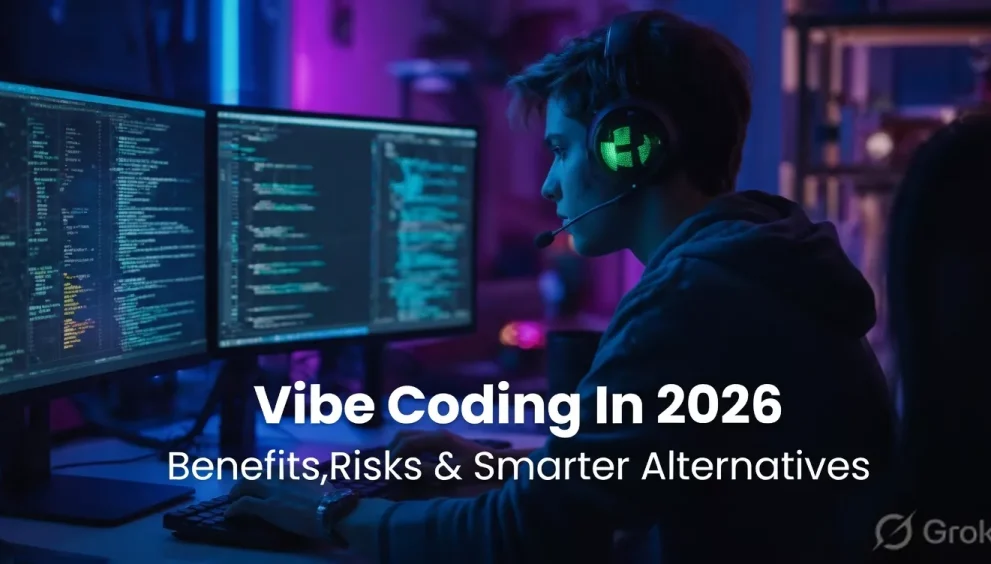
In 2026, a new way of building software is sweeping through American tech: vibe coding. Coined by AI pioneer Andrej Karpathy, vibe coding means describing what you want an app to do in plain English — and letting AI tools (like advanced versions of Cursor, Claude, or custom agents) generate the actual code.
No more wrestling with syntax errors for hours. Just “vibe” your idea, iterate through prompts, and watch a working prototype appear. But is this the future of American innovation — or a shortcut that could create massive headaches down the road?
Here’s a balanced, detailed breakdown of vibe coding pros and cons, tailored for US developers, startup founders, product managers, and tech professionals.
What Exactly Is Vibe Coding?
Traditional coding requires writing every line manually with deep knowledge of languages, frameworks, and architecture. Vibe coding flips that: you focus on the outcome (“Make a clean dashboard that shows real-time sales data with dark mode toggle”) and let AI handle the implementation.
In 2026, over 90% of US developers report using AI coding tools daily, with nearly half of new code being AI-generated. It’s especially popular in fast-moving environments like Silicon Valley startups, Austin tech scenes, and remote teams across the country.
Pros of Vibe Coding – Why Many Americans Love It
- Blazing Fast Prototyping and Iteration Americans love speed — and vibe coding delivers. What once took weeks can now be mocked up in hours or days. Founders in New York or San Francisco can validate ideas quickly without burning through runway on a full dev team. Product managers can experiment with features on the fly, keeping teams agile in competitive markets.
- Lower Barrier to Entry – Democratizing Tech You no longer need a computer science degree from Stanford or MIT to build something functional. Entrepreneurs, designers, marketers, and even non-tech side-hustlers across America can turn ideas into MVPs. This is huge for bootstrapped startups and small businesses in the Midwest or South who can’t afford big engineering salaries.
- Boosted Productivity for Experienced Developers Senior engineers in Seattle or Boston report getting 3-4x more done by offloading boilerplate, refactoring, and routine tasks. They stay in “flow state” longer, focusing on architecture, strategy, and complex problem-solving instead of tedious syntax.
- Cost Savings and Faster Time-to-Market In a high-cost US economy, vibe coding helps startups ship faster and cheaper. Many early-stage companies are using it to build internal tools, landing pages, or simple apps without hiring immediately — stretching venture capital further in a cautious 2026 funding environment.
- Creative Freedom and Fun Factor It feels more like brainstorming than grinding code. This creative “vibe” keeps American tech talent engaged and reduces burnout.
Cons of Vibe Coding – The Hidden Risks Americans Can’t Ignore
- Questionable Code Quality and Technical Debt AI often gets you 80% there — but that last 20% can be messy, inefficient, or downright broken. Many teams discover later that “vibe-coded” projects become nightmares to maintain. In enterprise environments (think banks in Charlotte or healthcare in Minneapolis), this leads to skyrocketing refactoring costs and “vibe hangovers.”
- Security Vulnerabilities AI-generated code can introduce hidden bugs, outdated libraries, or serious flaws like injection attacks. For American companies handling sensitive data under strict regulations (HIPAA, GDPR compliance, or SOC 2), this is a major red flag. One overlooked vulnerability could lead to breaches, lawsuits, or massive fines.
- Scalability and Maintainability Issues Vibe coding shines for prototypes and small projects but struggles with large, complex systems. As apps grow, the lack of clean architecture makes scaling painful. US tech leaders warn that over-reliance on vibes can create fragile products that fail under real user load.
- Debugging Becomes Harder If you don’t fully understand the code (a common vibe coding trap), fixing problems turns into a frustrating guessing game. Many developers end up spending more time debugging AI output than they saved initially.
- Job Market and Skill Erosion Concerns While vibe coding boosts individual productivity, it raises questions about the future of software engineering jobs in America. Will companies need fewer mid-level coders? Will the next generation of developers miss out on foundational skills? Some experts predict it will displace “bad software” companies but reward those who combine vibes with strong engineering discipline.
- Over-Reliance and Loss of Deep Understanding When you “fully give in to the vibes,” you risk losing the ability to think critically about systems. Long-term, this could weaken America’s edge in producing world-class engineers.
Vibe Coding vs Traditional Coding: Quick Comparison for American Tech Workers
- Best For Vibe Coding: Rapid prototypes, MVPs, internal tools, side projects, early-stage startups, and boosting senior dev output.
- Best For Traditional Coding: Mission-critical systems, secure applications (fintech, healthtech, defense), large-scale enterprise software, and anything requiring long-term maintainability.
- Smart Hybrid Approach (Recommended in 2026): Use vibe coding for speed and ideation, then apply professional review, testing, security audits, and refactoring for production.
Many successful US teams now treat vibe coding as a powerful assistant — not a replacement for engineering rigor.
The Bottom Line for Americans in 2026
Vibe coding is here to stay and is already transforming how software gets built across the United States. It offers exciting opportunities for faster innovation, lower costs, and broader participation in tech — aligning perfectly with the American spirit of entrepreneurship and disruption.
However, the cons around quality, security, and sustainability are real. Blindly vibing your way through development can lead to costly rework, compliance nightmares, and technical debt that hurts competitiveness.
Pro Tip for US Readers: Master prompt engineering, always review and test AI-generated code, and combine vibes with solid software engineering principles. The winners in 2026 won’t be pure “vibe coders” or old-school purists — they’ll be those who use AI intelligently while keeping human expertise at the core.
What do you think? Are you using vibe coding in your workflow, or sticking to traditional methods? Have you seen its pros or cons firsthand in your company? Share your experiences in the comments below — especially if you’re in Silicon Valley, Austin, NYC, or anywhere else in America building the future.
Stay tuned to ClickUSANews.com for more on AI, tech trends, and how they’re shaping the American economy.