



AI in Agriculture: Farming With Minimal Human Labor – How It’s Transforming U.S. Farms in 2026

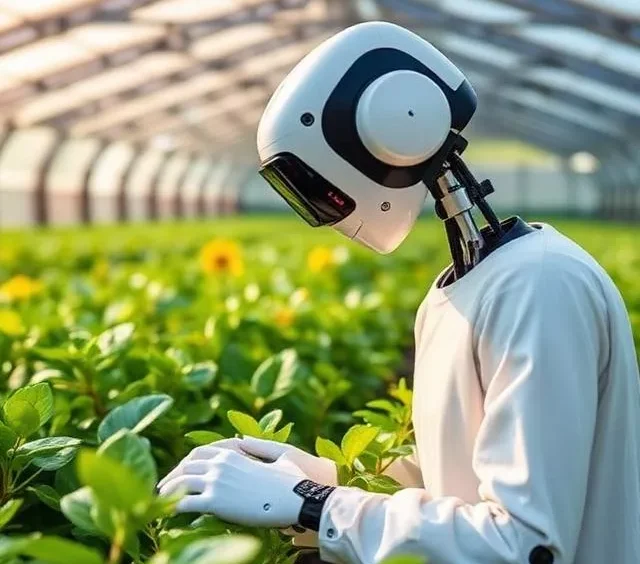
AI in Agriculture: Farming With Minimal Human Labor – How It’s Transforming U.S. Farms in 2026
In the heartland of America, from the vast cornfields of Iowa to the orchards of California and the lettuce rows of Arizona, a quiet revolution is underway. Artificial intelligence and robotics are reshaping agriculture, enabling farmers to produce more food with dramatically less human labor. As labor shortages persist—driven by aging rural populations, rising wages, and immigration challenges—U.S. farms are turning to AI-powered autonomous machines, precision tools, and data-driven systems to stay competitive and sustainable.
In 2026, American agriculture is leading the world in adopting these technologies. John Deere’s autonomous tractors till fields without drivers, laser-wielding robots zap weeds with pinpoint accuracy, and AI-equipped drones scout crops from above. The result? Farms run more efficiently, yields improve, inputs like water and fertilizer drop, and the need for large crews diminishes. While this shift raises questions about job displacement in rural communities, it also promises higher productivity, lower costs, and a path toward feeding a growing population with fewer resources.
This article explores the key AI innovations driving minimal-labor farming in the United States, real-world examples from leading companies and farms, measurable benefits, challenges ahead, and what it means for American agriculture moving forward.
The Labor Crisis Driving AI Adoption in U.S. Farming
U.S. agriculture has long faced labor challenges. The average farmer is over 58 years old, and the sector struggles with shortages of seasonal workers for tasks like weeding, harvesting, and planting. H-2A visa programs help, but costs have risen sharply—wages often reach $20 per hour or more in some regions, compared to much lower rates abroad.
AI and robotics offer a solution. The global agricultural robotics market is projected to exceed $20 billion by 2026, with North America leading adoption. In the U.S., large-scale farms (5,000+ acres) are early adopters, with over 75% expected to implement AI-driven solutions. Even smaller operations are benefiting from affordable drone and software tools.
The USDA’s FY 2025–2026 AI Strategy emphasizes responsible integration to enhance efficiency, predict risks, and support farmers. Technologies like autonomous equipment address shortages while improving precision and sustainability.
Autonomous Tractors and Self-Driving Farm Machines
The poster child for minimal-labor farming is the autonomous tractor.
John Deere leads this space. Since unveiling its first fully autonomous tractor in 2022, the company has expanded to models like the 8R, 9R, and 9RX series. These machines operate without drivers for tillage, planting, and more. Farmers set boundaries via the Operations Center app, and the tractor handles navigation, speed adjustments, and turns using GPS, sensors, and AI vision.
In 2026, Deere’s “essentially autonomous” X9 combine anticipates crop conditions, adjusts settings in real time, and operates with minimal oversight—”you just need to sit in the seat,” as one executive noted. On a 10,000-acre Illinois farm, users reported 15% productivity gains from precision planting and reduced overlap.
Other players include CNH Industrial and smaller innovators. Autonomous systems run 24/7, reducing labor for long shifts and enabling workers to focus on oversight or other tasks.
Impact: Cuts fuel and labor costs by 6-15% while addressing shortages. Large farms see the biggest gains, but upgrades make older equipment autonomous.
Precision Weed Control and Robotic Weeders
Weeding once required crews of workers—now AI robots handle it.
Carbon Robotics’ LaserWeeder uses computer vision trained on millions of images to identify weeds and zap them with CO2 lasers. One machine replaces 20-person crews for crops like arugula, cutting weed control costs by 80%. In California and Arizona, farms deploy these for high-value produce.
In Yuma, Arizona—America’s winter lettuce capital—AI vision systems thin crops, reducing crews from 45 to one operator. These tools operate day and night with high precision.
Impact: Reduces chemical use, lowers costs, and tackles labor-intensive tasks. Adoption grows in specialty crops facing shortages.
Drones for Crop Monitoring and Precision Spraying
Drones provide aerial intelligence with minimal ground labor.
Equipped with multispectral cameras and AI, drones scout fields for crop stress, pests, nutrient deficiencies, and yield estimates. Farmers receive actionable maps for targeted interventions.
In 2026, FAA rule changes enable swarming drones for spraying. Hylio drones cover large areas in Yuma, supported by broadband networks. AI analyzes imagery for early detection, reducing manual scouting.
Impact: Improves yields, cuts input costs, and minimizes field time. Affordable platforms make drones accessible to mid-size farms.
Other Key AI Applications Reducing Labor Needs
- Predictive Analytics and Decision Support: AI forecasts weather impacts, disease outbreaks, and optimal planting times.
- Automated Harvesting: Robots pick delicate crops like strawberries (Zordi systems) or thin lettuce.
- Livestock Monitoring: AI tracks animal health, reducing manual checks.
These tools shift labor from manual to oversight and data roles.
Benefits and Challenges for American Farmers
Benefits:
- Higher productivity and yields (up to 40% in some cases).
- Lower input costs (water, fertilizer, chemicals reduced 20-80%).
- 24/7 operations and sustainability gains.
- Addresses shortages while improving safety.
Challenges:
- High upfront costs (though ROI improves).
- Need for digital skills and broadband in rural areas.
- Potential job displacement in traditional roles.
- Ethical concerns about data and over-reliance on tech.
The USDA’s AI strategy promotes responsible adoption with workforce preparation.
The Road Ahead for U.S. Agriculture
In 2026, AI enables farming with minimal human labor on large operations. John Deere targets fully autonomous corn/soybean systems by 2030. Smaller farms benefit from drones and software.
This shift promises resilient, efficient agriculture amid climate and labor pressures. Workers may transition to tech oversight, data analysis, or maintenance roles.
American farms are pioneering a future where AI augments human effort, producing more with less. The result: stronger food security, sustainability, and economic vitality for rural America.
Stay tuned to ClickUSA News for updates on AI in agriculture, farm tech innovations, and rural economy trends.
For more USA news check:
https://clickusanews.com/news/
Latest USA breaking news, national headlines, global affairs, and trending stories.
https://clickusanews.com/sports/
USA sports news, live scores, match highlights, athlete updates, and major sporting events.
https://clickusanews.com/technology/
Technology news covering AI, gadgets, innovation, cybersecurity, and digital trends in the USA.
https://clickusanews.com/entertainment-movies-ott/
Entertainment updates including movies, OTT releases, celebrity news, and pop culture stories.
https://clickusanews.com/business/
Business and finance news with USA market updates, corporate stories, crypto, and economic insights.