



$14.2 Billion Cyber Monday 2025: Record Sales, Best Tech

$14.2 Billion Cyber Monday 2025: Record Sales, Best Tech
Published: December 1, 2025 | ClickUSANews.com
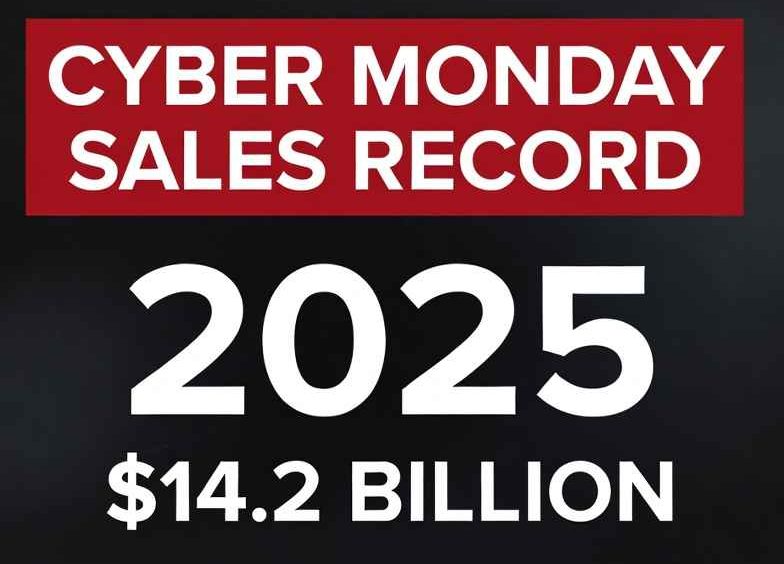
As Americans conclude their Thanksgiving weekend festivities, millions are turning to their screens for one of the year’s most anticipated shopping events. Cyber Monday 2025, taking place today, December 1st, is poised to become the biggest online shopping day in U.S. history, with projections reaching approximately $14.2 billion in sales.
What is Cyber Monday?
Cyber Monday is an annual online shopping event that occurs on the Monday following Thanksgiving and Black Friday. Unlike its brick-and-mortar counterpart Black Friday, Cyber Monday focuses exclusively on digital commerce, offering consumers substantial discounts on everything from electronics and fashion to home goods and holiday gifts.
This year’s event officially spans from November 29 through December 1, 2025, with many retailers extending deals throughout what has become known as “Cyber Week.”
The Origins: How Cyber Monday Was Born
The story of Cyber Monday begins in 2005, when Ellen Davis of the National Retail Federation coined the term after observing significant online shopping activity on the Monday after Thanksgiving. The phenomenon emerged from a unique convergence of technological and social factors.
In the early 2000s, internet connectivity at home was often slower than at workplaces. Millions of working Americans returned to their offices after Thanksgiving weekend and used high-speed workplace connections to complete their holiday shopping. This created a noticeable spike in online retail traffic and sales every Monday after Thanksgiving.
The National Retail Federation reported that 77 percent of online retailers experienced substantial sales increases on this particular Monday, prompting the organization to formalize the shopping event with an official name and marketing push.
The naming process itself had some interesting alternatives. Davis considered “Black Monday” and “Blue Monday” but rejected them due to negative associations with the 1987 stock market crash and depression, respectively.
Evolution from 2005 to 2025
Cyber Monday’s growth over two decades has been nothing short of remarkable. The first Cyber Monday in 2005 generated nearly half a billion dollars in online sales, which seemed impressive at the time but pales in comparison to today’s figures.
Key milestones in Cyber Monday history include:
2010: Online sales surpassed $1 billion for the first time, establishing Cyber Monday as the largest online shopping day in America.
2017: Sales reached $6.59 billion, demonstrating sustained year-over-year growth.
2020: During the COVID-19 pandemic, Cyber Monday became the biggest online shopping day in U.S. history with $10.7 billion in spending.
2024: The event generated approximately $13.3 billion in online sales, setting the stage for 2025’s projected record.
The event has also gone global. While originating in the United States, Cyber Monday has been adopted in countries including Canada, the United Kingdom, Germany, France, Belgium, Chile, Colombia, Australia, and Japan.
Cyber Monday 2025: Breaking Records
This year’s Cyber Monday is expected to set new benchmarks across multiple metrics. Adobe projects sales around $14.2 billion, representing a 6.8% increase year-over-year, which would make December 1, 2025 the most lucrative single day for online commerce in American history.
Major Deals and Discounts
Retailers across all categories are offering unprecedented discounts. Electronics are discounted up to 30% off average prices, while apparel deals reach 26% off.
Popular deals this year include:
Technology: Apple products, including AirPods Pro 3, MacBook Air M4, and Apple Watch models, are seeing significant price reductions. PlayStation 5 consoles are $100 off across all models.
Home Appliances: Major discounts on smart home devices, kitchen appliances, and home improvement products.
Fashion and Beauty: Retailers are offering 25-50% off clothing, shoes, and cosmetics.
Streaming Services: The Disney+ and Hulu bundle is available for $5 per month for one year, while other platforms offer similar promotional pricing.
The Mobile Shopping Revolution
One of the most significant trends in 2025 is the dominance of mobile commerce. During 2024’s Cyber Monday, 57% of online sales came through mobile devices, totaling $7.6 billion, and this percentage is expected to increase further this year.
Smartphones and handheld devices are projected to account for 56.1% of online spending this season, worth approximately $142.7 billion. This represents a dramatic shift from just five years ago when desktop computers dominated online shopping.
Economic Impact and Consumer Behavior
Cyber Monday’s importance to the U.S. economy extends far beyond a single day’s sales figures. The event kicks off the crucial holiday shopping season that can make or break retailers’ annual performance.
Holiday Season Significance
The National Retail Federation projects record holiday spending of approximately $1 trillion this year, with Cyber Monday serving as a major catalyst. For many small and mid-sized retailers, 20-40% of annual revenue occurs within the final two months of the year.
Buy Now, Pay Later Trend
Buy now, pay later loans are expected to drive $20.2 billion in online spending this holiday season, up 11% from last year. This financing option has made Cyber Monday deals more accessible to consumers managing budget constraints.
AI and Shopping Technology
Artificial intelligence is playing an increasingly important role. AI assistants and digital agents contributed to $14.2 billion of the $79 billion spent online worldwide on Black Friday, and this technology continues to shape shopping patterns during Cyber Monday.
Economic Uncertainties
Despite record projections, 2025’s Cyber Monday occurs against a backdrop of economic challenges. The economy shows bifurcation, with higher earners benefiting from stock market gains while lower-income consumers face budget constraints. This “K-shaped economy” means wealthier consumers drive much of the spending growth while others seek value and discounts.
How Americans Celebrate Cyber Monday
Cyber Monday has evolved into a cultural phenomenon with its own traditions and rituals:
Digital Deal Hunting: Consumers start researching deals days or weeks in advance, creating wishlists and setting price alerts.
Workplace Shopping: While less common than in 2005, about 25% of Americans still shop online at work on Cyber Monday.
Extended Shopping Windows: Rather than confining purchases to a single day, many shoppers browse during Cyber Week, taking advantage of rolling deals and flash sales.
Social Media Engagement: Shoppers share deals, compare prices, and discuss purchases across social platforms, creating a communal shopping experience.
Gift Planning: Many Americans complete significant portions of their holiday gift shopping during this event, taking advantage of discounts and free shipping offers.
The Importance of Cyber Monday
For Consumers
Cyber Monday offers several key benefits to shoppers:
Convenience: Shopping from home eliminates the need to navigate crowded stores and long checkout lines.
Price Comparison: Digital platforms make it easy to compare prices across multiple retailers instantly.
Wider Selection: Online inventories often exceed what physical stores can display.
Exclusive Deals: Many retailers offer online-only discounts that surpass in-store promotions.
For Retailers
The event is crucial for businesses of all sizes:
Revenue Boost: Cyber Monday can account for a substantial portion of quarterly and annual sales.
Customer Acquisition: Aggressive discounts attract new customers who may become repeat buyers.
Inventory Management: The event helps retailers clear seasonal merchandise before year-end.
Market Competition: Participation in Cyber Monday has become necessary to remain competitive in retail.
For the Economy
Cyber Monday serves as an important economic indicator:
Consumer Confidence: Strong sales suggest consumer willingness to spend despite economic uncertainties.
E-commerce Growth: The event highlights the continuing shift from traditional retail to digital commerce.
Employment Impact: Cyber Monday drives temporary hiring in warehousing, logistics, and customer service sectors.
Technology Adoption: The event accelerates innovation in payment systems, logistics, and AI-powered shopping tools.
Cyber Monday vs. Black Friday: The Changing Landscape
The relationship between Black Friday and Cyber Monday has evolved significantly. Since 2019, Black Friday has outpaced Cyber Monday in online shopping volume, though Cyber Monday traditionally generates higher total revenue.
The distinction between the two events has blurred considerably. Black Friday now features extensive online sales, while Cyber Monday deals are often available in physical stores. Many retailers simply extend their Black Friday promotions through Cyber Monday, creating a seamless five-day shopping period from Thanksgiving through Cyber Monday.
Looking Ahead: The Future of Cyber Monday
As Cyber Monday enters its third decade, several trends are shaping its evolution:
Sustainability Concerns: Growing awareness of environmental impacts has led some consumers to opt for digital gift cards or eco-friendly products to reduce packaging waste.
Extended Time Frames: The concept of a single shopping “day” continues to expand, with deals stretching across entire weeks or months.
Augmented and Virtual Reality: Technologies like AR and VR are making shopping more immersive, allowing customers to virtually try products before purchasing.
Global Expansion: More countries are adopting Cyber Monday, though they often adapt it to local holidays and consumer preferences.
Tips for Cyber Monday 2025 Shoppers
To maximize savings and avoid pitfalls during Cyber Monday:
Research Early: Know what you want and set price alerts to catch the best deals.
Compare Prices: Don’t assume the first deal you see is the best; check multiple retailers.
Watch for Scams: Stick to reputable websites and be wary of deals that seem too good to be true.
Check Return Policies: Understand each retailer’s return and exchange terms before purchasing.
Use Secure Payment Methods: Protect your financial information by using secure payment platforms.
Set a Budget: Avoid overspending by establishing spending limits before you start shopping.
Conclusion
Cyber Monday 2025 represents two decades of evolution in American consumer culture and digital commerce. What began as a simple observation about workplace shopping behavior has transformed into the biggest online shopping day of the year, generating billions in economic activity and influencing how Americans approach holiday gift-giving.
As we watch today’s sales figures roll in, Cyber Monday stands as a testament to technological advancement, changing consumer preferences, and the enduring American enthusiasm for a good deal. Whether you’re hunting for the perfect gift or treating yourself to a long-desired purchase, Cyber Monday 2025 offers unprecedented opportunities to save while participating in a uniquely modern tradition.
With projections suggesting this will be the largest online shopping day in U.S. history, Cyber Monday continues to prove that twenty years after its inception, its influence on American retail and consumer culture is stronger than ever.
For the latest Cyber Monday deals and shopping tips, stay tuned to ClickUSANews.com throughout the day.