



Texas Republicans Push Redistricting Plan to Flip Democratic Seats: A Fight for Congressional Control

August 4, 2025 | ClickUSANews.com
Texas is ground zero for a heated political clash as Republicans charge forward with a bold redistricting plan to redraw congressional maps, targeting five Democratic districts to lock in GOP dominance ahead of the 2026 midterms. On August 3, 2025, Texas Democrats fled the state to block a vote by denying a quorum, escalating a high-stakes battle backed by President Donald Trump and Governor Greg Abbott. Accused of partisan gerrymandering and racial bias, this plan could reshape America’s political landscape. At ClickUSANews.com, we dive into the details, the stakes for American voters, and what this means for Texas and the nation.
The GOP’s Redistricting Play: Securing Power
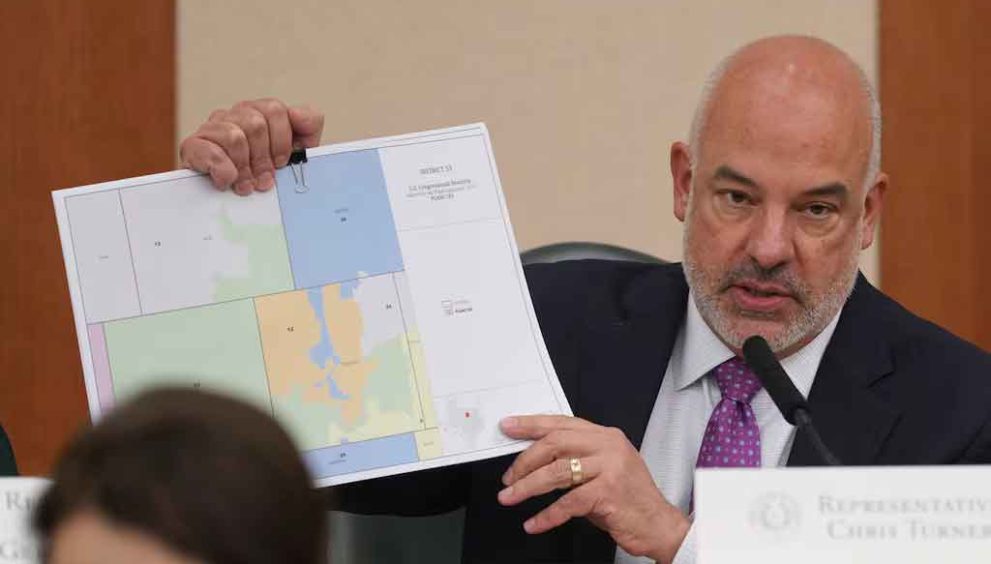
On July 30, 2025, Texas House Republicans, led by Rep. Todd Hunter (R-Corpus Christi), introduced a new congressional map designed to flip five Democratic seats, boosting their U.S. House majority. Leveraging 2024 election results—where Trump won 27 of Texas’ 38 districts—the plan aims to secure 30 GOP seats, each with at least a 10-point Trump margin, up from the current 25. This aggressive strategy targets Democratic strongholds in Austin, Dallas, Houston, and South Texas, using gerrymandering tactics like “packing” Democratic voters into fewer districts and “cracking” others by blending them with GOP-leaning rural areas.
Key changes include:
- South Texas: Reps. Henry Cuellar (D-Laredo) and Vicente Gonzalez’s (D-McAllen) majority-Hispanic districts, which Trump narrowly won in 2024 (7 and 4 points), would shift to safer GOP seats (Trump +10 points each).
- Austin: Rep. Greg Casar’s (D-Austin) District 35 would be eliminated, forcing a primary fight with Rep. Lloyd Doggett (D-Austin) in a redrawn, heavily Democratic seat.
- Dallas-Fort Worth: Rep. Julie Johnson’s (D-Farmers Branch) District 32 would stretch into rural East Texas, flipping it to a GOP-leaning seat (Trump +18 points). Rep. Marc Veasey’s (D-Fort Worth) District 33 would lose Fort Worth but stay blue.
- Houston: Rep. Al Green’s (D-Houston) District 9 would add conservative east Harris County, becoming 50% Hispanic and GOP-leaning (Trump +15 points). The vacant District 18, a historically Black Democratic stronghold, would pack in more Democratic voters to remain blue but weaken Democratic influence elsewhere.
Announced during a 30-day special session called by Governor Abbott, the plan advanced through a Texas House panel on August 2, 2025. With Trump’s team pushing for a stronger House majority (currently 219-212 with four vacancies), Republicans see this as a firewall against potential 2026 losses.
Democrats’ Dramatic Response: Breaking Quorum
On August 3, 2025, Texas Democrats pulled a stunning move, fleeing the state to deny the GOP-controlled House the two-thirds quorum needed to pass the map. Likely headed to states like New Mexico, Democrats aim to stall the vote before the special session ends on August 19. This echoes past quorum breaks in 2003 and 2021, when Democrats protested GOP-led policies. However, the tactic risks backlash: Republicans have imposed $500 daily fines on absent lawmakers, and Democrats face pressure to return for flood relief votes critical to Texans.
National Democratic leaders are rallying behind the effort. House Minority Leader Hakeem Jeffries (D-N.Y.) met with Texas Democrats in Austin on July 30, while the Democratic Congressional Campaign Committee and House Majority PAC committed $20 million to defend vulnerable seats. Former President Barack Obama is headlining a fundraiser to boost Democratic candidates. Democrats are also gearing up for legal challenges, alleging the map violates the Voting Rights Act by diluting minority voting power.
Racial and Legal Firestorm
The plan has ignited accusations of racial gerrymandering, as Texas’ population growth since 2020—95% driven by minorities—clashes with GOP efforts to redraw maps. The Department of Justice flagged four current districts (9, 18, 29, and 33) as unconstitutional “coalition districts” combining Black and Hispanic voters, a claim Texas disputes. The proposed map creates four majority-Hispanic and two majority-Black districts but reduces minority influence overall. For instance, District 9’s Black voter share drops from 45% to 12%, while white voters rise to 34%.
Democrats, including Rep. Al Green, have branded the map “discriminatory,” accusing Republicans of using a DOJ letter from Harmeet K. Dhillon as cover for a partisan power grab. Texas officials, led by Attorney General Ken Paxton, argue the 2021 maps were race-neutral and claim the new plan reflects Hispanic voters’ rightward shift, as seen in Trump’s 2024 gains. Voting rights groups are preparing lawsuits, citing Voting Rights Act and 14th Amendment violations, though the conservative 5th U.S. Circuit Court of Appeals may delay rulings past 2026.
Impacts on Texas and America
Short-Term Impacts
- GOP Advantage: If passed, the map could hand Republicans five additional seats, securing 30 of Texas’ 38 districts and strengthening their House majority.
- Election Upheaval: The redrawn District 18, vacant since Rep. Sylvester Turner’s March 2025 death, could disrupt its November 2025 election. Cuellar, Gonzalez, and others face tougher races, while Casar and Doggett risk a divisive primary.
- Voter Backlash: Public hearings showed Texans, like Austin’s Maria Gonzalez, decrying the plan as a “sham” that silences minority voices, fueling protests and distrust in the process.
Long-Term Impacts
- Deepened Divide: By creating safer GOP seats, the map could entrench partisan gridlock, discouraging candidates from appealing to moderates and alienating Texas voters.
- Demographic Misstep: Using 2020 census data, the map may underestimate Texas’ growing diversity. Democratic gains in 2018 and 2022 suggest some districts could flip back in a strong 2026 cycle.
- National Fallout: Texas’ move has triggered a redistricting war, with Democratic-led states like California and New York eyeing retaliatory maps, though independent commissions limit their options. This could reshape Congress for years.
A Defining Moment for American Democracy
Texas’ redistricting fight is a microcosm of America’s broader struggle over fair representation. For Republicans, it’s a strategic play to lock in power, backed by Trump’s vision of a GOP-dominated House. For Democrats, it’s an assault on democracy, threatening minority voters and competitive elections. With Texas’ population booming and diversifying, the map’s reliance on gerrymandering raises alarms about electoral fairness. As Democrats hold firm with their quorum break and legal battles loom, the outcome will ripple through the 2026 midterms and beyond, shaping who controls Congress and how Texans are represented.
Follow ClickUSANews.com for real-time updates on Texas politics and the battle for America’s future.