



Trump-Schumer Clash Halts Nominee Confirmations

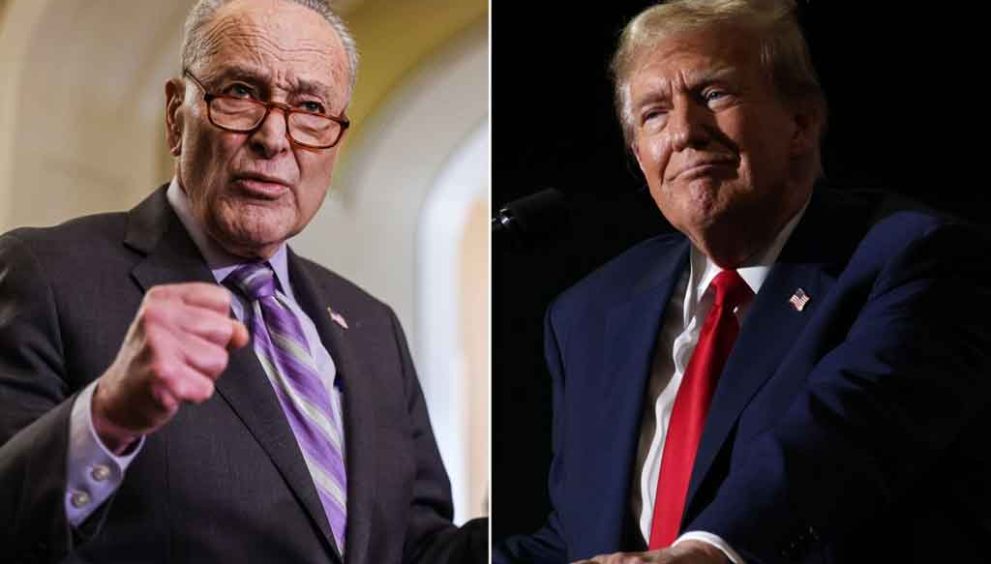
A fierce showdown between President Donald Trump and Senate Minority Leader Chuck Schumer has ground the confirmation of Trump’s nominees to a standstill, leaving critical government roles vacant as the Senate broke for its August recess on August 2, 2025. The collapse of bipartisan talks has fueled accusations of political sabotage, with Trump claiming Schumer demanded over $1 billion for Democratic pet projects to speed up approvals, while Schumer insisted on intense scrutiny for what he called “deeply flawed” nominees.
The conflict erupted as Democrats, under Schumer’s leadership, abandoned the usual practice of fast-tracking non-controversial nominees through unanimous consent or voice votes. Instead, they’ve insisted on time-intensive roll-call votes for each of the roughly 1,200 pending Senate-confirmed positions, arguing that Trump’s picks require unprecedented oversight. “These nominees are uniquely unqualified,” Schumer declared, defending the delays as essential for accountability.
Tensions peaked when Trump unleashed a scathing post on Truth Social, blasting Schumer: “Tell Schumer, under pressure from his Radical Left Lunatics, to GO TO HELL! Don’t take the deal, go home and show the Democrats for the bad people they are.” The outburst shattered fragile negotiations led by Senate Majority Leader John Thune, who had been working to clear up to 60 bipartisan-supported nominees in exchange for restoring some Trump administration budget cuts, including funds for foreign aid and the National Institutes of Health. Democrats also sought assurances against future cuts, but both sides accused the other of bad faith, with Republicans claiming Schumer raised the price at the last minute and Democrats pointing to Trump’s rhetoric as the dealbreaker.
Senator Markwayne Mullin, R-Okla., a key player in the talks, vented frustration: “Schumer chose this path. It didn’t have to be this way.” Republicans are now weighing drastic measures, including rule changes to slash debate time or allow bulk voting, adjourning to enable Trump’s recess appointments, or even a “nuclear option” to overhaul the confirmation process. Thune emphasized the need for reform, stating, “The system is broken and needs fixing fast.”
Before the recess, the Senate managed to confirm seven nominees, including Jeanine Pirro as U.S. Attorney for the District of Columbia in a tight 50-45 vote, despite fierce Democratic pushback. Schumer framed the outcome as a win, saying, “Trump tried to strong-arm us, but we held firm.” Republicans, however, called the progress inadequate and vowed to tackle the backlog when they return in September.
This clash marks a new low in partisan battles over nominations, building on prior rule changes like the 2013 filibuster reduction for lower court judges and the 2017 extension to Supreme Court nominees. Democrats’ blanket refusal to expedite confirmations is unprecedented, intensifying gridlock and threatening the Trump administration’s ability to execute its agenda. As the Senate prepares for a contentious September, potential rule changes could reshape the confirmation process, further straining bipartisan cooperation in Washington.