


Iran War 2026: Why US Forces Aren’t Leaving Yet

By Click USA News Investigative Team | April 10, 2026
Washington D.C. – President Donald Trump declared “total and complete victory” after the two-week U.S.-Iran ceasefire took effect, but Defense Secretary Pete Hegseth delivered a blunt warning to the American public: U.S. forces will be “hanging around” the Middle East for the foreseeable future.
Hegseth made it clear — this is not a full withdrawal. American troops, ships, and aircraft will remain deployed across the region until a “real agreement” is reached with Iran, not just the fragile 14-day pause announced on April 8.
Click USA News investigation uncovers what this means for U.S. service members, military families, taxpayers, and national security as Vice President JD Vance heads to high-stakes talks in Islamabad this weekend.
“Hanging Around” – The Pentagon’s Stark Message
During a Pentagon briefing, Hegseth stated: “A ceasefire is a pause, and the joint force remains ready if ordered or called upon to resume combat operations with the same speed and precision as we’ve demonstrated over the last 38 days.”
Chairman of the Joint Chiefs of Staff Gen. Dan Caine reinforced the point, saying U.S. forces will stay positioned and prepared to restart strikes if Iran fails to deliver on reopening the Strait of Hormuz or if talks collapse.
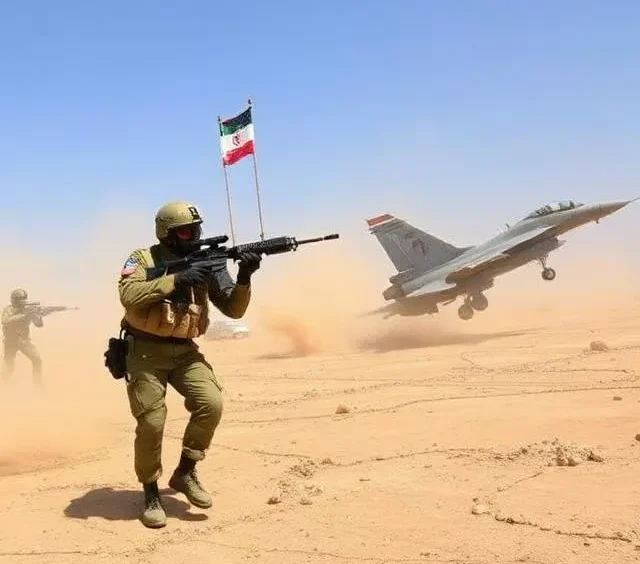
This stance directly contradicts any notion of quick de-escalation. Even as Trump celebrates victory, thousands of American troops — including air wings, naval assets, Marine Expeditionary Units, and ground support elements — are staying put in bases across the Gulf, Red Sea, and eastern Mediterranean.
The message to Iran is unmistakable: America is not leaving until the job is finished on U.S. terms.
The Human and Financial Cost to Americans
After six weeks of intense conflict that began in late February 2026, the toll on U.S. forces has already been significant. Official reports indicate American casualties in the campaign, with service members killed and hundreds wounded in supporting operations and proxy attacks.
For military families:
- Deployments that were supposed to rotate home are now extended indefinitely during this “pause.”
- Spouses and children face prolonged separation while wondering if the two-week clock will expire with renewed combat.
- Reservists and National Guard units activated for the buildup remain on alert.
For taxpayers:
- The high-intensity air and naval campaign depleted munitions stockpiles that will take months or years — and billions of dollars — to replenish.
- Keeping a large forward presence in the Middle East burns through fuel, maintenance, and operational funds every single day the forces “hang around.”
- Any breakdown in talks could trigger fresh spending on reinforcements or escalated operations.
Analysts estimate the overall cost of the 2026 Iran campaign already runs into tens of billions, with long-term expenses for force posture and readiness still climbing.
What the White House Isn’t Emphasizing
While Trump calls the ceasefire a decisive win that met all military objectives, key issues remain unresolved:
- Iran has not yet fully restored shipping through the Strait of Hormuz. Traffic remains minimal, with only a handful of vessels transiting daily under strict Iranian oversight.
- The ceasefire explicitly does not cover Israeli operations in Lebanon, where strikes continue and risk Iranian retaliation.
- Iran retains near-weapons-grade uranium stockpiles and advanced ballistic missiles despite U.S. and Israeli strikes.
- Tehran’s 10-point proposal includes demands the U.S. has historically rejected, such as full sanctions relief and limits on American presence in the region.
Vice President JD Vance will lead the U.S. delegation to Islamabad starting April 11, joined by Special Envoy Steve Witkoff and Jared Kushner. Their mission: turn this temporary pause into a lasting “real deal” that addresses nuclear concerns, proxy threats, and secure Hormuz passage.
The two-week window is short. Failure could mean rapid resumption of hostilities — with U.S. troops already in position and ready.
The Endgame Americans Deserve to Know
Click USA News spoke with former military officials and defense analysts who paint a sobering picture: This is classic great-power bargaining. The U.S. used military force to degrade Iranian capabilities and force negotiations, but Tehran survived with enough leverage — especially over global energy flows — to drag out the process.
President Trump and his team insist they will not accept a weak agreement. That toughness keeps troops forward-deployed as insurance.
But for everyday Americans, the stakes are personal:
- Will your son, daughter, husband, or wife in uniform face extended deployment or renewed combat?
- How much more will this cost in taxes and higher energy prices if Hormuz stays restricted?
- Does “victory” mean real strategic gains, or just another expensive pause in an endless cycle?
The classified military assessments reportedly highlight depleted stockpiles and the strain of sustaining high-tempo operations. Yet the Pentagon’s public line remains firm: We stay until Iran complies.
Click USA News Bottom Line
The “total victory” narrative provided political momentum, but the on-the-ground reality is more cautious. U.S. troops are not packing up and heading home. They are staying put as leverage while Vance negotiates in Pakistan.
This endgame will decide whether the 2026 Iran war delivers lasting security for America or becomes another costly chapter with troops stuck in the Middle East for months or longer.
We will continue tracking the Islamabad talks, Pentagon force posture updates, gas price impacts from Hormuz delays, and any developments affecting U.S. service members.
Americans sent their military into action. They have every right to know exactly when — and under what conditions — those forces will finally come home.
This is a developing story. The next 10 days may determine the difference between a true off-ramp and a dangerous return to fighting.