

What If Death Becomes Optional This Decade? Ray Kurzweil’s Bold Vision for Human Immortality by 2030

What If Death Becomes Optional This Decade? Ray Kurzweil’s Bold Vision for Human Immortality by 2030
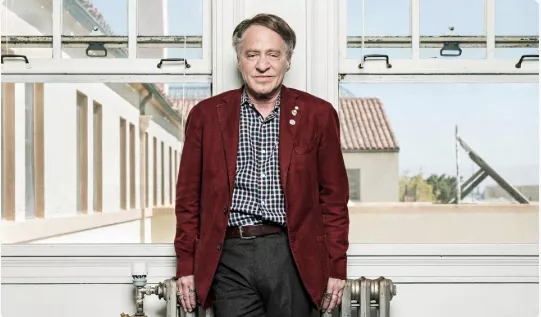
In a world where artificial intelligence is advancing at breakneck speed, renowned futurist Ray Kurzweil is reigniting the debate on one of humanity’s oldest dreams: overcoming death. The Google engineering director and inventor predicts that by the end of this decade—around 2029-2030—we could reach “longevity escape velocity,” a tipping point where medical breakthroughs extend human life expectancy by more than one year for every year that passes. This could make aging reversible and death from natural causes optional for those who reach it.
Kurzweil’s vision combines explosive AI progress with nanotechnology and biotechnology, potentially allowing microscopic nanobots to repair cells, eradicate diseases, and halt aging at the molecular level. As we enter 2026, with AI models already transforming medicine, is true human immortality closer than ever? Or are we facing profound ethical, social, and economic challenges?
Ray Kurzweil’s Predictions: AGI in 2029, Longevity Escape Velocity by 2030
Kurzweil, whose past forecasts (like the rise of the internet and voice recognition) have proven remarkably accurate, sticks firmly to his timeline:
- Artificial General Intelligence (AGI) by 2029: AI matching or surpassing human intelligence across all tasks.
- Nanobots in the bloodstream by the early 2030s: Tiny robots repairing DNA damage, clearing plaques, and reversing cellular aging.
- Longevity Escape Velocity: Starting around 2029-2030, advances add more life than time subtracts—potentially leading to indefinite lifespans.
In interviews and his book The Singularity Is Nearer, Kurzweil argues exponential progress in computing and biology will make this possible sooner than skeptics expect. Elon Musk has echoed parts of this, predicting superintelligent AI by 2029, though he’s more cautious on personal longevity.
The Science Behind Aging Reversal: Nanotechnology and AI Breakthroughs
Current research lends credence to parts of Kurzweil’s vision:
- Nanotechnology in Medicine: While full-scale medical nanobots aren’t here yet, progress includes targeted drug delivery, senescent cell clearance, and even Alzheimer’s reversal in mice using nanoparticles (2025 studies).
- AI-Driven Discoveries: AI is accelerating drug design and biological simulations, with breakthroughs in epigenetic reprogramming and mitochondrial tweaks showing promise for extending healthspan.
- Human-Machine Integration: Brain-computer interfaces (like Neuralink) and gene therapies are paving the way for enhanced longevity.
Leading institutions like Harvard University are at the forefront, with researchers reporting partial aging reversal in animal models and exploring cellular reprogramming techniques that could translate to humans.
The Biotechnology Debate: Promise vs. Peril
Supporters hail this as the ultimate human achievement—eradicating suffering from age-related diseases like cancer, Alzheimer’s, and heart conditions. It could unlock unprecedented productivity, wisdom accumulation, and exploration of the universe.
Critics raise serious alarms:
- Inequality: Early treatments may be accessible only to the ultra-wealthy, creating a biological divide between “immortals” and the rest.
- Overpopulation and Resources: Indefinite lifespans could strain Earth’s food, energy, and environmental systems.
- Ethical Dilemmas: Redefining death, inheritance, retirement, and human purpose—would endless life lead to boredom, stagnation, or psychological crises?
- Unintended Risks: Errors in nanobots or superintelligent AI could introduce catastrophic failures.
Even visionaries like Elon Musk express caution, focusing more on making humanity multi-planetary than achieving personal immortality.
Are Societies, Economies, and Human Psychology Ready?
If Kurzweil is right, the 2030s could fundamentally redefine existence:
- Economies might boom with centuries of experienced workers, but pension systems, career structures, and innovation incentives would need complete overhaul.
- Relationships, family planning, and personal motivation could shift dramatically in a world without a natural endpoint.
- Cultural and religious views on mortality would face unprecedented challenges.
The deeper question remains: Does eliminating death enhance human potential—or diminish what makes life meaningful?
Final Thoughts: A Turning Point for Humanity
As human immortality research, nanotechnology medicine, artificial intelligence future, and aging reversal science converge at an accelerating pace, 2026 feels like the calm before a transformative storm. Whether this decade delivers optional death or not, the pursuit itself is reshaping medicine, ethics, and our understanding of what it means to be human.
Stay informed with ClickUSANews.com for the latest developments in biotechnology debate, human-machine integration, and groundbreaking science news driving America’s innovation edge.
For more USA news check:
https://clickusanews.com/news/
Latest USA breaking news, national headlines, global affairs, and trending stories.
https://clickusanews.com/sports/
USA sports news, live scores, match highlights, athlete updates, and major sporting events.
https://clickusanews.com/technology/
Technology news covering AI, gadgets, innovation, cybersecurity, and digital trends in the USA.
https://clickusanews.com/entertainment-movies-ott/
Entertainment updates including movies, OTT releases, celebrity news, and pop culture stories.
https://clickusanews.com/business/
Business and finance news with USA market updates, corporate stories, crypto, and economic insights.