



Christmas Morning in America: What Time Kids Actually Wake

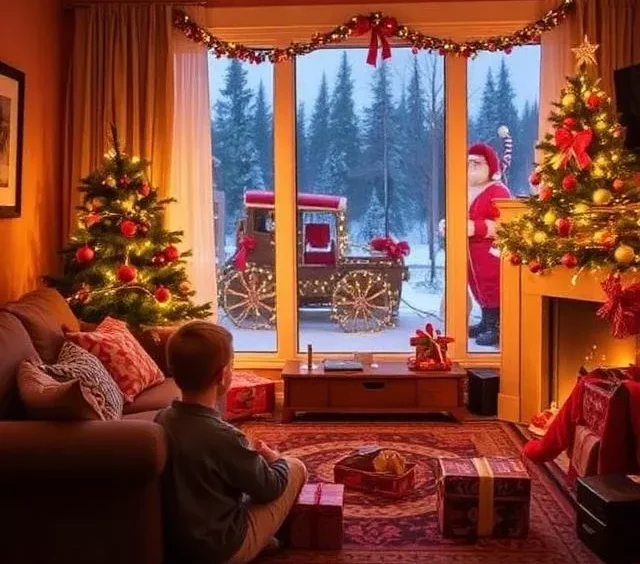
Christmas Morning in America: What Time Kids Actually Wake
From bleary-eyed 5 a.m. risers to teenage snoozers—here’s the real data on when American children wake up on Christmas morning, broken down by age, region, and family dynamics
Every parent of young children knows the phenomenon: Christmas morning arrives with the sound of tiny footsteps, excited whispers, and the inevitable question, “Can we open presents yet?” But what time does this magical chaos actually begin across America? New research reveals fascinating patterns about when children wake up on the most anticipated morning of the year—and the answers vary dramatically by age, location, and even parental generation.
The National Average: Earlier Than You’d Think
According to survey data of 2,000 parents, the average child wakes up at 6:44 a.m. on Christmas morning—significantly earlier than typical weekday mornings. However, the overall American population averages a wake-up time of 7:35 a.m. on Christmas Day, which is 50 minutes later than the average weekday.
This disparity reveals an important truth: while adults may sleep in on Christmas morning, children are doing exactly the opposite. The holiday excitement creates a powerful biological override of normal sleep patterns, transforming even the heaviest sleepers into early risers.
Recent surveys show that just over 38% of children wake up early on Christmas, around 32% wake up at their usual time, and almost 29% actually wake up later than usual. For families with early risers, approximately 47% of children who wake up earlier do so by a full sixty to ninety minutes ahead of their typical morning routine.
Wake-Up Times by Age: The Younger, The Earlier
Age plays perhaps the most significant role in determining Christmas morning wake-up times. The data paints a clear picture:
Young Children (Ages 2-10)
Over 50% of parents surveyed reported that kids under 10 years old wake up before 8 a.m. to open presents. This group represents the earliest risers, with many families reporting wake-up times between 5:30 and 6:30 a.m.
Parents of toddlers and early elementary-age children should prepare for dawn arrivals. The combination of excitement and naturally earlier sleep schedules in young children creates the perfect storm for pre-sunrise Christmas celebrations.
Tweens and Young Teens (Ages 11-13)
This middle group shows more variation, with wake-up times ranging from 6:30 to 8 a.m. While still excited about Christmas, these children have developed slightly better impulse control and can sometimes be persuaded to wait until a more reasonable hour.
Teenagers (Ages 14+)
The teenage years bring a dramatic shift. Only 15 percent of teens will willingly wake up before 7 a.m. on Christmas morning despite the promise of presents. Kids older than 14 are most likely to wake up at 8 a.m. or later, with many sleeping until 9 or 10 a.m. if left undisturbed.
Sleep expert Lisa L. Lewis explains that this shift is biological, not behavioral. As children hit adolescence, they naturally transition to later sleep schedules for both bedtimes and wake times, even overriding the excitement of Christmas morning.
Generational Differences: When Parents Were Kids
The generation of the parents also influences when children wake up on Christmas morning, revealing fascinating patterns:
Gen Z Parents (Born 1997-2010)
Gen Z parents have the highest percentage of early risers, with roughly 30% of their children waking up at 6 a.m. Additionally, just over 12% of children of Gen Z parents wake up as early as 5 a.m.
Millennial Parents (Born 1981-1996)
About 29% of millennial parents’ children wake up at 6 a.m. on Christmas, closely matching Gen Z families. Just over 34% of millennial children wake up at 7 a.m., and about 19% wake an hour later.
Gen X and Baby Boomer Parents
About 34% of children of baby boomers and Gen X parents combined wake up at 6 a.m., while 38% of baby boomer children wake at 7 a.m., and 22% wake at 8 a.m.
The data suggests that younger parents may have children who wake slightly earlier, possibly due to having younger children overall or different household dynamics and bedtime routines.
Regional and Cultural Variations
While comprehensive state-by-state data on Christmas wake-up times is limited, regional patterns and cultural traditions offer insights into how different parts of America experience Christmas morning:
Northeast: Traditional Early Risers
New England families tend to embrace early Christmas mornings, with many households setting 6:30-7:00 a.m. as the acceptable wake-up time. The region’s strong traditions around Christmas morning—including special breakfasts and church services—encourage earlier starts to accommodate packed holiday schedules.
Connecticut, Massachusetts, and Rhode Island families often report that children wake between 6:00-7:00 a.m., with parents implementing strict “no downstairs before 6:30” rules to maintain some semblance of morning sanity.
Mid-Atlantic: Structured Celebrations
Pennsylvania, New York, and New Jersey families demonstrate a mix of approaches. Urban families in cities like New York and Philadelphia may start slightly later (7:00-8:00 a.m.) due to apartment living and neighbors, while suburban and rural families mirror national averages of 6:30-7:00 a.m. starts.
Many Mid-Atlantic families incorporate cultural traditions that affect timing. Italian-American families who celebrated the Feast of the Seven Fishes on Christmas Eve may have later Christmas mornings due to late-night festivities.
Southern States: Relaxed Morning Starts
Southern hospitality extends to Christmas morning, with many families embracing a more leisurely approach. States like Alabama, Mississippi, and Georgia often report Christmas morning starting between 7:00-8:00 a.m., particularly in families that attended late Christmas Eve church services.
Texas families show unique variation—some open presents on Christmas Eve, making Christmas morning less urgent and allowing for later wake-up times. Louisiana families along the Mississippi River who light bonfires on Christmas Eve may also have later Christmas morning starts.
Midwest: The “No Earlier Than 7:00” Rule
Midwestern families demonstrate strong adherence to household rules. Common approaches include “no presents until 7:00 a.m.” or “you can look at presents, but no opening until everyone is awake.” States like Wisconsin, Minnesota, and Michigan report average wake-up times of 6:30-7:30 a.m.
The region’s Scandinavian heritage influences some families to incorporate Christmas morning traditions that encourage structured, orderly celebrations rather than chaotic early-morning present-opening sessions.
Southwest: Cultural Blend
In New Mexico, Arizona, and parts of Texas and Colorado, Hispanic traditions influence Christmas morning timing. Families celebrating Nochebuena (Christmas Eve) with late feasts often allow children to sleep later on Christmas morning. Wake-up times range from 7:00-9:00 a.m., depending on the previous night’s activities.
West Coast: Later Mornings, Relaxed Attitudes
California, Oregon, and Washington families report some of the latest Christmas morning wake-up times in the nation, averaging 7:30-8:30 a.m. The region’s laid-back culture and emphasis on work-life balance extends to holiday mornings.
Seattle-area families, like one mother of three young children described in surveys, report a typical pattern: the oldest child wakes around 6:00 a.m., excitedly wakes siblings and parents, and the family begins celebrating together shortly after.
Mountain States: Early Outdoor Enthusiasts
Colorado, Utah, and Montana families often report earlier Christmas mornings (6:00-7:00 a.m.), with many planning to hit ski slopes or engage in outdoor activities after present-opening. The outdoor culture influences families to start celebrations early to maximize daylight hours for recreation.
The Science Behind Christmas Morning Wake-Ups
Why do children wake up so early on Christmas morning? Sleep experts point to several factors:
Anticipation and Excitement
The excitement of Christmas creates an adrenaline response that overrides normal sleep patterns. Children who normally sleep until 8:00 a.m. find themselves wide awake at 5:30 a.m., their brains flooded with anticipatory hormones.
Sleep specialists note that children are more likely to wake during lighter sleep phases when experiencing heightened excitement. The knowledge that presents await creates a mental alarm clock that activates earlier than usual.
Reduced Sleep Quality on Christmas Eve
Many children sleep poorly on Christmas Eve due to excitement, experiencing more frequent wake-ups during the night. When they do wake in the early morning hours, the excitement prevents them from falling back asleep, unlike typical early morning wake-ups.
Cultural and Family Reinforcement
Years of Christmas morning memories create powerful associations. Children internalize the idea that Christmas morning is special and early, perpetuating the pattern even as they grow older.
Parental Strategies: Managing the Early Morning Rush
American parents have developed creative approaches to managing Christmas morning wake-up times:
The “Rules Before Chaos” Approach
Many families establish clear boundaries:
- “No going downstairs before 6:30 a.m.”
- “Wake up Mom and Dad first—no entering the living room alone”
- “Stockings can be opened in bedrooms, but tree presents require family”
- “No present opening until the coffee is ready”
One parent with children ages 10 and 6 enforces a rule that children cannot go downstairs earlier than 6:30 a.m. Another family requires children to wake up parents first, and it cannot be before 7:00 a.m.
The OK-to-Wake Clock Strategy
For families with young children who cannot yet tell time, OK-to-wake clocks provide a visual signal when it’s acceptable to get up. Parents set these clocks for 6:30 or 7:00 a.m., giving children a clear indicator while allowing parents crucial extra sleep.
The Middle-Ground Compromise
Sleep expert Lisa L. Lewis implemented a rule when her children were younger: no waking Mom and Dad until 7 a.m., but children could go downstairs and look at presents and stockings before that time. This approach acknowledges children’s excitement while protecting parental sleep.
The “Embrace the Chaos” Philosophy
Some families skip rules entirely, accepting that Christmas morning will start early and planning accordingly. These parents simply go to bed earlier on Christmas Eve, acknowledging that 5:30 or 6:00 a.m. wake-ups are inevitable.
The Stocking Buffer
Many families place stockings in children’s bedrooms, providing 20-30 minutes of entertainment before the main event. This strategy allows parents to wake up gradually while children explore their first round of gifts.
Time Zone Considerations
America’s multiple time zones create interesting dynamics for families with relatives across the country:
Eastern Time families experience the earliest Christmas morning by clock time, with 6:00 a.m. arrivals when West Coast relatives are still asleep at 3:00 a.m. Pacific time.
Central Time families often coordinate with both coasts, sometimes delaying present-opening to video chat with West Coast grandparents.
Mountain Time families fall in the middle, making coordination easier with both coasts.
Pacific Time families benefit from later wake-up times that align better with East Coast relatives who’ve already begun celebrating.
Virtual Christmas morning celebrations have become common, with families scheduling video calls to open presents “together” across time zones. This often pushes Pacific families to earlier wake-ups or Eastern families to delay celebrations.
Special Circumstances and Variations
Only Children vs. Siblings
Household composition affects wake-up times. Only children tend to wake slightly later than children with siblings, possibly because there’s no sibling to wake them or share excitement with immediately upon waking.
Families with multiple children often report that the oldest child wakes first and subsequently wakes younger siblings, creating a domino effect that accelerates the morning start.
Divorced and Blended Families
Families navigating custody arrangements may experience different Christmas morning dynamics. Children who spend Christmas Eve with one parent and Christmas morning with another sometimes wake later due to travel and transition time.
Blended families report that wake-up times vary more widely, as children from different family backgrounds bring different Christmas morning traditions and expectations.
Families Who Travel
Just over 18% of families polled travel out of town for the holidays, and 25% travel on Christmas morning. These families often report later wake-up times, as travel logistics delay the start of celebrations.
Families staying in hotels or at relatives’ homes may implement stricter wake-up rules to avoid disturbing others, often setting 7:30 or 8:00 a.m. as the earliest acceptable time.
The Historical Context
Christmas morning traditions have evolved significantly over American history. In early colonial America, Christmas morning varied dramatically by region. Puritan New England largely ignored the holiday, while Southern colonies embraced festive celebrations that often began with gunfire at dawn.
By the 19th century, as Christmas became more standardized across America, morning gift-giving traditions solidified. Early 20th-century accounts describe children waking around 6:00-7:00 a.m., remarkably consistent with modern patterns.
The introduction of Christmas Eve television specials in the 1960s may have contributed to later bedtimes and subsequently later wake-ups for some families, though data on this is limited.
What’s Considered “Normal”?
Sleep specialists emphasize that there’s no single “correct” Christmas morning wake-up time. What matters most is that the approach works for your family and ensures everyone can enjoy the day.
However, experts recommend:
- Maintaining some boundaries to ensure parents get adequate sleep
- Being consistent year-to-year so children know what to expect
- Considering children’s ages when setting expectations
- Prioritizing family togetherness over strict adherence to clock times
Tips for Better Christmas Morning Sleep
For Parents
Go to bed early Christmas Eve: If you know your children will wake at 6:00 a.m., plan accordingly. Finish wrapping and preparations early enough to get to bed by 10:00 or 11:00 p.m.
Set clear expectations in advance: Discuss wake-up rules days before Christmas, not in the moment when excited children are jumping on your bed at 5:30 a.m.
Prepare coffee the night before: Set up your coffee maker so you can simply press a button when children wake you.
Accept reality: Fighting biology and excitement rarely works. Plan for an early morning rather than hoping for a miracle sleep-in.
For Better Children’s Sleep on Christmas Eve
Maintain normal bedtimes: Resist the temptation to let children stay up late on Christmas Eve. Overtired children often wake earlier and are more emotional.
Reduce sugar intake in the evening: Avoid giving children sugary treats after dinner on Christmas Eve, as this can disrupt sleep quality.
Stick to bedtime routines: Keep bath time, story time, and other calming rituals consistent even on Christmas Eve.
Encourage daytime physical activity: A full day of play and outdoor time increases sleep pressure and may promote slightly later morning wake-ups.
Manage excitement constructively: Acknowledge children’s excitement during the day, but implement calming activities as evening approaches.
The Emotional Heart of Christmas Morning
Beyond the logistics and data, Christmas morning represents something profound in American family life. That early morning wake-up time—whether 5:30 a.m. or 8:30 a.m.—marks a moment of pure joy and anticipation that children carry throughout their lives.
Parents may grumble about the early hour, but many later admit these chaotic Christmas mornings become their most cherished memories. The sound of footsteps on Christmas morning, the whispered “Is it time yet?”, the explosion of wrapping paper and excitement—these moments pass quickly as children grow.
Survey data shows that most parents feel the early mornings are worth it. The joy on children’s faces, the family togetherness, and the creation of lasting memories outweigh the inconvenience of a 6:00 a.m. wake-up call.
Looking Ahead: When Will They Sleep In?
Exhausted parents can take comfort in knowing the early mornings are temporary. As children enter their teenage years, Christmas morning transforms dramatically. Parents often find themselves in the amusing position of having to wake teenagers for Christmas—a reversal they never imagined during the toddler years.
Many parents of adult children report that Christmas morning now begins around 9:00 or 10:00 a.m., with everyone enjoying a leisurely start and brunch before opening presents. The transformation from 5:30 a.m. chaos to 10:00 a.m. calm happens gradually but inevitably.
Final Thoughts
Christmas morning wake-up times in America reflect a beautiful combination of tradition, biology, family dynamics, and regional culture. While the national average hovers around 6:44 a.m. for children, individual experiences vary widely based on age, location, and household rules.
Whether your children wake at 5:00 a.m. or sleep until 9:00 a.m., whether you enforce strict rules or embrace the chaos, what matters most is creating Christmas morning memories that your family will cherish for years to come.
So set that OK-to-wake clock, prepare the coffee maker, maybe get to bed a bit earlier on Christmas Eve, and embrace whatever time Christmas morning arrives at your house. Because in a few short years, you’ll be nostalgic for those early wake-ups when Christmas magic still prompted children to leap out of bed before dawn.
About This Article
This comprehensive guide draws from recent sleep surveys, parental experiences, and regional tradition research to provide American families with realistic expectations for Christmas morning wake-up times. Data sources include surveys of over 1,000 parents and sleep pattern research across multiple years.
Related Topics: Christmas morning traditions, children’s sleep patterns, holiday parenting tips, American Christmas customs, family holiday planning, managing early risers, Christmas morning rules, regional Christmas traditions